Delivery from €16,90 per winemaker in Europe (excluding the United Kingdom)


Sparkling
French sparkling wines such as Crémants (from Alsace, the Loire, Burgundy, etc.) offer a wide variety of flavors. Produced using traditional methods, these wines are distinguished by their fine bubbles and freshness. Whether as an aperitif, with seafood or desserts, Crémants are an elegant and affordable alternative, reflecting the savoir-faire of France's wine-growing regions. Limoux, Gaillac and the Bugey add other styles, including wines bottled before their first fermentation ends, which then finishes in the bottle and creates the bubbles. You can order them direct from the winemaker.
Filtrer








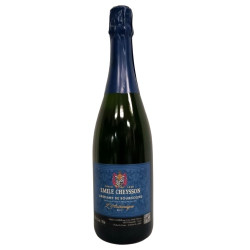


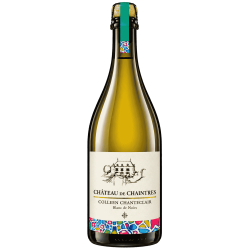


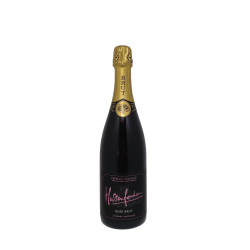


Sparkling or Mousseux: What EU Law Means by Each Word
On this page, “sparkling” covers any wine with bubbles, the way people use the word every day. EU law uses different terms: Crémant, Blanquette and most appellation sparkling wines belong to the “vin mousseux” family, while “vin pétillant” names a lower-pressure category.
Natural or Added Bubbles: How EU Law Sorts Sparkling Wine
A vin mousseux gets its carbon dioxide from fermentation alone and holds at least 3 bar of pressure (about 44 psi) at 20 °C (68 °F). A vin mousseux de qualité, the category every Crémant belongs to, needs at least 3.5 bar (about 51 psi) and base wines of at least 9% ABV.
When some or all of the gas is added, the wine is called “gazéifié” (carbonated). A vin mousseux gazéifié can only be made from wine with no protected designation of origin (PDO) or protected geographical indication (PGI).
On a Vin de France, the category always appears on the label. An appellation wine can leave it off, since the appellation name is enough, as with a Crémant d’Alsace or a Blanquette de Limoux.
The word “Crémant” adds its own conditions, including less than 50 g/L of sugar. A Crémant therefore cannot be labeled “doux” (sweet), a term reserved for sparkling wines with more than 50 g/L.
Discover Our Selection of Sparkling Wines – The Excellence of AOP Crémants
Immerse yourself in the world of French sparkling wines with our selection of the finest Crémants from Alsace, Burgundy, the Loire Valley, and other renowned appellations. Crafted using the traditional method, these sparkling wines feature fine bubbles, vibrant freshness, and complex aromas, reflecting the expertise of passionate winemakers and the richness of French wine-growing terroirs.
The 8 AOP Crémant Appellations
- Crémant d’Alsace AOP – Made from grapes including Pinot Blanc, Riesling, Pinot Gris, and Chardonnay, it captivates with its finesse and liveliness.
- Crémant de Bourgogne AOP – Crafted from grapes including Chardonnay and Pinot Noir, it offers a well-structured body with elegant minerality.
- Crémant de Loire AOP – A blend of Chenin Blanc, Cabernet Franc, and Chardonnay, balancing freshness with fruity notes.
- Crémant de Bordeaux AOP – Composed of grapes including Sémillon, Cabernet Franc, and Merlot, it unveils a creamy texture with indulgent aromas.
- Crémant du Jura AOP – Often made from Chardonnay and Savagnin, it brings bright acidity with a slightly saline touch.
- Crémant de Savoie AOP – Produced with Jacquère, Altesse, and Chardonnay, it is fresh and aromatic, with a hint of alpine character.
- Crémant de Die AOP – Made from Clairette Blanche, it is light, floral, and delicately sparkling.
- Crémant de Limoux AOP – The first historical sparkling wine, blending Chardonnay, Chenin Blanc, and Mauzac, combining richness and elegance.
Exceptional Expertise for Unmatched Quality
Our partner winemakers, committed to sustainable viticulture, passionately work to reveal the unique character of their terroirs through refined and authentic Crémants.
Why Choose an AOP Crémant?
An elegant and affordable alternative to champagne.
Fine bubbles and a diverse range of flavors, perfect for any occasion.
A versatile wine, ideal as an aperitif, with seafood, or with desserts.
Let yourself be tempted by our selection of AOP Crémants and savor the excellence of French sparkling wines!
Label Terms and Methods: Sparkling Wine Questions
What does “obtenu par adjonction de dioxyde de carbone” mean on a French label?
On a French sparkling wine label, “obtenu par adjonction de dioxyde de carbone” means “made by adding carbon dioxide.” Some or all of the bubbles come from added gas. It must follow the terms “vin mousseux gazéifié” or “vin pétillant gazéifié,” in the same type and size. It can also read “obtenu par adjonction d’anhydride carbonique.”
“Fermentation en bouteille” or “méthode traditionnelle”: what’s the difference on the label?
On a sparkling wine label, “méthode traditionnelle” (traditional method) is stricter than “fermentation en bouteille” (bottle-fermented). Both rely on a second fermentation in the bottle; the traditional method also calls for nine months on the lees without a break, then disgorging. The bottle-fermented term requires nine months of production, including 90 days on the lees, and allows filtering after transfer.
Can Crémant be red?
Crémant is always white or rosé: EU rules reserve the term for quality sparkling wines of those two colors. It also requires a protected designation of origin. Red sparkling wines exist, but they go by another name.
Where can you buy sparkling wines direct from the winemaker?
You can buy sparkling wines direct from the winemaker on Avenue des Vins. The wine comes to you directly from the producer who made it.
See also: AOC Crémant de Loire - AOC Crémant de Limoux - AOC Blanquette de Limoux