Delivery from €16,90 per winemaker in Europe (excluding the United Kingdom)


Gin
Gin Tonic, Gin Fizz, Pink Lady... Gin is a flavored spirit that's sure to be your best ally for classic or original cocktails. This spirit is produced from molasses (sugar cane, potato or beet) or grain flour (corn, rye, etc.). Flavored with juniper berries, gin is obtained by distillation. Discover our producers' nuggets and treat your friends and family. European rules make juniper berries mandatory for any gin. The base alcohol must be of agricultural origin, and it can come from grain just as well as from grapes or fruit such as apples.
Filtrer


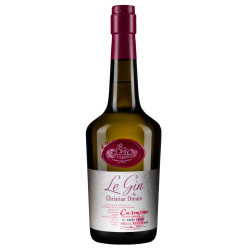
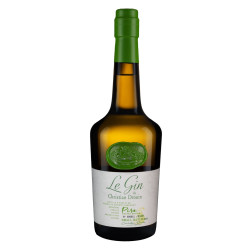

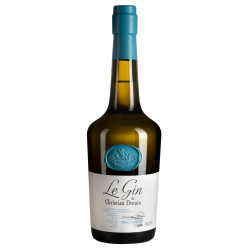


Distilled Gin, London or Dry: What Each Label Term Guarantees
On a label, “gin,” “distilled gin” and “London gin” are three legal names set by Regulation (EU) 2019/787 of April 17, 2019, each tied to a method; “dry” can be added only under conditions. Those words tell you how a gin was made before you even open the bottle.
From Plain Gin to London Gin, the Method Sets the Name
A gin can be made by simple blending: the alcohol receives flavorings or flavoring preparations, juniper berries among them, without going back into the still. Distilled gin is redistilled with juniper berries and other natural botanicals. Simply adding essences or flavorings to the alcohol never earns that name.
London gin is a distilled gin held to stricter rules. Every botanical goes through the still, the distillate reaches at least 70% ABV, and afterward only water, more alcohol and up to 0.1 gram of sweetener per liter may be added: no coloring, no flavoring. It can be made anywhere: London names a method, not a place.
Then there is “dry.” On a gin or a distilled gin, the word guarantees no more than 0.1 gram of sweetener per liter, calculated as invert sugar. London gin already has that cap, so “London dry gin” promises nothing more than “London gin.”
Botanicals: One Required, the Rest Up to the Distiller
Only one plant is required: common juniper (Juniperus communis). In gin and distilled gin alike, the taste of its berries must come first. Beyond that, each producer writes their own recipe.
Citrus peel, such as lemon or grapefruit, brings freshness, while spices like coriander or pepper add warmth. Flowers such as violet, orris (iris root) or lavender give a softer perfume.
Other recipes build on a fruit, such as apple, pear or red berries, or on a Mediterranean plant like olive or rosemary. Whatever they are, these botanicals stay behind the juniper.
Tasting Gin: Glass, Water and Garnish
To get to know a gin, taste it neat first, in a small tasting glass, with a few drops of water: they open up the aromas and make the botanicals easier to pick out.
If you lengthen it with tonic or sparkling water, choose a garnish that echoes the recipe: a twist of peel for a citrus gin, a slice of apple or pear for a fruit gin, a sprig of rosemary for an herbal one. A less sweet tonic lets the botanicals come through.
Once open, store the bottle upright, tightly closed, away from light and heat. Gin does not age in the bottle, so there is no point keeping it for years in the hope it improves.
Genever and Pink Gin: Common Questions
What is the difference between gin and genever?
Gin and genever are both flavored with juniper berries, but juniper must dominate in gin and only needs to be noticeable in genever. Regulation (EU) 2019/787 places genever among juniper-flavored spirit drinks, bottled at 30% ABV or more. A specialty of northern France, Belgium and the Netherlands, it is traditionally made from grain.
Where does the color of a pink or red gin come from?
A pink or red gin gets its color after distillation, since a distillate comes out of the still colorless: fruit or flowers steeped in it, or a coloring. Juniper must still dominate the taste, and a colored gin cannot be labeled London gin.
Where can you buy gin direct from the producer?
You can buy gin direct from the producer on Avenue des Vins. Every gin’s page gives the name of its producer.
See also: Liqueurs - Cognac-Armagnac - Whisky