Delivery from €16,90 per winemaker in Europe (excluding the United Kingdom)

Domaine de Cardon
Domaine de Cardon in Rully: Mercurey, Beaujolais and Crémant de Bourgogne wines direct from the Burgundy estate...
Lire plus


Discover Domaine de Cardon in photos



Domaine de Cardon: Mercurey, Bourgogne and Chiroubles direct from Rully
Domaine de Cardon - Rully, Cote chalonnaise (Saone-et-Loire)
Domaine de Cardon is a Burgundy wine estate whose winery is in the centre of Rully, in the Cote chalonnaise, a few kilometres from Mercurey and twenty-five kilometres south of Beaune. Relaunched in 2013 by Frederique de Cardon de Sandrans, it farms around fifteen hectares in Mercurey, Mercurey 1er cru, Bourgogne and Chiroubles, certified High Environmental Value and committed to Terra Vitis.
There are estates one inherits, and others that must be revived. In the middle of the 20th century, the vines planted by the de Cardon de Sandrans family in Dracy-le-Fort had been uprooted; in 2012, their descendant Frederique decided to bring them back to life. Domaine de Cardon now stretches from the granite of Chiroubles to the clay-limestone of Mercurey, with a harvest still done by hand on the great appellations and wines aged in oak and acacia barrels, to discover direct on Avenue des Vins.
From Catalonia to the Cote chalonnaise: the history of the de Cardon de Sandrans family
The estate's name is first of all that of a family. The de Cardon de Sandrans descend from the Cardona, whose origins date back to the 12th century in Spain. In the 15th century, engaged in the Italian campaigns of the King of Spain, Folch Cardona married a descendant of the Strozzi family in Lucca; two of their sons reached France and settled in Lyon. For having defended the city against the Reformation, Horace and Folch received from Henri IV the barony of Sandrans, in the Dombes.
Firmly established in the Lyon region, where it notably owns the Domaine de Roche Cardon at the gates of Lyon, the family left the chateau de Sandrans in the 19th century for Dracy-le-Fort, in Burgundy, where it planted its first vines. They were farmed, modestly, until the middle of the 20th century: the property was then divided and the vine stocks uprooted.
It is that page that Frederique de Cardon de Sandrans reopened. In 2012, she decided to reconnect with the winegrowing tradition and values of her family; surrounded by friends sharing her convictions, Domaine de Cardon was born in April 2013. The acquisition of a winery in Rully, at the end of 2015, paved the way for a first production in 2016. Sebastien, head of cultivation, tends the vines; Pierre, cellar master since August 2015, signs the vinifications.
|
||
|
||
|
||
|
||
|
From the granite of Chiroubles to the clay-limestone of Mercurey
The winery occupies the centre of Rully, a few kilometres from Mercurey and twenty-five kilometres south of Beaune. The vineyard, for its part, does not fit into a single village: it runs from Villie-Morgon, in the Beaujolais, to the slopes of Mercurey, via Aluze and Couches. Around twenty hectares in total, fifteen of them in production.
Two geologies answer each other here. In the Cote chalonnaise, the Bourgogne, Mercurey and Mercurey 1er cru appellations rest on clay-limestone and marl-limestone soils, the geological signature of the great Burgundies; the plots are tiered from 250 to 320 metres, facing due east or due south. In the Beaujolais, the gamays are planted on the eroded granite of Chiroubles and Villie-Morgon, up to 500 metres altitude for the highest plots.
Mercurey, Mercurey 1er cru, Bourgogne, Chiroubles
Cote chalonnaise and Beaujolais crus - clay-limestone, marl-limestone and granite
Four Burgundy grapes share these soils: pinot noir and chardonnay in the Cote chalonnaise, gamay in the Beaujolais, aligote on old vines in Aluze and Couches.
A sustainable viticulture, HVE-certified and Terra Vitis-committed
Domaine de Cardon is not certified in organic farming: it claims a sustainable (raisonnee) viticulture, backed by two environmental frameworks. High Environmental Value (HVE) certification is a voluntary approach that assesses the estate as a whole: biodiversity, plant-protection strategy, fertilisation and water management. The Terra Vitis approach, born in the Beaujolais vineyard, certifies for its part a traced and sustainable production; its logo, a vine leaf on which an insect forages, appears on the labels.
In the vineyard, treatments are limited to the strict minimum and prophylactic control, partly grassed plots, worked soils, prevents diseases rather than fighting them. The volumes produced are deliberately contained each year, to gain in concentration and aromatic maturity.
The commitment extends beyond the vine. The estate has joined the Coq Vert community, launched with the Agency for the Environment and Energy Management (ADEME) and the ministry, lightened its bottles from 530 to 395 grams in 2022 and set up the recovery of pruning shoots.
Hand harvest on the Mercurey, an ageing that favours wood
The harvest is mainly manual: it is the rule for the Mercurey Village, the Mercurey 1er cru and the cremant, as for the Mercurey white Roc Blanc and the Chiroubles. The other cuvees are harvested mechanically, then destemmed before vatting.
In red, vatting stretches from around ten days on the Chiroubles to nearly three weeks on the Mercurey, with a rise in temperature at the end of vinification on the 1er cru Les Croichots to refine the extraction of colour, aromas and tannins. In white, pneumatic pressing is followed by settling, then a fermentation that takes place entirely in barrels for the Roc Blanc.
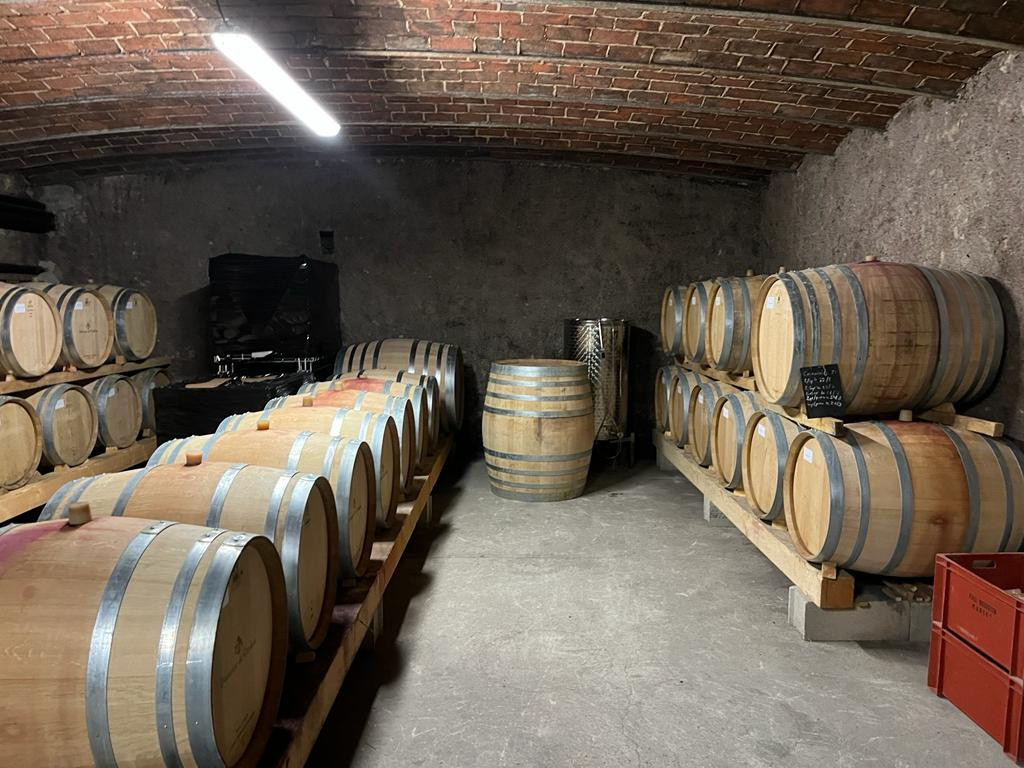
Ageing favours wood. The reds go exclusively into oak, at least eight months for the Bourgogne, at least twelve months for the Mercurey, preceded by a spell in tank for Roche Cardon. The Mercurey white Roc Blanc ages ten months under wood, oak and acacia combined, a more discreet association that preserves the tension of the chardonnay. Only the Bourgogne Les 4 Parcelles stays entirely in stainless steel, to keep the brightness of its fruit.
The Domaine de Cardon cuvees available direct
Six wines make up the selection: two chardonnay whites, three pinot noir reds from the Cote chalonnaise and one gamay from the Beaujolais. Each cuvee bears the name of its plot or its blend, and belongs to a precise appellation.
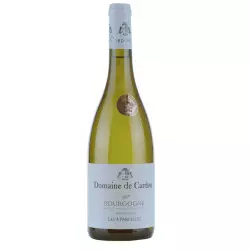
Bourgogne Côte Chalonnaise « Les 4 Parcelles » - white
Chardonnay - vines 20 to 50 years old - clay-limestone soil
The name refers to the four plots that make up the blend. A chardonnay from young vines, aged entirely in stainless steel to preserve its brightness: pale colour with green tints, a nose of citrus and fresh fruit lifted by white flowers, a delicate attack and discreet roundness. Serve between 8 and 10 °C, as an aperitif, with fish, seafood or a comte cheese. Keeping potential of two to three years.
Bourgogne « Cuvée Margaux » - red
Pinot Noir - 20-year-old vines - clay-limestone and marl, in Couches
A plot facing due south at 260 metres altitude, in the Cote du Couchois appellation area. About a fortnight of vatting, then at least eight months in oak barrel: garnet colour, a bouquet of strawberry, blackcurrant, blueberry and elderberry, tannins smoothed by the ageing. It keeps two to ten years and accompanies a meat pie, a chicken-liver terrine, a pot-au-feu or a rare cut of beef, served between 15 and 17 °C.
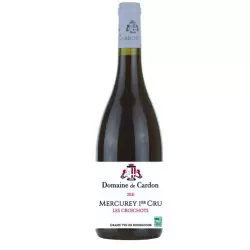
Mercurey 1er Cru « Les Croichots » - red
Pinot Noir - 50-year-old vines - marl-limestone soil, 260 metres altitude
The peak of the range. The plot occupies a wide south-facing hollow on the slopes of Mercurey. Hand harvest, destemming, three weeks of vatting with a final rise in temperature, then at least twelve months in oak barrel. Luminous garnet colour, an intense nose of tobacco evolving towards undergrowth and cocoa bean, an elegant tannic structure. Five to ten years of keeping, with roast duck, coq au vin, a fillet of beef in sauce or a cheese board.
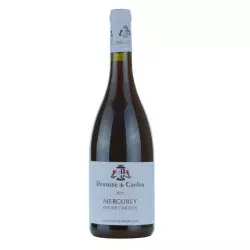
Mercurey « Roche Cardon » - red
Pinot Noir - 60-year-old vines - clay-limestone soil, south-east exposure
The estate's oldest vines, on a Mercurey plot tucked away in the shelter of a wood. Around three weeks of vatting, then ageing in tank followed by at least twelve months in oak barrel. The nose blends redcurrant and tobacco, the palate keeps its liveliness and a clean tannic frame, with fine persistence. Five to ten years of keeping: serve it between 15 and 17 °C with beef tongue in Madeira sauce, a breast of veal, a beef daube or hard cheeses.
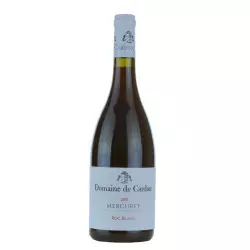
Mercurey « Roc Blanc » - white
Chardonnay - vines 20 to 60 years old - clay-limestone and marl, 250 metres altitude
The Roc Blanc plot, in Mercurey, gives the estate's most ambitious white. Hand harvest, slow pneumatic pressing, twenty-four-hour settling, full fermentation in barrel then ten months of ageing under wood, oak and acacia combined. Pale colour with ochre tints, buttery notes, toasted bread and hazelnut, a round palate marked by cinnamon, hawthorn and acacia. Three to five years of keeping, to serve between 11 and 13 °C with a dish in a creamy sauce, lobster, a fish terrine or a powerful cheese.
Chiroubles - red
Gamay - 55-year-old vines - eroded granite, 500 metres altitude
The highest cru of the Beaujolais, and the estate's highest plot. Hand harvest, destemming, around ten days of vatting and ageing entirely in oak barrel. Ruby colour, a very marked floral palette, violet, iris, lily of the valley, peony, and red fruits that express the gamay. The winegrower sees it ageing towards a cherry-stem note and drawing closer to pinot noir. Two to five years of keeping, with a board of fine charcuterie, verrines as a starter or grilled fish.
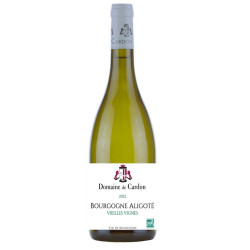
Outside this selection, the estate also produces a Bourgogne Aligote Vieilles Vignes, a Bourgogne red Cuvee Folch, a Bourgogne red Les Gardes, a Beaujolais-Villages, a gamay rose from a plot in Aluze and a Cremant de Bourgogne « Eminent » Selection Frederique, aged twenty-four months on laths.
Mercurey, Mercurey 1er cru, Bourgogne and Chiroubles - direct from the winegrower, delivery in France and Europe
Why choose Domaine de Cardon?
Two vineyards, one estate. From the granite of Chiroubles to the clay-limestone of Mercurey, the property covers both the Beaujolais crus and the Cote chalonnaise: rare for around twenty hectares.
An accessible Mercurey 1er cru. Les Croichots, hand-harvested and aged at least twelve months in oak barrel, opens the door to a Burgundy premier cru without the prices of the Cote de Nuits.
Real old vines. Sixty years for the pinot noir of Roche Cardon, fifty-five for the gamay of Chiroubles, fifty for Les Croichots: matter and depth.
A certified environmental commitment. High Environmental Value, Terra Vitis approach, Coq Vert company label and bottles lightened from 530 to 395 grams since 2022.
Direct from the winegrower. On Avenue des Vins, you order with no middleman, as close as possible to the cellar-door price, with careful delivery in France and Europe.
Frequently asked questions about Domaine de Cardon
Where is Domaine de Cardon located?
Domaine de Cardon has its winery at 2 rue de la Republique, in Rully (71150), in the Cote chalonnaise, a few kilometres from Mercurey and twenty-five kilometres south of Beaune. Its vineyard stretches much further: from Villie-Morgon, in the Beaujolais, to the slopes of Mercurey, via Aluze and Couches, for around twenty hectares, fifteen of them in production.
Who created Domaine de Cardon?
The estate was relaunched by Frederique de Cardon de Sandrans. In 2012, she decided to reconnect with her family's winegrowing tradition, whose vines in Dracy-le-Fort had been uprooted in the middle of the 20th century. Domaine de Cardon was born in April 2013, with friends who shared her values; the acquisition of a winery in Rully, at the end of 2015, paved the way for a first production in 2016. Sebastien is head of cultivation, Pierre cellar master since August 2015.
Where does the name Cardon come from?
The name comes from the de Cardon de Sandrans family, whose origins date back to the 12th century in Spain, in the form Cardona. In the 15th century, Folch Cardona married a descendant of the Strozzi family in Lucca; two of their sons settled in Lyon and received from Henri IV the barony of Sandrans, in the Dombes. The family reached Burgundy in the 19th century, in Dracy-le-Fort, where it planted its first vines.
Which appellations does Domaine de Cardon produce?
The estate claims six appellations: Mercurey 1er cru, Mercurey Village in red and white, Bourgogne, Chiroubles, Beaujolais-Villages and Cremant de Bourgogne. The selection available direct brings together the Mercurey 1er Cru Les Croichots, the Mercurey red Roche Cardon, the Mercurey white Roc Blanc, the Bourgogne Cuvee Margaux, the Bourgogne Cote Chalonnaise Les 4 Parcelles and the Chiroubles.
Which grape varieties are planted at the estate?
Four Burgundy grapes. Pinot noir and chardonnay occupy the Cote chalonnaise, gamay the crus of the Beaujolais, aligote comes from old vines in Aluze and Couches. Concretely, pinot noir gives the Mercurey and the Bourgogne reds, chardonnay the two whites Les 4 Parcelles and Roc Blanc, gamay the Chiroubles, the Beaujolais-Villages and the rose.
What is the Mercurey 1er Cru Les Croichots?
Les Croichots is a Mercurey climat classified as premier cru. The estate's plot there occupies a wide south-facing hollow, at 260 metres altitude, on a marl-limestone soil planted with fifty-year-old pinot noir. Hand-harvested, vatted for about three weeks then aged at least twelve months in oak barrel, this cuvee keeps for five to ten years.
Is Domaine de Cardon organic?
No, the estate is not certified organic. It works in sustainable (raisonnee) viticulture and holds the High Environmental Value (HVE) certification, to which are added the Terra Vitis approach and the Coq Vert company label. Treatments are limited, the plots are partly grassed and the volumes produced are deliberately contained.
What do the HVE and Terra Vitis labels mean?
High Environmental Value certification is a voluntary French approach that assesses the whole estate: biodiversity, plant-protection strategy, fertilisation and water management. Terra Vitis, born in the Beaujolais vineyard, certifies a sustainable and traceable wine production; its logo shows a vine leaf on which an insect forages. The estate has also joined the Coq Vert community, led by ADEME and the ministry.
How are the Domaine de Cardon wines aged?
Ageing is very largely in barrel. The reds go exclusively into oak: at least eight months for the Bourgogne, at least twelve months for the Mercurey, preceded by a spell in tank for Roche Cardon. The Mercurey white Roc Blanc ferments entirely in barrel then ages ten months under wood, oak and acacia combined. Only the Bourgogne Les 4 Parcelles stays in stainless steel, to preserve its fruit.
What is the keeping potential of these wines?
It varies by cuvee. Count two to three years for the Bourgogne Les 4 Parcelles, two to five years for the Chiroubles, three to five years for the Mercurey white Roc Blanc, two to ten years for the Cuvee Margaux, and five to ten years for the Mercurey Roche Cardon as for the 1er Cru Les Croichots. Keep the bottles lying down, away from light and temperature variations.
At what temperature should the estate's wines be served?
The pinot noir reds and the Chiroubles are served between 15 and 17 °C. The Mercurey white Roc Blanc is enjoyed between 11 and 13 °C, a little warmer than an ordinary white to let its barrel ageing speak. The Bourgogne Les 4 Parcelles is drunk cooler, between 8 and 10 °C, and the estate's cremant between 4 and 6 °C.
Which dishes go with the Domaine de Cardon wines?
Each cuvee has its pairings. Les 4 Parcelles goes with the aperitif, seafood, fish or a comte; the Roc Blanc with a dish in a creamy sauce, lobster or a fish terrine. In red, the Cuvee Margaux accompanies a pot-au-feu or a meat pie, Roche Cardon a beef tongue in Madeira sauce or a beef daube, Les Croichots a roast duck or a fillet of beef in sauce. The Chiroubles, lighter, is happy with a charcuterie board or grilled fish.
Which Domaine de Cardon wine to give as a gift?
For a gift, the Mercurey 1er Cru Les Croichots is the most striking choice: a Burgundy premier cru hand-harvested, aged at least twelve months in oak barrel and able to age for five to ten years. The Mercurey Roche Cardon, from sixty-year-old vines, offers a keeping alternative in red, and the Mercurey white Roc Blanc will appeal to lovers of barrel-aged chardonnays.
Can you visit the estate and taste the wines?
Yes, by appointment. Domaine de Cardon welcomes visitors all year round in Rully, on 07 86 55 06 58, for guided tours of the vines and the cellar, commented tastings and themed workshops such as an introduction to tasting or food-and-wine pairings. The estate also runs a Club des amis, at 150 euros a year, giving access to a box of three personalised bottles, preferential rates and invitations to a blind tasting or a tasting from the barrel.
Where to buy the Domaine de Cardon wines direct?
The Domaine de Cardon wines are bought direct from the winegrower on Avenue des Vins, with no middleman and as close as possible to the cellar-door price, with careful delivery in France and the eligible European countries. Buying through the short circuit means knowing the exact origin of each bottle, plot, appellation, vintage, and directly supporting a family estate of the Cote chalonnaise.
Mercurey, Mercurey 1er cru Les Croichots, Bourgogne and Chiroubles - direct winegrower sale
Domaine de Cardon - a family estate of the Cote chalonnaise, winery at 2 rue de la Republique in Rully (Saone-et-Loire), vineyard from Villie-Morgon to Mercurey. Relaunched in 2013 by Frederique de Cardon de Sandrans, certified High Environmental Value and committed to Terra Vitis.
Mercurey 1er Cru Les Croichots, Mercurey Roche Cardon, Mercurey Roc Blanc, Bourgogne Cuvee Margaux, Bourgogne Les 4 Parcelles, Chiroubles - pinot noir, chardonnay and gamay.