Delivery from €16,90 per winemaker in Europe (excluding the United Kingdom)

Domaine Prés Lasses
Domaine Prés Lasses: 25 years of organic farming on the schist of Faugères. 1910 Carignan, hand-harvested, no added sulfur...
Lire plus


- Bio
- Without So2

- Bio
- Without So2


- Bio
- Without So2


Discover Domaine Prés Lasses in photos


Domaine Près Lasses: 25 years of organic farming, the schist of Faugères… and wines that tell the story of their terroir
Domaine Près Lasses
Organic Faugères since 2008, Autignac. Schist, centenarian 1910 Carignan, 30 ha. No added sulfur. Boris Feigel.
Domaine Près Lasses is the story of a passion that became a life's project. It all began in 1999, with the purchase of 10 hectares of old vines and a cellar set up in Autignac, on rue de l'Amour, "Love Street" (yes, it's a real street name… and no, it isn't a marketing slogan).
|
||
|
||
|
||
|
A passion that became a life's project in Autignac
Since then, the vineyard has been patiently restructured, replanted and refined. Today the estate spans more than 30 hectares, a large share of it in production.
In 2006, Boris Feigel joined the family venture. Two years later he began the conversion to organic farming (2008), with one clear obsession: the soil first. Managed cover crops, active microbial life, deep rooting… The cellar opened in 2010 carries this philosophy through: low-intervention winemaking, sometimes without added sulfur, and always a search for balance rather than artificial effect.
Faugères: a schist terroir made for great reds… and characterful whites
The estate thrives in the Faugères appellation, north of Béziers, on the last foothills of the Cévennes. Here schist dominates: poor, free-draining soils that force the vine to plunge deep.
The result: wines that are more taut, more mineral, more precise, often marked by that warm-stone signature typical of schist terroirs.
The estate's treasure lies in its old vines, notably 7 hectares of Carignan, some plots planted as early as 1910. Centenarian vines, still in production, far from passing fashions.
Why organic here? For the vine… and for the planet
At Domaine Près Lasses, organic is not a marketing argument. A less-assisted vine develops its own defences, balances itself naturally and produces more expressive grapes.
From an environmental standpoint, organic farming combined with soil conservation promotes carbon storage and reduces dependence on chemical inputs. A more coherent, sustainable and living approach.
Hand-harvesting and a low-intervention cellar
Harvesting is done by hand, with rigorous sorting. In the cellar the philosophy stays the same: few inputs, very low doses of sulfur when needed (sometimes none), and bottling often without fining or filtration.
Ageing takes as long as it needs: from 18 to 36 months in raw concrete vats and barrels, with a small proportion of new oak. The goal is clear: gastronomic wines, capable of ageing, true to their terroir and faithful to the vintage.
The "Amour" cuvées: immediate pleasure, with backbone
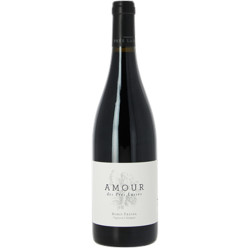
The estate's logo is inspired by the first cellar on rue de l'Amour, adorned with a small 19th-century "Amour" (cupid). The Amour des Prés Lasses range embodies that spirit: approachable, fresh and delicate wines, to open without ceremony.
Amour des Prés Lasses White
Roussanne, Rolle, Grenache Blanc · Organic farming · Faugères
Aromatic and generous.
Amour des Prés Lasses Red
Mostly Cinsault, Grenache · Organic farming · Faugères
Finesse and suppleness.
Amour des Prés Lasses Rosé
Mourvèdre, Grenache · Organic farming · Faugères
Fine, delicate and expressive.
Amourette Red
Merlot-dominant · Complex terroir · Organic farming
Generous, southern, from a complex terroir.
Amour Pétillant Naturel Rosé
Pét-nat · Rosé · Organic farming · No added sulfur
Fresh pét-nat, fine bubbles, red fruit and citrus.
Careful delivery across France and Europe · Schist wines, sulfur-free, centenarian Carignan
Chemin de Ronde & Castel Viel: the ambition of great schist wines
These cuvées aim to express the depth and complexity of the Faugères terroirs, with wines built for the table and for cellaring.
Chemin de Ronde Red
AOC Faugères · Mourvèdre, Grenache, Syrah, Carignan · Organic · Cellaring
A blend of Mourvèdre, Grenache, Syrah and Carignan. Fruit, spice, floral notes and a marked mineral frame.
Chemin de Ronde White
Faugères · Grenache Blanc, Rolle, Clairette, Roussanne · Organic
Grenache Blanc, Rolle, Clairette, Roussanne. Tension, noble bitters, a saline and mineral finish.
Castel Viel Red ⭐
AOC Faugères · Old-vine Carignan & Grenache · 3 years' ageing · Flagship cuvée
The estate's flagship cuvée, from the oldest Carignan and Grenache vines. A total of 3 years' ageing and great cellaring potential.
Castel Viel White
Faugères · Aged on lees in barrel · Gastronomy & cellaring
Richer and more powerful, aged at length on lees in barrel, designed for the table and for evolution.
The single-plot cuvées: maximum precision on the schist of Faugères
For an even finer reading of the terroir, the estate offers single-plot cuvées: wines designed to tell the story of one precise place, without blurring the message.
Nissau
AOC Faugères Red · Single-plot cuvée · Schist · Organic
A single-plot reading of the schist of Faugères in red: one place, one terroir, a wine that doesn't blur the message.
Pataque
AOC Faugères White · Single-plot cuvée · Schist · Organic
A single-plot white expression: minerality, tension and schist-Cévennes salinity in their most precise form.
Frequently asked questions about Domaine Près Lasses and Faugères wines
Which Domaine Près Lasses cuvée best expresses the schist of Faugères ?
It depends on your tasting horizon. Castel Viel Red, Carignan and Grenache over 110 years old on schist, aged 3 years, is the most accomplished and the deepest version: ideal for understanding what the schist of Faugères can give over the long term. Chemin de Ronde Red offers a more immediate reading of the terroir's minerality and spice. For white-wine lovers, Chemin de Ronde White and Castel Viel White reveal the saline, taut dimension of schist that few southern appellations can offer.
Where is Domaine Près Lasses located and what is its appellation ?
Domaine Près Lasses is located in Autignac, in the Hérault (34), within the Faugères appellation, north of Béziers, on the last foothills of the Cévennes. Boris Feigel has run the estate since 2006 across more than 30 hectares of organically farmed vines, on the schist terroirs that built the reputation of this Languedoc appellation.
What is the Faugères appellation and what makes it distinctive ?
Faugères is one of the flagship AOCs of the Languedoc, renowned for its schist terroirs, poor, free-draining, deep soils, radically different from the clay-limestone of the Mediterranean plains. This schist, from the southern edge of the Massif Central, gives the wines a minerality, freshness and tension rarely associated with southern vineyards. Faugères produces reds, whites and rosés, all from Mediterranean grapes (Syrah, Mourvèdre, Grenache, Carignan, Cinsault for the reds; Roussanne, Rolle, Grenache Blanc, Clairette for the whites).
Is Domaine Près Lasses certified organic ?
Yes. The conversion to organic farming began in 2008, on Boris Feigel's initiative. The whole vineyard has been farmed organically ever since, managed cover crops, active microbial life, deep rooting. The winemaking follows the same logic: few inputs, very low doses of sulfur (sometimes none), no fining or filtration. A coherent approach from vine to bottle.
What dishes pair well with Domaine Près Lasses wines ?
The Amour cuvées (red, rosé, white) pair with everyday meals, charcuterie, Mediterranean salads and Languedoc cheeses. Chemin de Ronde Red and Chemin de Ronde White suit simple gastronomy: Cévennes lamb, fish in sauce, lamb tagine. Castel Viel Red, with its 3 years' ageing, is ideal with red meats in sauce, game and matured cheeses. Castel Viel White, more powerful, shines with langoustines, lobster or roast squab. The Amour pét-nat works as an aperitif or with light charcuterie.
How long can the estate's wines be kept ?
The Amour cuvées are made for immediate pleasure, to drink within 3 to 5 years. The Chemin de Ronde cuvées keep for 5 to 8 years. Castel Viel Red, after 3 years' ageing at the estate, has a cellaring potential of 10 to 15 years, it is the estate's collector cuvée. Castel Viel White, aged on lees in barrel, also keeps for 8 to 12 years. The pét-nat is best drunk within 12 to 18 months. The no-added-sulfur cuvées should be drunk sooner and stored at a low temperature.
Why is centenarian Carignan so important in the Près Lasses cuvées ?
Carignan is the historic grape of Faugères. At Domaine Près Lasses, 7 hectares of old vines have been planted since 1910, more than 110 years of rooting in schist. These centenarian vines naturally yield small crops and develop an aromatic complexity that no young vine can reproduce. Silky tannins, mineral structure, lingering freshness: old Carignan on schist is one of the most authentic expressions of the Languedoc, and the backbone of Castel Viel.
Why order Domaine Près Lasses wines on Avenue des Vins ?
Avenue des Vins offers the Domaine Près Lasses cuvées direct from the grower, with careful delivery across France and Europe, suitable protective packaging and an expert selection. Boris Feigel's Faugères wines, Castel Viel, Chemin de Ronde, the Amour range, are small-production, confidential releases, especially prized by lovers of organic and terroir wines. Guaranteed access, with no middleman.
Which Domaine Près Lasses wine should you choose as a gift or for a first discovery ?
For an accessible first discovery: Amour des Prés Lasses Red or Rosé, fruity, delicate, representative of the estate's spirit. To give a great cellaring wine: Castel Viel Red, the estate's flagship cuvée, from the oldest Carignan vines. For lovers of natural wines and pét-nat: Amour Pétillant Naturel Rosé. For someone curious about southern whites: Chemin de Ronde White or Castel Viel White, both of a minerality rare in the Languedoc.
What is a pétillant naturel (pét-nat) and how does it differ from Champagne ?
A pétillant naturel (pét-nat) is a sparkling wine made by the ancestral method: fermentation is interrupted before it finishes, the bottle is sealed, and fermentation completes naturally in the bottle, creating a soft, light sparkle. Unlike Champagne (the traditional method), there is no addition of tirage liqueur, no disgorgement and no dosage liqueur. The Amour Pétillant Naturel Rosé from Domaine Près Lasses is made with no added sulfur, with a fine bubble and a very fresh red-fruit and citrus profile.
Avenue des Vins · Organic growers of the Languedoc · Protected shipping
Domaine Près Lasses · Boris Feigel · Autignac, Hérault (34) · AOC Faugères · Organic farming since 2008
30+ ha · 1910 Carignan · Cévennes schist · Faugères · Organic wines · Languedoc · Sulfur-free wines