Delivery from €16,90 per winemaker in Europe (excluding the United Kingdom)

Champagne Chretien
Champagne Chrétien in Rouvres-les-Vignes: Côte des Bar grower Champagne by Elodie Chrétien, direct from the house...
Lire plus
Discover Champagne Chretien in photos


Champagne Chrétien: the grower champagne of Élodie Chrétien in Rouvres-les-Vignes, in the Côte des Bar
Champagne Chrétien - AOC Champagne (Rouvres-les-Vignes, Aube)
Champagne Chrétien is a family estate in Rouvres-les-Vignes, in the Côte des Bar (Aube), today run by Élodie Chrétien. A grower-producer and member of Champagne de Vignerons, she signs four hand-harvested cuvees: Brut Tradition, Rose, Blanc de Noirs and Blanc de Blancs.
There are champagnes you choose for a label, and others for the person who makes them. In Rouvres-les-Vignes, at the very south of Champagne, Élodie Chrétien has taken over from her father on the family vines. Pinot Noir of the Côte des Bar, chiselled Chardonnay, bunches picked by hand: her four cuvees tell of a frank, generous grower champagne, made for the table as much as for the aperitif, to discover direct on Avenue des Vins.
Élodie Chrétien, the new generation of a family of Aube winegrowers
Among the Chrétiens, the vine is handed down. The family has grown its Rouvres-les-Vignes plots for several generations, and it is now Élodie Chrétien who holds the estate. She took over after her father, whose work she extends with the same level of exigence.
To take over an estate in Champagne is to receive two things at once: vines, of course, and a way of looking at them. Élodie Chrétien keeps what the family built, respect for the grape, manual work, champagnes without artifice, and adds her own winegrower's sensibility, with the idea of preparing the estate's future rather than simply keeping it.
The name on the label is therefore nothing like a fancy brand: it is that of the family that prunes, harvests and follows each cuvee. In opening a bottle of Champagne Chrétien, you taste the work of an Aube winegrower and of those who preceded her on these lands.
|
||
|
||
|
||
|
||
|
Rouvres-les-Vignes and the Côte des Bar: the terroir of Champagne Chrétien
Champagne is readily associated with Reims and Épernay. Champagne Chrétien comes from the other end of the appellation: the Côte des Bar, in the Aube department, more than a hundred kilometres south of the Montagne de Reims. Rouvres-les-Vignes, whose very name tells of its attachment to the vine, is near Bar-sur-Aube.
The Côte des Bar has its own character. Its soils of marl and limestone, largely inherited from the Kimmeridgian, are cousins of those of Chablis, much closer to here than Reims. Pinot Noir dominates widely and gives fruity, fleshy, frank wines. Chardonnay and Meunier complete the palette: Champagne Chrétien grows all three, which allows it to offer both a Blanc de Noirs and a Blanc de Blancs.
AOC Champagne - Côte des Bar (Aube)
Rouvres-les-Vignes · Pinot Noir, Chardonnay, Pinot Meunier · hand harvest
A single appellation, Champagne, but very different terroirs from north to south. The southern Aube brings the Chrétien cuvees the generosity of Pinot Noir and a saline tension found both in the Brut Tradition and in the Blanc de Noirs.
A reasoned viticulture and a hand harvest
In the vines, Élodie Chrétien has chosen a reasoned approach, in a logic of sustainability: she intervenes only when needed, to keep healthy vines and harvest healthy grapes. The estate also states that it produces in accordance with the HVE (High Environmental Value, the environmental certification of French farms) and VDC (Sustainable Viticulture in Champagne, the framework specific to the Champagne sector) references.
The harvest is done by hand, as the Champagne appellation requires. The gesture counts: picking whole bunches, without crushing them, limits oxidation before pressing and allows the grapes that are not up to standard to be set aside. For the Blanc de Noirs, whose white juice must be extracted from black grapes, this care is essential.
From grape to bubble: champagne method and Brut dosage
Like all champagnes, the Chrétien cuvees owe their bubbles to a second fermentation in the bottle. The still wine receives a tirage liqueur (sugar and yeasts), then the bottle rests lying down on its lees before being riddled, disgorged and corked. The appellation rules require at least fifteen months in the cellar for a non-vintage champagne.
At disgorging, the four cuvees receive an expedition liqueur that brings their dosage to 9 grams of sugar per litre. This figure places them in the Brut category (less than 12 g/L): enough roundness for the aperitif, enough freshness to move to the table.
For service, the estate advises tasting its champagnes cool, around 8 °C. A bucket filled with water and ice brings the bottle to the right temperature in about twenty minutes; a tulip glass rather than a coupe will let the aromas express themselves better.
The cuvees of Champagne Chrétien: Brut Tradition, Rose, Blanc de Noirs and Blanc de Blancs
Four champagnes, four ways of reading the same terroir: two blends of the three Champagne grapes, and two single-grape wines that isolate Pinot Noir on one side, Chardonnay on the other. All are hand-harvested and dosed as Brut.
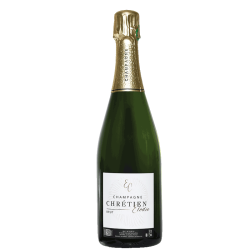
Champagne Brut Tradition
Pinot Noir, Chardonnay, Pinot Meunier - Brut, 9 g/L
The house's classic blend, the one you open without waiting for an occasion. Its robe leans slightly towards amber; on the nose, dried fruits and candied citrus give way to dried apricot and quince. The palate stays lively, saline, with an iodised touch. As an aperitif, gougeres and small ham pastries suit it well; it also follows seafood, a Sunday brunch or a fillet of beef with ease.
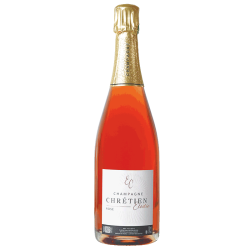
Champagne Rose
Pinot Noir, Pinot Meunier, Chardonnay - Brut, 9 g/L
A rose all in roundness, with a salmon-hued robe. The nose blends almond, poppy sweet and small red fruits. On the palate, it is supple and generous without heaviness, and keeps its freshness to the finish. It is a rose for the table as much as for celebration: white meats, barbecue grills, sole in armoricaine sauce or salmon in an almond crust.
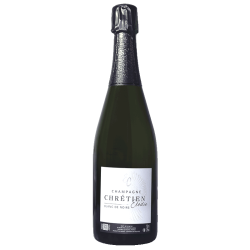
Champagne Blanc de Noirs
100% Pinot Noir - Brut, 9 g/L
Pinot Noir, the flagship grape of the Côte des Bar, vinified in white and alone in the bottle. A pale straw robe with pearly glints, a fine bubble. The nose wrong-foots those expecting red fruits: citrus, exotic fruits, then a spiced touch of vanilla and cinnamon. On the palate, the entry is lively and taut, on zest and pineapple, before an ample, structured palate. It holds the aperitif, a fish, a white meat and even a fruit dessert.
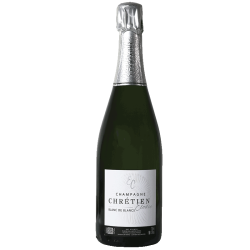
Champagne Blanc de Blancs
100% Chardonnay - Brut, 9 g/L
The most airy cuvee of the range. A bright yellow robe with golden glints, a nose of lemon and fruit paste, lifted by a light toasted note. The palate runs straight, on grapefruit and lime, carried by a clean effervescence. Light and fresh, it is the bottle for delicate meals: fine fish, scallop carpaccio.
Formats: the estate makes its Brut Tradition in half-bottle, bottle and magnum, the large format for big tables. The formats and cuvees offered on Avenue des Vins change according to the estate's availability.
Champagne de Vignerons: what this logo guarantees
Élodie Chrétien belongs to Champagne de Vignerons, the collective mark carried by the General Union of Champagne Winegrowers, which counts about 500 members. Its principle: family estates where the winegrower works his own vines, and where the wine is made at home or in a growers' cooperative structure. For you, it is a simple marker to recognise a grower champagne, different from the trading houses that buy most of their grapes.
Grower champagne of the Côte des Bar · careful delivery across France and Europe
Why choose Champagne Chrétien?
A winegrower, a name, a village. Élodie Chrétien grows the family vines of Rouvres-les-Vignes: behind each bottle there is a person you can name, not an anonymous brand.
The Côte des Bar in the glass. The south of Champagne gives fruity, characterful wines, carried by Pinot Noir.
A short, complete range. A versatile Brut Tradition, a Rose for the table, a Blanc de Noirs and a Blanc de Blancs: from aperitif to dessert, each moment finds its cuvee.
Careful work in the vines. Reasoned viticulture, hand harvest and membership of Champagne de Vignerons.
Direct from the winegrower. You order with no superfluous middleman: the estate is paid at its fair value and your bottles are delivered in France and the served European countries.
Frequently asked questions about Champagne Chrétien
Where is Champagne Chrétien located?
Champagne Chrétien is in Rouvres-les-Vignes (10200), a village of the Aube near Bar-sur-Aube, in the Côte des Bar. This sector, the most southern of the Champagne vineyard, is closer to Chablis than to Reims and renowned for its Pinot Noir.
Who makes Champagne Chrétien?
Champagne Chrétien is run by Élodie Chrétien, who took over the family estate after her father. She represents the new generation of a family that has grown vines in Rouvres-les-Vignes for several generations.
Is Champagne Chrétien a grower champagne?
Yes. Élodie Chrétien is a grower-producer: she cultivates the vines from which her champagnes come. She is also a member of Champagne de Vignerons, the collective mark of the General Union of Champagne Winegrowers: its logo guarantees a family estate where the winegrower works his own vines, the wine being made at home or in a growers' cooperative.
What are the cuvees of Champagne Chrétien?
Champagne Chrétien offers four cuvees: the Brut Tradition (a blend of the three grapes), the Rose, the Blanc de Noirs (100% Pinot Noir) and the Blanc de Blancs (100% Chardonnay). All are Brut, dosed at 9 g/L.
Which grapes are used in the Chrétien champagnes?
The Chrétien champagnes are made from the three great Champagne grapes: Pinot Noir, Chardonnay and Pinot Meunier. The Brut Tradition and the Rose blend the three; the Blanc de Noirs is a pure Pinot Noir and the Blanc de Blancs a pure Chardonnay.
What is the difference between the Blanc de Blancs and the Blanc de Noirs of Champagne Chrétien?
The Blanc de Blancs comes only from white grapes (Chardonnay), the Blanc de Noirs only from black grapes (Pinot Noir) gently pressed to obtain a white juice. At Chrétien, the first is light, lemony and airy; the second more ample, on citrus, exotic fruits and a spiced touch.
What is the dosage of the Chrétien champagnes?
The four cuvees of Champagne Chrétien are dosed at 9 grams of sugar per litre, which places them in the Brut category (less than 12 g/L). It is a versatile balance: neither so dry as to seem austere, nor sweet enough to be reserved for dessert.
Is Champagne Chrétien organic?
No, Champagne Chrétien is not presented as certified organic. The estate practises a reasoned and sustainable viticulture and states that it produces in accordance with the HVE (High Environmental Value) and VDC (Sustainable Viticulture in Champagne) frameworks, two approaches that govern the use of inputs and the protection of the environment.
Which Chrétien champagne to serve as an aperitif?
For the aperitif, the Brut Tradition is the most natural choice: lively and saline, it calls for gougeres or small ham pastries. The Blanc de Noirs, more ample, also suits very well if you like characterful champagnes.
Which Chrétien champagne to choose with fish or seafood?
With a fine fish or a scallop carpaccio, choose the Blanc de Blancs, all in lightness. On seafood, the Brut Tradition and its iodised touch work very well; the Rose, for its part, accompanies a sole in armoricaine sauce or a salmon with almonds.
Which Chrétien champagne to serve with meat?
The Champagne Rose is the most at ease with white meats and barbecue grills. The Brut Tradition can accompany a fillet of beef, and the Blanc de Noirs a poultry or another white meat.
Which Chrétien champagne to give as a gift?
To give as a gift, the Blanc de Blancs appeals to lovers of finesse and the Blanc de Noirs to those who like the Pinot Noir of the Côte des Bar. The Rose always makes an impression as a gift, and a magnum of Brut Tradition, when available, delights a large table. Buying direct from the winegrower also means paying for the estate's work rather than the brand.
How to keep and serve a Chrétien champagne?
Serve Champagne Chrétien cool, around 8 °C, as the estate recommends. Keep the bottles lying down, away from light and at a stable temperature; a non-vintage brut is generally enjoyed within the two to three years following its purchase.
Can Champagne Chrétien be visited in Rouvres-les-Vignes?
Yes, Champagne Chrétien welcomes visitors for a tasting, by appointment: the estate simply asks to be notified in advance. If you cannot make the trip to the Côte des Bar, the cuvees can be ordered remotely.
Where to buy Champagne Chrétien direct?
The cuvees of Champagne Chrétien are available direct on Avenue des Vins, the marketplace of independent French winegrowers. Your bottles are shipped from the estate, with care, in France and the served European countries.
Direct from Élodie Chrétien, winegrower in Rouvres-les-Vignes, in the Côte des Bar
Champagne Chrétien - Élodie Chrétien, grower-producer in Rouvres-les-Vignes (Aube), Côte des Bar. AOC Champagne, member of Champagne de Vignerons.
Pinot Noir, Chardonnay, Pinot Meunier — Brut Tradition, Rose, Blanc de Noirs, Blanc de Blancs