Delivery from €16,90 per winemaker in Europe (excluding the United Kingdom)

Domaine Ostertag-Hurlimann
Domaine Ostertag-Hurlimann: organic Alsace riesling & pinot gris direct from the estate in Epfig...
Lire plus


Discover Domaine Ostertag-Hurlimann in photos


Domaine Ostertag-Hurlimann, five generations of winegrowers, Alsace carved into the soil
Domaine Ostertag-Hurlimann
A family estate in Epfig (Alsace), five generations of independent winegrowers since 1890, run by Sylvie and Yannick. About 20 hectares over five communes, granite, quartz and schist. Certified HVE and organic from the 2023 vintage.
At the heart of Alsace, in Epfig, Domaine Ostertag-Hurlimann embodies a family history deeply rooted in the vine since 1890. Independent winegrowers for five generations, Sylvie and Yannick Ostertag-Hurlimann today continue this adventure with a clear vision: to reveal the Alsace terroirs with precision, sincerity and respect for the living. The estate spans about 20 hectares over five emblematic communes (Epfig, Blienschwiller, Reichsfeld, Bernardville and Dambach-la-Ville), on more than 80 plots with granite, quartz and schist soils, giving expressive, upright and distinctive wines.
A family history passed down since 1890
It all begins at the end of the 19th century, when Georges Ostertag acquired his first plots on the slopes of Epfig. His son Francois Auguste, then Justin and Jeannine Ostertag, gradually developed the estate, moving from polyculture to an assertive winegrowing orientation. In 1976, direct sales marked a turning point: the estate got closer to its clients and asserted its identity as an independent winegrower. In 1995, Rene Hurlimann joined the estate, which became Domaine Ostertag-Hurlimann, with the first Cremant d'Alsace. From the 2000s, Yannick then Sylvie (oenologist) took over: they modernised the tools, refined the winemaking, invested in new terroirs and committed the estate to a sustainable viticulture.
A respectful and committed viticulture
Domaine Ostertag-Hurlimann is certified High Environmental Value (HVE) since 2018 and engaged in conversion to organic agriculture since 2020; the wines are officially certified organic from the 2023 vintage. Controlled grass cover to limit erosion, mechanical soil work, planting density adapted to each plot, precise pruning: each decision aims to strengthen the vitality of the vine and a deep rooting. Here, we seek just grapes, never excessive yields.
|
||
|
||
|
||
|
Alsace terroirs revealed in every cuvee
Three signature terroirs structure the range. The Grand Cru Winzenberg, in Blienschwiller, on quartz-rich granite, gives wines of great finesse, of crystalline minerality, deep and cellar-worthy. The Schieferberg, on the heights of Reichsfeld, imposes deep rooting on the old schists: breeding, tension and mineral energy, with the Pinot Gris Empreinte de Schiste cuvee. The Fronholz, in Epfig, blends quartz, silica and clays for more finesse and aromatic precision, with the Gewurztraminer Empreinte de Quartz cuvee. Around them, a complete range of Alsace grapes and Cremant.
Winemaking with precision, without masking the terroir
In the cellar, the philosophy stays faithful to that of the vines. The fermentations are carried out with indigenous yeasts, the ageing conducted on lees to bring texture and depth, and the interventions limited to the strict minimum. The winemaking rests on slow fermentations, sometimes in old foudres, at low temperature to preserve the aromatic expression. Time plays a key role: each wine is monitored daily to find the right balance between substance, freshness and structure. The result: precise, structured Alsace wines, never demonstrative, with a real cellaring capacity and a very legible reading of the vintage and the soil.
The Grand Cru Winzenberg
Blienschwiller - quartz-rich granite
On the commune of Blienschwiller, this south and south-east facing slope rests on a quartz-rich granite soil. It gives wines of great finesse, carried by a crystalline minerality and a natural elegance, with depth, uprightness and cellaring potential. The estate's signature grand cru.
Empreinte de Schiste (Schieferberg)
Reichsfeld - the schist lands
On the heights of Reichsfeld, the old schists impose deep rooting on the vine. The Pinot Gris Empreinte de Schiste and the Schieferberg wines stand out for their breeding, their tension and their ability to evolve slowly, developing complex aromas and a fine mineral energy.
Empreinte de Quartz (Fronholz)
Epfig - the quartz lands
In Epfig, the Fronholz terroir blends quartz, silica and clays for a singular expression. The Gewurztraminer Empreinte de Quartz and the wines of this terroir gain in finesse, freshness and aromatic precision, with a very clear reading of the rock and the climate.
The great grapes & the Cremant d'Alsace
Riesling, Gewurztraminer, Pinot Gris...
A complete range of Alsace wines: Riesling (including the Cuvee Particuliere), Gewurztraminer, Pinot Gris, Pinot Blanc, Sylvaner, Muscat and Pinot Noir, as well as precise, elegant Cremant d'Alsace. Tradition, Terroir and Exception ranges, up to the late harvests.
An organic and committed viticulture
HVE (2018), organic from the 2023 vintage
The estate is certified High Environmental Value since 2018 and engaged in organic conversion since 2020: the wines are officially certified organic from the 2023 vintage. Controlled grass cover, mechanical soil work, precise pruning: the vine is accompanied, never rushed.
Five generations since 1890
Sylvie and Yannick Ostertag-Hurlimann
Since 1890 in Epfig, five generations of independent winegrowers. From Georges Ostertag to Sylvie (oenologist) and Yannick today, the family reveals the Alsace terroirs with precision. Winemaking with indigenous yeasts, ageing on lees, slow fermentations sometimes in old foudres.
The organic Alsace wines (Grand Cru Winzenberg, Empreintes, Cremant), direct
Why choose Domaine Ostertag-Hurlimann?
Alsace carved into the soil. Granite, quartz and schist over 80 plots, five communes around Epfig.
An organic viticulture. Certified HVE (2018), organic from the 2023 vintage, respect for the living.
Signature terroirs. Grand Cru Winzenberg, Empreinte de Schiste, Empreinte de Quartz.
Five generations. Since 1890, Sylvie (oenologist) and Yannick, precision and sincerity.
Frequently asked questions about Domaine Ostertag-Hurlimann
Which Domaine Ostertag-Hurlimann wine to choose?
For a mineral grand cru, the Riesling Grand Cru Winzenberg; for a schist terroir, the Pinot Gris Empreinte de Schiste; for a quartz terroir, the Gewurztraminer Empreinte de Quartz; for a gastronomic Riesling, the Cuvee Particuliere; and a Cremant d'Alsace for celebration.
Where is Domaine Ostertag-Hurlimann located?
In Epfig (67680), in Alsace (Bas-Rhin). The estate, of about 20 hectares, is spread over five emblematic communes: Epfig, Blienschwiller, Reichsfeld, Bernardville and Dambach-la-Ville, over more than 80 plots with granite, quartz and schist soils.
Is Domaine Ostertag-Hurlimann organic?
Yes: the estate is certified High Environmental Value (HVE) since 2018 and engaged in conversion to organic agriculture since 2020. The wines are officially certified organic from the 2023 vintage.
Since when has Domaine Ostertag-Hurlimann existed?
Since 1890, when Georges Ostertag acquired his first plots on the slopes of Epfig. Five generations have followed; in 1995, Rene Hurlimann joined the estate, which became Domaine Ostertag-Hurlimann. Sylvie and Yannick run it today.
Which grapes does Domaine Ostertag-Hurlimann grow?
The great Alsace grapes: Riesling, Gewurztraminer, Pinot Gris, Pinot Blanc, Sylvaner, Muscat and Pinot Noir. They express themselves on an exceptional diversity of soils (granites, quartz, schists) and also give Cremant d'Alsace.
What are the great terroirs of Domaine Ostertag-Hurlimann?
Three signature terroirs: the Grand Cru Winzenberg (Blienschwiller, quartz-rich granite), the Schieferberg (Reichsfeld, old schists, Empreinte de Schiste cuvee) and the Fronholz (Epfig, quartz and silica, Empreinte de Quartz cuvee).
What is the Grand Cru Winzenberg?
The Winzenberg is an Alsace grand cru, in Blienschwiller: a south and south-east facing slope on quartz-rich granite. It gives wines of great finesse, of crystalline minerality, deep, upright and cellar-worthy. One of the peaks of the estate's range.
What do the Empreinte de Schiste and Empreinte de Quartz cuvees mean?
They are single-plot cuvees that bear the name of their rock: Empreinte de Schiste (Pinot Gris from the Schieferberg, in Reichsfeld) expresses the tension and breeding of the schists; Empreinte de Quartz (Gewurztraminer from the Fronholz, in Epfig) the finesse and precision of the quartz soils.
How are Domaine Ostertag-Hurlimann wines made?
With precision, without masking the terroir: fermentations with indigenous yeasts, ageing on lees for texture and depth, slow fermentations at low temperature, sometimes in old foudres. Each wine is monitored daily for the balance between substance, freshness and structure.
Can Domaine Ostertag-Hurlimann wines be cellared?
Yes: these are precise, structured Alsace wines, never demonstrative, with a real cellaring capacity. The grands crus (Winzenberg) and the terroir cuvees (schists, quartz) evolve slowly and gain in complexity over time.
What to pair with Domaine Ostertag-Hurlimann wines?
The Riesling with fish and seafood; the Gewurztraminer with spicy dishes, Asian cuisine and cheeses; the Pinot Gris with poultry and white meats; the Cremant as an aperitif; the late harvests with foie gras and desserts.
Can you buy Domaine Ostertag-Hurlimann wines directly?
Yes: the estate's organic Alsace wines (Grand Cru Winzenberg, Empreinte de Schiste, Empreinte de Quartz, Riesling, Gewurztraminer, Cremant...) are available here, direct from the property in Epfig, shipped with care, across France and Europe.
Direct from the estate, the organic Alsace wines
Domaine Ostertag-Hurlimann: a family wine estate in Epfig (Bas-Rhin, Alsace), five generations of independent winegrowers since 1890, run by Sylvie (oenologist) and Yannick Ostertag-Hurlimann. About 20 hectares spread over five communes (Epfig, Blienschwiller, Reichsfeld, Bernardville, Dambach-la-Ville) and more than 80 plots, on granite, quartz and schist soils. Certified HVE since 2018, in organic conversion since 2020, certified organic from the 2023 vintage. Winemaking with indigenous yeasts, ageing on lees, slow fermentations sometimes in old foudres.
Grapes: Riesling, Gewurztraminer, Pinot Gris, Pinot Blanc, Sylvaner, Muscat, Pinot Noir. Terroirs: Grand Cru Winzenberg, Schieferberg (Empreinte de Schiste), Fronholz (Empreinte de Quartz). Cremant d'Alsace, late harvests, eaux-de-vie
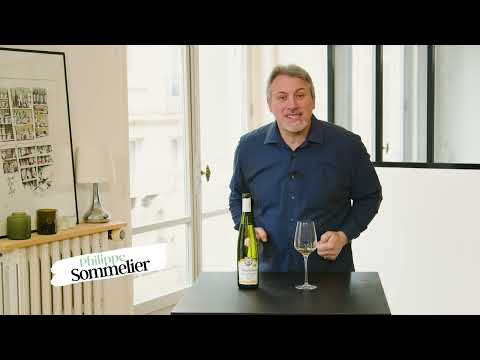
Discover our wines in video