Delivery from €16,90 per winemaker in Europe (excluding the United Kingdom)

Champagne Bernard Lonclas
Champagne Bernard Lonclas, a Vitryat family house: Chardonnay-led blanc de blancs, brut and rosé. Direct from the producer...
Lire plus


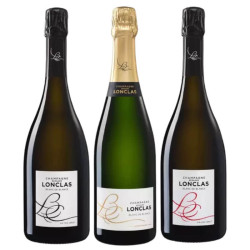
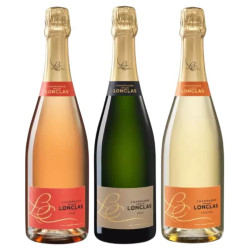
Discover Champagne Bernard Lonclas in photos


Champagne Lonclas: exceptional Blanc de Blancs in Bassuet, the Champagne soul since 1976
Champagne Bernard Lonclas - A family house of the Coteaux Vitryats in Bassuet, a Blanc de Blancs specialist since 1976
Maison Bernard Lonclas is a family Champagne house in Bassuet, in the Coteaux Vitryats, renowned for its 100% Chardonnay Blanc de Blancs since 1976.
Since 1976, in Bassuet, Maison Lonclas has grown Chardonnay on the chalky soils of the Coteaux Vitryats. Chablis pruning, hand harvest, riddling on pupitres: an artisanal know-how, passed down as a family, at the service of Blanc de Blancs of great finesse.
Some stories begin before we can even remember them. Bernard Lonclas's begins with a pop, then the fizz of bubbles against crystal, and laughter: his birth, celebrated with champagne, in a family home. The green of the vine stocks, the bluish purple of the black grapes, the silvery sheen of the Chardonnays, his first colours, his first certainties.
"More than a job, it is a vocation, even a calling."
Since 1976, Bernard Lonclas has grown, vinified and passed on this passion in Bassuet, a typical village of the Coteaux Vitryats, in this corner of Champagne where chalky soils bring Chardonnay to its finest expression. Today, his daughters Aurélie and Mathilde follow in his footsteps, carrying on with commitment and precision the spirit of a house that has never sought to resemble any other.
|
||
|
||
|
||
|
||
|
An ideal terroir for Chardonnay
Bassuet is not a village like any other in Champagne. Its slopes offer a soil particularly suited to Chardonnay, the house's king grape, which makes up 85% of the vineyard. Pinot Meunier (10%) and Pinot Noir (5%) complete the blend discreetly, bringing structure and roundness without ever taking over.
It is this predominance of Chardonnay that explains the house's reputation: Blanc de Blancs of remarkable finesse and aromatic richness, among the most distinctive signatures of family Champagne.
The vine, worked with a craftsman's precision
At Lonclas, quality begins well before the cellar: it is built gesture after gesture throughout the year. Chablis pruning, done in winter and never in frost, regulates the vigour of each vine by carefully selecting the buds that will carry the crop, a noble, demanding pruning that directly shapes the quality of the coming vintage.
Tying (February to April) orients the framework for optimal penetration of sun and air; lifting (May to June) guides the growth towards the light; trellising (June) refines the bunches' sun exposure; finally topping and trimming (July to August) controls summer growth over four passes, the last sometimes by hand to perfect airflow before the harvest.
The harvest: 60 pickers, ten intense days
In Champagne, the harvest must be done by hand. Maison Lonclas calls on more than 60 seasonal pickers for 9 to 10 days, generally in the second half of September, about 90 days after flowering. Each bunch goes straight to the press in small crates of 50 kilos maximum, preserving the integrity of the juice even before pressing.
From pressing to blending: the art of losing nothing
All the vines lie within 10 kilometres of the press, a deliberate proximity to limit juice loss and preserve the grapes' aromatic freshness. Pressing is carried out on C.I.V.C.-approved presses: from each 4,000-kilo load, 2,550 litres of must are extracted, the first 2,050 litres form the cuvée, the remaining 500 the taille.
A few months after the harvest comes the blending, a solemn moment that Bernard Lonclas experiences as a ceremony: several successive tastings, discussions, shared sensations. It is from this collective work that the subtlety defining the Lonclas style is born, consistent in quality, unique in expression.
From the cellar to your table: patience and precision
After bottling, the bottles rest in the cellar on laths, in darkness and coolness. Manual riddling on traditional pupitres lasts at least four weeks: each bottle is turned and tilted daily to slide the deposit towards the neck, a gesture repeated thousands of times, with a watchmaker's rigour.
Disgorging then removes this deposit by freezing the neck; the bottle is dosed with the expedition liqueur to obtain Brut, Extra Brut or Demi-Sec. Then come labelling and corking: the bottle is ready, waiting for just one thing, your table.
The Lonclas range: a single standard
From the Brut La Cuvée to the three 100% Chardonnay Blanc de Blancs, every cuvée carries the same signature: finesse, minerality and freshness.
Brut La Cuvée
Balance, freshness and conviviality: the house's everyday champagne.
Rosé
Elegant red fruit, a delicate blend.
Cuvée Prestige
The house know-how in its fullest expression.
Millésimé (Vintage)
The memory of a great year, aged at least 8 years on lees.
Blanc de Blancs Brut
100% Chardonnay: the Lonclas signature.
Blanc de Blancs Extra Brut
Mineral tension and absolute purity.
Blanc de Blancs Grand Brut
Generosity and aromatic depth.
Careful shipping across France and Europe
Why choose Champagne Bernard Lonclas
A Blanc de Blancs specialist. 85% Chardonnay on the chalky soils of Bassuet, for cuvées of great finesse.
An artisanal know-how. Chablis pruning, hand harvest, riddling on pupitres and in-house disgorgement.
A family house since 1976. Bernard Lonclas and his daughters Aurélie and Mathilde, a passed-on, consistent style.
Seven cuvées, one standard. Brut, Rosé, Prestige, Millésimé and three Blanc de Blancs, from everyday to grand occasions.
Direct from the grower. From the Coteaux Vitryats to your table, your champagnes travel the shortest route, carefully shipped across France and Europe.
Your questions about Champagne Lonclas
Where is Maison Lonclas located?
In Bassuet, in the Coteaux Vitryats (Marne), in the heart of family Champagne, on chalky soils that bring out the best of Chardonnay.
How long has Maison Lonclas existed?
Since 1976, Bernard Lonclas has grown and vinified in Bassuet. Today his daughters Aurélie and Mathilde follow in his footsteps, carrying on the house's spirit with commitment and precision.
What is the estate's signature grape?
Chardonnay, making up 85% of the vineyard, gives the Lonclas cuvées their characteristic finesse, minerality and freshness.
What is the grape breakdown of the Lonclas vineyard?
The vineyard is planted with 85% Chardonnay, the house's king grape, complemented by 10% Pinot Meunier and 5% Pinot Noir, which discreetly bring structure and roundness.
Is the harvest done by hand?
Yes, as the Champagne appellation requires. More than 60 seasonal pickers work 9 to 10 days using small 50-kilo crates to preserve the integrity of the grapes.
How are the vines worked at Lonclas?
Quality is built gesture after gesture: Chablis pruning in winter (never in frost), tying, lifting, trellising, then topping and trimming in summer, over several passes, for optimal exposure and airflow around the bunches.
How does the pressing work?
All the vines lie within 10 kilometres of the press. On C.I.V.C.-approved presses, each 4,000-kilo load yields 2,550 litres of must: the first 2,050 litres form the cuvée, the remaining 500 the taille.
How long do Lonclas champagnes age?
At least 36 months on lees for the non-vintage champagnes, and up to 8 years for the vintages, before manual riddling on pupitres and disgorgement.
What makes the Lonclas Blanc de Blancs so special?
Its expression comes directly from the chalky terroir of Bassuet and a carefully mastered blend, made as a family, ensuring a consistent and instantly recognisable style.
What are the cuvées in the Lonclas range?
The range brings together the Brut La Cuvée, the Rosé, the Cuvée Prestige, the Millésimé, and three 100% Chardonnay Blanc de Blancs: Brut, Extra Brut and Grand Brut.
Which Lonclas champagne to choose for a food pairing?
The Blanc de Blancs Extra Brut for seafood and fine fish, the Cuvée Prestige for foie gras, and the Millésimé for special occasions.
Where can you buy Lonclas champagnes directly?
You can find the available Maison Lonclas cuvées here, direct from the grower in Bassuet, carefully shipped across France and Europe. The selection changes with the disgorgements and deliveries.
Direct from the estate, in Bassuet in the Coteaux Vitryats
Champagne Bernard Lonclas - A family house of the Coteaux Vitryats in Bassuet, a specialist in 100% Chardonnay Blanc de Blancs since 1976.
Brut La Cuvée, Rosé, Cuvée Prestige, Millésimé and Blanc de Blancs Brut, Extra Brut and Grand Brut
Discover our wines in video