Delivery from €16,90 per winemaker in Europe (excluding the United Kingdom)


AOC Alsace Wine
Let's meet along the Rhine, where the Alsace region's winemakers treat us to their finest wines. In this area, we can find, among others, the AOC Alsace (Controlled designation of origin). The Alsace region is well-known for its particularity to put forward a unique variety. That's the reason why its bottles give pride of place to the famous Gewurztraminer (especially known for its late harvests), Pinot gris, Pinot blanc, Pinot noir, Riesling, Sylvaner and Muscat as well as the less known Chasselas, Auxerrois and Savagnin Rose. The fruity flavours of these noble varieties, combined with a mineral terroir, offer wines that are renowned for their finesse, their lightness and their fruit. The AOC Alsace wines stand for 70% of the area's production and are 90% white wines.
Filtrer









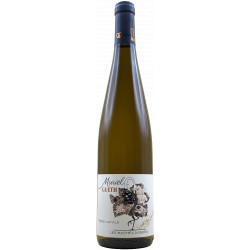


Communes and Lieux-Dits on an AOC Alsace Label
In Alsace, it is common practice to put a more precise place name on the label than the appellation itself. Since 2011, AOC Alsace has regulated that practice: a wine may add the name of a village or a small group of villages, or that of a lieu-dit, a named vineyard site, if it meets stricter production rules.
AOC Alsace's 13 Geographic Names and Their Grapes
AOC Alsace recognizes 13 geographic names, each tied to specific grapes. Bergheim is reserved for Gewurztraminer, Blienschwiller and Côtes de Barr for Sylvaner, Scherwiller and Wolxheim for Riesling. Coteaux du Haut-Koenigsbourg allows Gewurztraminer and Riesling, Vallée Noble adds Pinot Gris, and Côte de Rouffach also makes Pinot Noir reds.
Val Saint Grégoire brings together Auxerrois, Pinot Blanc and Pinot Gris, Klevener de Heiligenstein comes only from Savagnin Rose, and Ottrott, Rodern and Saint-Hippolyte make Pinot Noir reds only. The grapes must be riper: 193 grams of sugar per liter of must for Gewurztraminer or Pinot Gris, versus 185 grams for AOC Alsace without a geographic name.
A lieu-dit name can also follow the appellation on a white or a red, never on a rosé or an Edelzwicker blend. White yields then drop to 68 hl/ha, versus 80 for AOC Alsace alone. None of these names makes a wine a grand cru: since 2011, the 51 Alsace grands crus have each been a separate appellation.
History of the AOC Alsace Appellation
The AOC Alsace extends across the entire Alsatian vineyard and boasts a mosaic of soils, climates, grape varieties, and wine styles. Alsace wines have been distinguished by their excellence since the Middle Ages. After several challenging historical periods, Alsace gained AOC Alsace recognition in 1962 and became one of the pioneering regions of wine tourism.
Climate and Terroir of the AOC Alsace Appellation
- Climate: The Alsace vineyard enjoys a semi-continental climate that is relatively warm, dry, and sunny thanks to the Vosges mountains. This geographical situation allows it to be one of the vineyards with the lowest rainfall in France!
- Soils: The AOC Alsace appellation spans a wide variety of soils, ranging from limestone to granite, with schist, gneiss, or sandstone in between.
Key Grape Varieties of the AOC Alsace Appellation
AOC Alsace offers a great diversity of grape varieties, the main ones being:
- Pinot Noir (red wine and rosé)
- Sylvaner (white wine)
- Pinot Blanc (white wine)
- Gewurztraminer (white wine)
- Riesling (white wine)
- Muscat (white wine)
- Pinot Gris (white wine)
- Chasselas (white wine)
- Auxerrois (white wine)
Style of AOC Alsace Wines
- White: A wide variety of styles depending on the grape varieties used. Some, like Gewurztraminer or Muscat, have a very fruity and exuberant profile, while others, like Riesling, have a livelier, more mineral structure. AOC Alsace offers dry, off-dry, sweet wines (from late harvest or noble selection of grapes).
- Rosé: Rosé wines from AOC Alsace have a deep pink color with salmon highlights. The aromatic palette is characterized by fresh red fruit aromas (strawberry, raspberry, cherry) and floral notes, creating a soft and fresh palate.
- Red: The wines have a clear garnet red color. The nose reveals complex notes of red and black fruits (cherry, raspberry), vanilla, and undergrowth as they age. On the palate, these red wines are refined and structured, with a lovely aromatic persistence.
The Best Food Pairings with AOC Alsace Wine
Here are some dish ideas to pair with a beautiful bottle from a domain or château in AOC Alsace, whether white, red, or rosé:
- Dry White: curry chicken, sauerkraut
- Sweet White: foie gras, Roquefort
- Rosé: flammekueche
- Red: baeckeoffe, roast pork
AOC Alsace: Your Questions
What is Schillerwein in Alsace?
In AOC Alsace, Schillerwein is a fresh, fruity, light Pinot Noir wine, usually pale pink to translucent red in color. The appellation accepts it, like “Clairet,” as a name for Pinot Noir rosé.
Which new grape varieties is AOC Alsace trying out?
AOC Alsace is trying out “varieties of interest for adaptation” under agreements with INAO and the appellation's governing body. For whites: Voltis, Opalor, Selenor, Souvignier Gris, Johanniter, Chenin and Vermentino; for reds and rosés: Coliris, Nebbiolo and Syrah. They are capped at 5% of a farm's vines and 10% of a blend, and never named on the label.
What does “spretsig” mean for an AOC Alsace wine?
“Spretsig” is the Alsatian word for the slight prickle of carbon dioxide you can sense in some AOC Alsace wines. It often underlines the length on the palate and brings out the wine's minerality and saltiness.
Where can you buy AOC Alsace wines direct from the winemaker?
You can buy AOC Alsace wines direct from the winemaker on Avenue des Vins. Your order ships straight from the producer, with no middleman.
See also: White wines from Alsace - AOC Alsace Riesling - AOC Alsace Pinot Noir