Delivery from €16,90 per winemaker in Europe (excluding the United Kingdom)

Domaine et Maison Joliet
Domaine Joliet: Fixin 1er Cru Clos de la Perrière monopole, direct from the estate, Joliet family since 1853...
Lire plus


Discover Domaine et Maison Joliet in photos


Domaine et Maison Joliet, Fixin Premier Cru Clos de la Perrière (Burgundy)
Domaine et Maison Joliet
A Fixin Premier Cru monopole in Fixin, Côte de Nuits: the Clos de la Perrière, 5 walled hectares, founded in 1142 by the monks of Cîteaux, in the Joliet family since 1853. Pinot Noir and Chardonnay, organic (uncertified) viticulture. Maison Joliet broadens the selection across Burgundy.
In the vaulted cellars of the Manoir de la Perrière, in Fixin in the Côte de Nuits, time has stood still since 1142. The Cistercian monks of Cîteaux had recognised this slope as one of the finest terroirs of Burgundy. Benigne Joliet, sixth generation of a family that has owned it since 1853, perpetuates this heritage with a precision that makes the Clos de la Perrière one of the most singular monopoles of the Côte de Nuits. Nine centuries of Cistercian viticulture, one family, a single clos, and today a merchant house born of the same rigour.
History and origin of the estate
The Clos de la Perrière takes its name from the stone quarry that occupied this slope before the vines (perrière, in old French). In 1142, the Cistercian monks of the abbey of Cîteaux founded their estate on this Fixin slope, built the vaulted cellars and the manor with the materials extracted from the site, and planted the first vines on this exceptional terroir. This cellar carved into the rock in the 12th century is still the one where Benigne Joliet vinifies today. In 1853, the Joliet family acquired the Clos and made it a 5-hectare monopole surrounded by its original walls, never split up in six generations. In 1850, this terroir was classified Tête de Cuvée, on a par with the current Grands Crus of Gevrey-Chambertin. In 2022, Camille Joliet, his daughter, returned from Canada and relaunched Maison Joliet, a merchant structure created in 2013.
A monopole preserved intact since 1853, an absolute rarity in Burgundy
In Burgundy, vineyards fragment with each generation through inheritance. The Clos de la Perrière, five hectares under a single Cistercian wall, has never been split up: six generations of the Joliet family have resisted this dispersion. In 1850, the Clos was classified Tête de Cuvée at the level of the current Grands Crus; Benigne Joliet is now working towards a reclassification as Grand Cru. What you buy is this wholeness, and the responsibility it represents.
|
||
|
||
|
||
|
The terroir of the Clos de la Perrière
The Clos de la Perrière occupies the top of the Fixin slope, right at the forest's edge, facing the Dijon plain. This high position gives it a particular microclimate: cooler nights, more wind, slower ripening. This is precisely what structures the wines: a freshness and a chalky minerality that the premiers crus further south do not have. Benigne Joliet distinguishes four distinct terroirs within the Clos (a very stony, chalky zone, a clay zone, a mixed clay-limestone zone, and the cooler upper part, close to the forest). Each is vinified separately, in stainless steel, on indigenous yeasts, before being blended shortly before bottling: a mosaic of soils that gives the wines a complexity without equal in the Fixin Premier Cru appellation.
The work in the vineyard and the winemaking
Benigne Joliet farms his vines organically, without seeking certification, out of a rejection of formalism rather than a lack of conviction: flowers and grasses grow freely between the rows, the shoots are left on the ground to enrich the humus, no chemical product touches these five hectares. The vines are on average 50 years old, the oldest 80 to 100 years. In the cellar, the philosophy is one of non-intervention: spontaneous fermentation on indigenous yeasts, a variable proportion of whole clusters (up to 100% in the great years), ageing of 24 months in oak barrels (about 20% new oak), without racking. This same rigour guides Maison Joliet: out of sixty samples tasted, Camille and Benigne kept only five, a filter of less than 10% that defines the spirit of the Maison.
The cuvees of Domaine and Maison Joliet
From the flagship Fixin 1er Cru Clos de la Perrière Red (and its Cuvée Camille) to the very rare Fixin 1er Cru White, from the Charmes-Chambertin Grand Cru to the Maison Joliet selections (Santenay, Monthélie, Fixin Village Filiae, Bourgogne Chardonnay and Pinot Noir), all the precision of Burgundy, direct from Fixin.
Fixin 1er Cru Clos de la Perrière Red
AOC Fixin 1er Cru - Pinot Noir, the flagship wine
The estate's flagship wine, born of the Clos's four micro-terroirs (old vines 40-100 years). Vinified with whole clusters depending on the vintage, on indigenous yeasts, 24 months of ageing without racking. A tannic density rare for Fixin, mineral length, silky finish. Rated 96/100 by Decanter on the 2019. Also exists as Cuvée Camille.
Fixin 1er Cru Clos de la Perrière White
AOC Fixin 1er Cru - Chardonnay, an absolute rarity
One of the rare white Premiers Crus of Fixin (0.5 hectare, fewer than 2,000 bottles a year). Chardonnay here expresses a taut chalky minerality and a hilltop freshness. With noble fish, Bresse poultry or mature Burgundy cheeses.
Charmes-Chambertin Grand Cru
AOC Charmes-Chambertin Grand Cru - the summit of the Maison
The summit of the Maison Joliet range, chosen among the five wines selected from sixty samples. A deep nose of black fruits, sweet spices, undergrowth; an ample, silky palate, with the density and length of the Côte de Nuits grands crus. Ultra-limited edition.
Santenay & Monthélie Village
Côte de Beaune - the Maison Joliet selections
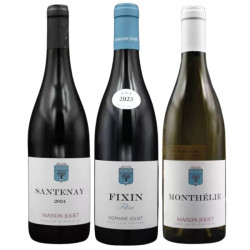
Monthélie Village White (floral, clean Chardonnay) and Santenay Village Red (generous Pinot Noir, crunchy fruit, supple tannins): two Côte de Beaune villages chosen according to the same demanding criteria, in environmentally respectful viticulture.
Bourgogne & Fixin Village Filiae
AOC Bourgogne & Fixin - the Joliet gateway
The gateway into the Joliet world: Bourgogne Chardonnay and Bourgogne Pinot Noir, selected for their freshness and tension; and the Fixin Village Filiae (red), the accessible expression of the Fixin terroir. Ideal to discover the precision of the style.
A monopole intact since 1853
Fixin, Côte de Nuits - 5 walled hectares
The Clos de la Perrière, 5 hectares under a single Cistercian wall (4.5 ha of Pinot Noir, 0.5 ha of Chardonnay), has never been split up. Founded in 1142 by the monks of Cîteaux, owned by the Joliet family since 1853, run by Benigne (6th generation) since 2004, joined by his daughter Camille in 2022.
From the Bourgogne Village to the Charmes-Chambertin Grand Cru, direct from Fixin
Why choose Domaine and Maison Joliet?
The only monopole of Fixin, intact since 1853. Five walled hectares, never split up in six generations.
A Cistercian cellar from 1142. The same vaulted cellar of the Cîteaux monks, still in use.
A Premier Cru that aims for Grand Cru. Classified Tête de Cuvée in 1850, rated 96/100 by Decanter.
An ultra-demanding merchant selection. Five wines kept out of sixty, a selection rate below 10%.
Frequently asked questions about Domaine and Maison Joliet
Which Domaine et Maison Joliet wine to choose?
For the flagship wine, the Fixin 1er Cru Clos de la Perrière Red (or the Cuvée Camille); for a rarity, the Fixin 1er Cru White; for the summit, the Charmes-Chambertin Grand Cru; to discover, the Bourgogne Chardonnay or Pinot Noir, the Fixin Village Filiae, the Santenay or the Monthélie.
What is the Clos de la Perrière and why is it so special?
The Clos de la Perrière is a 5-hectare monopole classified Fixin Premier Cru, founded in 1142 by the Cistercian monks of Cîteaux and owned by the Joliet family since 1853. Its singularity: it has never been split up, it rests on four micro-terroirs vinified separately, and it produces one of the very rare white Premiers Crus of Fixin. In 1850, it was classified on a par with the current Grands Crus of the Côte de Nuits.
Where is Domaine Joliet located?
At the Manoir de la Perrière, in Fixin, in the northern part of the Côte de Nuits (Burgundy), at the gates of Gevrey-Chambertin. The Clos de la Perrière occupies the top of the slope, at the forest's edge, facing the Dijon plain: a high position that gives it freshness and chalky minerality.
Is Domaine Joliet organic?
Benigne Joliet farms his vines organically, without seeking certification, out of a rejection of formalism. Flowers and grasses grow freely between the rows, the shoots enrich the humus, no chemical product touches the five hectares. The vines are on average 50 years old, the oldest 80 to 100 years.
Who runs Domaine and Maison Joliet?
Benigne Joliet, sixth generation of the family that has owned the estate since 1853, has run it alone since 2004. In 2022, his daughter Camille returned from Canada and joined him, relaunching Maison Joliet (a merchant structure created in 2013). Together, they build a selection of Burgundy wines.
What is the difference between Domaine Joliet and Maison Joliet?
Domaine Joliet produces exclusively the wines of the Clos de la Perrière (Fixin Premier Cru red and white), from the 5 hectares of the family monopole. Maison Joliet is a merchant structure (created in 2013, relaunched in 2022) that selects wines from other Burgundy appellations according to the same criteria. Two structures, one philosophy: precision, transparency, quality without compromise.
How are the Clos de la Perrière wines made?
Each of the Clos's four micro-terroirs is vinified separately, in stainless steel, on indigenous yeasts, before a final blend a few weeks before bottling. Depending on the vintage, a variable proportion of whole clusters (up to 100%). Ageing of 24 months in oak barrels (about 20% new oak), without racking.
What is the Cuvée Camille?
The Cuvée Camille is a cuvee of the Fixin 1er Cru Clos de la Perrière Red, named in tribute to Camille Joliet, who joined the estate in 2022. A single-plot selection of the monopole, an accomplished expression of Pinot Noir on the Clos terroir.
How long can you keep a Fixin 1er Cru Clos de la Perrière?
The Fixin 1er Cru Red is structured for long ageing: Decanter recommends opening from 2026 for the 2019, with a potential up to 2049. Generally count 8 to 20 years. The white is drunk earlier (5 to 10 years) but evolves magnificently. The Maison Joliet selections: 3 to 10 years depending on the appellations.
What to pair with Domaine et Maison Joliet wines?
The Fixin 1er Cru Red with roast lamb, feathered game, a boeuf bourguignon or mature cheeses; the Fixin 1er Cru White with noble fish, Bresse poultry or scallops; the Bourgogne Chardonnay as an aperitif; the Santenay with grilled dishes; the Charmes-Chambertin Grand Cru with game, black truffle or pigeon with ceps.
What is the price of Domaine et Maison Joliet wines?
The range starts at the Bourgogne (Chardonnay and Pinot Noir), the entry cuvees, and rises to the Charmes-Chambertin Grand Cru. The estate's Fixin Premier Cru red and white are produced in confidential quantities. Direct, the prices are those of the estate, without an intermediary; vintages and prices are available on the page.
Can you buy Domaine et Maison Joliet wines directly?
Yes: each bottle leaves directly from the Manoir de la Perrière in Fixin, without an intermediary, at the estate's price, in the exact conservation conditions maintained by Benigne and Camille Joliet. Careful delivery across France and Europe.
Direct from the Manoir de la Perrière, in Fixin
Domaine et Maison Joliet: a Fixin Premier Cru monopole at the Manoir de la Perrière, in Fixin, in the northern part of the Côte de Nuits (Burgundy), at the gates of Gevrey-Chambertin. The Clos de la Perrière, 5 walled hectares (4.5 ha of Pinot Noir, 0.5 ha of Chardonnay), founded in 1142 by the Cistercian monks of Cîteaux, in the Joliet family since 1853, never split up. Benigne Joliet (6th generation) has run the estate since 2004; his daughter Camille joined him in 2022 and relaunched Maison Joliet (merchant, created in 2013). Organic (uncertified) viticulture, old vines 40-100 years, plot-by-plot winemaking (four micro-terroirs, indigenous yeasts, 24 months ageing). Fixin 1er Cru Red rated 96/100 by Decanter (2019).
Cuvees: Fixin 1er Cru Clos de la Perrière Red (and Cuvée Camille), Fixin 1er Cru White, Charmes-Chambertin Grand Cru, Santenay Village Red, Monthélie Village White, Fixin Village Filiae, Bourgogne Chardonnay and Pinot Noir
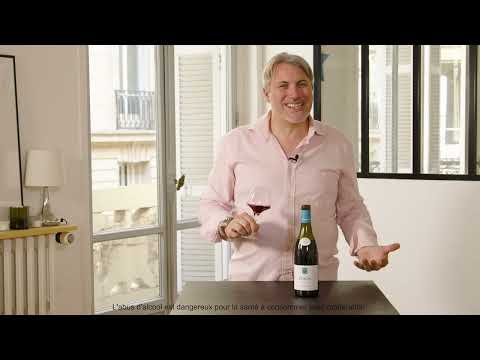
Discover our wines in video