Delivery from €16,90 per winemaker in Europe (excluding the United Kingdom)

Château Fonsalade
Château Fonsalade, Saint-Chinian in Causses-et-Veyran since 1839: reds, whites and rosés, night-harvested. Direct from the estate...
Lire plus


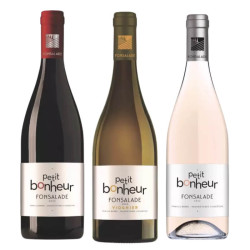
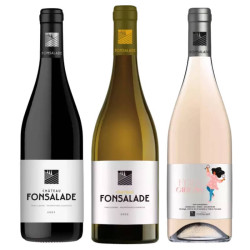
Discover Château Fonsalade in photos


Château Fonsalade: Saint-Chinian Wines - Causses-et-Veyran, Languedoc
At the foot of the Montagne Noire, some twenty kilometres north of Béziers, a valley opens onto vineyards shaped for centuries by north winds and sea breezes. Here, on a unique geological fault in the Saint-Chinian appellation, the Barbe family crafts Languedoc wines that are both powerful and refreshingly unexpected.
Here, since 1839, we do more than make wine. We welcome, we pass on, we share.
The history and origins of the estate
It all begins with a spring. In old Occitan, Funt Salad means the salt fountain, a natural water source rich in sodium bicarbonate that has flowed through the heart of the estate for centuries. Far from being a mere curiosity, this bicarbonate is used in vineyard work to combat mildew and powdery mildew naturally, protecting the vines without chemical inputs. Earth and water have worked together here since the 15th century.
In the 17th century, the construction of the Canal du Midi opened new economic horizons. The estate grew, and the ageing cellar was built in 1790. It was in 1839 that the first wine sales were recorded under the name Château Fonsalade, an official birth date for a story far older.
The three cypress trees
On the pilgrim route to Santiago de Compostela via Arles, travellers knew they could stop at Fonsalade. Three cypress trees at the estate entrance signalled hospitality, here, one could drink, eat and sleep. Those same trees still appear on the château's logo today. A symbol of generosity that has endured through the centuries.
The terroir and its unique character
Château Fonsalade sits on a geological fault. Beneath its 33 hectares, no fewer than seven different soil types follow one another, from schistose-sandstone to gypsum marl, through rounded pebbles and calcareous clay. A pedological mosaic that few estates in Saint-Chinian can claim.
The plots range from flatlands to hillside terraces, the highest reaching 350 metres altitude on the heights of Roquebrun. The Fonsalade valley runs on average 3 to 4 °C cooler than the rest of the Saint-Chinian appellation, swept by northerly winds and maritime breezes. This rare freshness for the Languedoc leaves its mark directly on the wines, in tension, aromatic precision and length on the palate.
|
||
|
||
|
Working the vines and our commitments
Zero herbicides. Zero soil inputs. Mechanical weeding, 100 % organic nutrition. These are not slogans, they are the daily reality for Benjamin, the vineyard manager, whose speciality is pruning. Spread from November through March and adjusted plot by plot, pruning conditions the vine's behaviour across several growing seasons.
The HVE 3 certification (High Environmental Value), obtained in 2021, officially recognises a commitment made long before sustainability became a selling point. Chemical weedkilling was definitively abandoned in 2020. Each year, the estate plants heritage fruit trees and nectar plants for pollinators.
Laurent, a beekeeper, has installed his hives at Fonsalade, visitors taste the honey produced on site. 300 olive trees complete the ecosystem, yielding an artisan olive oil made in-house. The wine you open tonight grew in a living terroir.
Grape varieties and appellations
The range of grape varieties grown at Fonsalade is conceived like an orchestra. For the red and rosé Saint-Chinian wines: Grenache Noir, Mourvèdre, Syrah, Cinsault and century-old Carignans, the true backbone of the Baumes plot. For the white wines: Roussanne, Marsanne, Viognier and Grenache Blanc.
The decision to replant southern varieties first, Carignan, Cinsault, Grenache, is deliberate. These varieties, better adapted to the Languedoc's droughts, require less protection. For the more fragile Syrah, the estate favours regular inter-planting rather than chemical intervention. Each grape variety is grown for what it is, not for what one might wish it to be.
The wine style and the cuvées
Harvest takes place exclusively at night or at dawn. The goal: to start fermentations below 14 °C, preserving the aromatic integrity of the grapes from the very first moment of picking. Benoît, the estate manager, vinifies each plot separately in thermoregulated concrete vats. Claude Gros, consulting oenologist since 2019, accompanies this approach.
Le Petit Bonheur
The everyday cuvée, fruity, supple, aged for a few months in concrete vats. This is Fonsalade's red for any occasion: a summer barbecue, a charcuterie board, a spontaneous evening with friends. A Languedoc red wine made for immediate pleasure.
Château Fonsalade
The estate's signature cuvée. A precise plot blend, expressive fruit, valley freshness, it embodies the finest that Saint-Chinian has to offer. Perfect at the table with slow-cooked meats, aged cheeses or a lamb shoulder from the garrigue.
Felix Culpa
The character cuvée. Sourced from identified plots, aged 24 months in 600-litre demi-muids, it concentrates everything that Fonsalade's geological fault has to offer at its most complex. A wine built for ageing, exceptional alongside game, braised meats or a powerful cheese board.
What you will only find at Fonsalade
A remarkably rare geological terroir. Seven soil types on a single estate, in the Saint-Chinian appellation, with a microclimate running 3 to 4 °C cooler than the surrounding region. This combination produces wines of unusual precision and freshness for the Languedoc.
A genuine commitment, HVE 3 certified. No herbicides since 2020, zero soil inputs, deliberate planting of climate-resilient southern varieties. A conviction held long before sustainability became a marketing trend.
Plot-driven wines, not a formula. Systematic plot-by-plot vinification, thermoregulated concrete vats, night harvests, ageing from 6 to 24 months depending on the cuvée, every choice serves the honest expression of the fruit, not a pre-set style.
A real story, since 1839. The Barbe family did not inherit vines by chance. They chose this land, this valley, these soils, and built something lasting here. That freedom of choice comes through in every bottle.
Frequently asked questions about Château Fonsalade
What is the difference between a Saint-Chinian wine and a Languedoc wine ?
Saint-Chinian is an AOC appellation in its own right, nestled in the foothills of the Montagne Noire and the Minervois. It is specifically recognised for powerful, structured red wines drawn from varied soils, schist and limestone. Languedoc refers to the broader geographical zone that encompasses it. Choosing a Saint-Chinian wine means choosing a terroir precision that generic Languedoc cannot offer.
Why order Château Fonsalade wines directly from the estate ?
Because everything leaves from the cellar. No intermediate warehouse, no dormant stock, every bottle dispatched comes directly from the property, stored under the same conditions the winemaker applies. Buying direct from Château Fonsalade means receiving a wine at its best, at a fair price, packed with the care of a producer who stands behind every bottle.
What food pairs well with Château Fonsalade Saint-Chinian wines ?
The natural freshness of Fonsalade wines makes them versatile at the table. Le Petit Bonheur pairs beautifully with grilled meats, charcuterie and savoury tarts. The Château Fonsalade cuvée is a natural match for slow-roasted lamb, aged cheeses or hearty stews. Felix Culpa, more complex and tannic, reveals its full depth alongside game, rib of beef or a powerful cheeseboard featuring Roquefort or aged Comté.
Is Château Fonsalade organically certified?
The estate practises high-standard sustainable farming, certified HVE 3 (High Environmental Value) since 2021. No chemical herbicides have been used since 2020. Weeding is mechanical, soil nutrition is 100 % organic, and grape varieties are chosen for their natural resilience to the Mediterranean climate.
How long can you keep a Château Fonsalade wine ?
Le Petit Bonheur is best enjoyed within 2 to 4 years. The Château Fonsalade cuvée shows its best between 4 and 8 years after harvest. Felix Culpa, aged 24 months in barrel, is a wine built for cellaring, it can comfortably evolve over 10 to 15 years in good conditions: cool cellar, darkness, bottles stored on their side.
What is the price of Château Fonsalade wines ?
The range spans from accessible cuvées such as Le Petit Bonheur, ideal for discovering the Saint-Chinian appellation, to premium expressions like Felix Culpa, aged 24 months in barrel. All prices and current vintage availability are listed directly on the Avenue des Vins boutique.
Direct from the estate · Secure payment · Expertly packed
Château Fonsalade - Causses-et-Veyran, Hérault - Languedoc, Occitanie, France
Producer since 1839 - AOC Saint-Chinian - HVE 3 Certified - Independent Winemaker
Discover our wines in video