Delivery from €16,90 per winemaker in Europe (excluding the United Kingdom)

Let's eat !
What wine goes with turbot? Pairings for a fine, festive fish
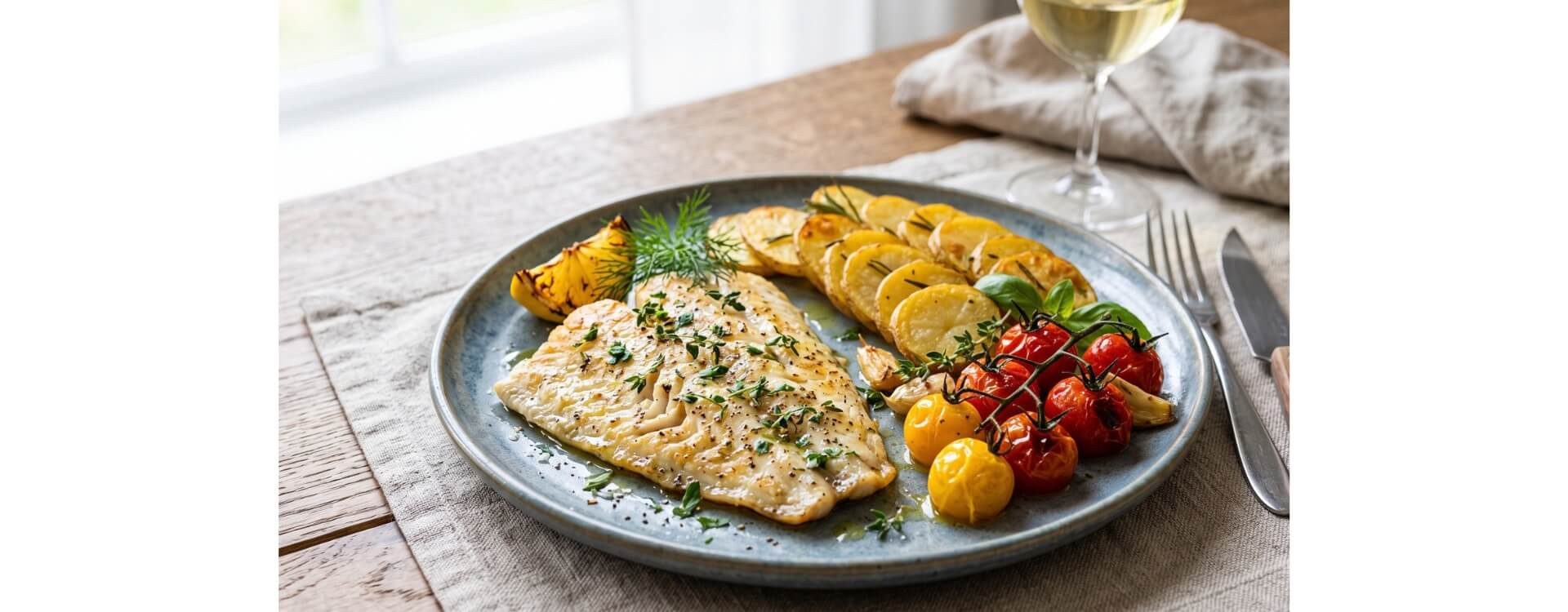
On turbot with beurre blanc, a full, dry white such as Meursault or Pouilly-Fuissé matches the sauce without overpowering it. This firm-fleshed festive fish deserves a wine of real substance, appellation by appellation, sauce by sauce.
Turbot is a noble flat fish, a centrepiece for a special table. Its white flesh is firm and fine, with real flavour and hold. Unlike a plate of small fried fish, it needs more than a light, sharp white. It calls for a wine with volume, able to stand up to butter, cream and festive sauces.
Everything hinges on the sauce. Plain poached turbot stays delicate, while a beurre blanc or champagne version turns rich and full. The wine follows that substance first, and the fish second. Here is how to choose, region by region.
A great white Burgundy, the reference pairing with turbot
On turbot with beurre blanc or cream, a full Burgundian chardonnay is the safest match. A Meursault, a Pouilly-Fuissé or a Saint-Véran bring the richness and length needed to answer the sauce. It is the same reflex as with cod in beurre blanc.
These whites combine roundness and freshness. Their body wraps around the butter, their acidity refreshes the palate between mouthfuls. On a leaner preparation, a Chablis premier cru, straighter and more mineral, keeps the same class with more edge.
Our tips for white Burgundy and turbot
Go for a vintage with a little age, more mellow. Serve the wine around 11 to 12 °C, no colder, so its aromas stay open. A white that is too young and too sharp would break the harmony with the beurre blanc.
A Loire white for a fresher turbot
On poached, steamed or simply roasted turbot, a taut Loire white adds freshness. A Savennières, a great dry chenin built to age, matches the firm flesh with its body and its precision.
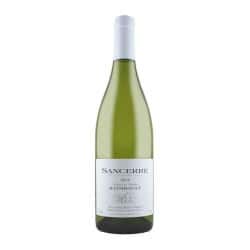
For a more citrus note, a Sancerre or a Pouilly-Fumé, made from sauvignon, lift a buttery sauce with a touch of zest. They suit the lighter versions, where the fish speaks more than the sauce.
Our tips for Loire whites and turbot
Keep the Savennières for the most refined preparations, a whole roasted turbot for instance. Save the sauvignon for short cooking and light sauces. Serve these whites cool, around 10 to 11 °C.
Champagne and Crémant: bubbles for turbot in a creamy sauce
On poached turbot in a creamy or champagne sauce, a sparkling wine works wonders. A blanc de blancs Champagne, all chardonnay, cuts through the richness of the cream and prolongs the finesse of the fish.
For a more accessible pairing, a blanc de blancs Crémant plays the same tune, with a fine bead and freshness. It is also the choice for a celebration meal, where one wine opens the dinner and stays with the dish.
Our tips for sparkling wine and turbot
Choose a blanc de blancs rather than a brut led by pinot noir, which is more vinous. Serve the bottle at 8 to 10 °C. Avoid heavily dosed champagnes, whose sugar would clash with a savoury sauce.
Alsace and Condrieu: richer whites for generous sauces
On a truly opulent sauce, a white with body goes the distance. An Alsace riesling keeps freshness and precision, while an Alsace pinot gris brings more roundness and a fuller texture that answers the cream.
For a very rich sauce, with mounted butter or truffle, a Condrieu made from viognier takes on the pairing. Its richness and powerful aromas need a preparation to match, or it will cover the fish.
Our tips for Alsace, Condrieu and turbot
Riesling suits almost every cooking method, the all-rounder of the table. Keep the Condrieu for grand occasions and the most generous sauces. Serve these wines around 11 °C.
Can you serve a red or a rosé with turbot?
Yes, but white stays the best choice, because turbot's fine flesh sits poorly with tannins. If you want another colour, keep to supple, fresh wines.
A full gastronomic rosé, a Bandol for example, goes with grilled turbot or a tomato-based sauce. For a red, pick it light and low in tannin, a Sancerre rouge or an entry-level red Burgundy, served cool at around 14 °C.
Our tips for rosé, red and turbot
Keep these pairings for roasted or grilled cooking, never for turbot with beurre blanc, which only a white sets off. As with sea bass and other noble fish, red stays the exception.
What are the best wine pairings with turbot?
Each preparation has its wine. Here are the pairings to remember, sauce by sauce.
Turbot with beurre blanc: a full white Burgundy, Meursault or Pouilly-Fuissé, to answer the richness of the butter.
Baked or roasted turbot: a Savennières built to age or a Chablis premier cru, straight enough for the roasted flesh.
Poached or steamed turbot, hollandaise sauce: a blanc de blancs Champagne or Crémant, to cut the richness of the sauce.
Turbot with cream or champagne: an Alsace pinot gris or, on a very rich sauce, a Condrieu.
Grilled turbot: a Sancerre, a Pouilly-Fumé, or a gastronomic rosé if you vary the colours.
Always serve the white between 10 and 12 °C: too cold, it loses its aromas, too warm, it feels heavy on the fish.
Our selection of great white Burgundies for turbot: crisp, mineral chardonnays, straight from the growers, at cellar-door prices. See the selection →
Bonus: our turbot with beurre blanc recipe
The great classic, the one that best sets off a white Burgundy. Count on a fine turbot of about 1.5 kg for four guests.
Ingredients (serves 4)
One turbot of about 1.5 kg, cleaned, or four steaks. For the court-bouillon: water, one carrot, one onion, a bouquet garni, coarse salt. For the beurre blanc: three shallots, 10 cl of dry white wine, 5 cl of white wine vinegar, 250 g of cold butter, salt and pepper.
Method
Prepare the court-bouillon and let it simmer for twenty minutes. Slip in the turbot and poach it at a gentle simmer, eight to ten minutes depending on thickness. The fish is done when the flesh comes away from the bone.
Meanwhile, reduce the finely chopped shallots with the white wine and vinegar until almost dry. Off the heat, whisk in the cold butter cube by cube to obtain a smooth sauce. Season with salt and pepper, coat the turbot and serve at once.
Turbot is not a fish like any other: it is a festive centrepiece, with rich flesh that calls for a great white. A Burgundy chardonnay stays the safe bet, while a Loire white or a sparkling wine takes over depending on the sauce.
The advantage of buying straight from the grower is serving these appellations at cellar-door prices, with no middleman. To go further, our advice on white wine and fish applies just as well to other noble cuts such as sea bass.
Our selection of festive whites: Champagne, Crémant and great dry whites for your noble fish, straight from the estate. See the selection →
Frequently asked questions about turbot and wine
Which white wine goes with turbot in beurre blanc?
A great white Burgundy, Meursault, Pouilly-Fuissé or Saint-Véran, is the reference pairing. Its richness answers the butter, its acidity keeps the palate fresh. Serve it around 11 to 12 °C.
Can you drink champagne with turbot?
Yes, above all on poached turbot or a creamy sauce. A blanc de blancs Champagne, all chardonnay, cuts the richness and prolongs the finesse of the fish. Prefer a lightly dosed blanc de blancs.
Which red wine can go with turbot?
White stays the recommendation, as tannins harden turbot's fine flesh. If you insist on red, pick it light and low in tannin, a Sancerre rouge or a red Burgundy served cool, on grilled turbot.
At what temperature should you serve wine with turbot?
Serve dry whites between 10 and 12 °C, sparkling wines at 8 to 10 °C. Too cold, the wine loses its aromas; too warm, it feels heavy. A Condrieu is served a little cooler, around 11 °C.
Which wine goes with baked turbot?
A straight white with good body, such as a Savennières built to age or a Chablis premier cru. Its tension holds the roasted flesh without weighing it down. An Alsace riesling also works very well.