Delivery from €16,90 per winemaker in Europe (excluding the United Kingdom)


AOC Meursault
Burgundy, located in eastern France, is one of the most prestigious French wine regions, renowned for its grand cru wines. The AOC Meursault spans nearly 400 hectares of limestone and clay soils, ideal for Pinot Noir and Chardonnay. This appellation mainly produces Burgundy white wines, fresh, mineral, and well-structured, with aromas of almond, hazelnut, flowers, and sometimes honey and citrus. A few red wines are also crafted, subtle and elegant. These are excellent age-worthy wines, capable of aging 5 to 15 years.
Filtrer


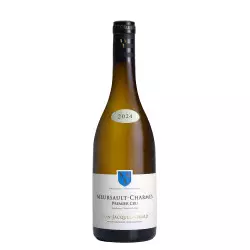
Meursault: 19 Premiers Crus, from Perrières to Charmes
Meursault: Everything to Know About the Wines of This Appellation
When thinking of the great white wines of Burgundy, the appellation that immediately comes to mind is undoubtedly Meursault. Tasting a great white wine from Meursault leaves no one indifferent. This is why the vineyard enjoys unprecedented success, with some Premier Crus fetching exorbitant prices worldwide. Discover through this guide the history, terroir, and grape varieties of the wines of the AOC Meursault appellation. Follow our advice for making the best food and wine pairings with Meursault.
History of the Meursault Vineyard
Like most Burgundy and Côte de Beaune appellations, viticulture in Meursault is documented from the 11th century. In the Middle Ages, the Meursault vineyard continued to develop thanks to monasteries and the Dukes of Burgundy, who directed production towards quality wines. Since the 18th century and continuing today, although red wine production persists (albeit in small quantities), Meursault is primarily renowned for its white wine, ranked among the greatest white wines of Burgundy.
Climate and Terroir of the AOC Meursault Appellation
The climate of the AOC Meursault
The AOC Meursault appellation is located in Burgundy, specifically in the Côte de Beaune region. Overall, the Meursault vineyard has an oceanic climate with semi-continental and southern influences, although a multitude of microclimates, as often seen in Burgundy, distinguish the different vineyard plots.
The soils of the AOC Meursault
Meursault benefits from a soil mainly composed of marly limestones and marls, ideal for the cultivation of Chardonnay.
The premiers crus of Meursault
Among these climates, 19 are classified as "Premier Cru," with the most renowned being "Perrières," "Les Charmes," and "Les Genevrières."
Main Grape Varieties of the AOC Meursault Appellation
The AOC Meursault appellation predominantly produces dry white wine made from Chardonnay. However, the appellation also offers rare red AOC Meursault wines made from Pinot Noir.
Chardonnay in Meursault
The essential white grape variety of Burgundy's white wines and the Meursault appellation, Chardonnay is a white grape with delicate aromas of yellow fruits, white flowers, and honey, showcasing its full potential and finesse in the great wines of Meursault.
Pinot Noir in Meursault
The emblematic red grape of Burgundy, Pinot Noir is characterized by its freshness and finesse. It develops notes of red fruits (cherry, strawberry), flowers, and spices that can gain complexity with aging.
Although the wines are often single-varietal, each domain is different and expresses the identity of its terroir and expertise through its wines.
Wine Style of Meursault
The appearance of a Meursault
The white wines of Meursault are yellow-green, slightly golden. In red, the AOC Meursault offers wines with a light red color with ruby hues.
The nose of a Meursault
The white AOC Meursault wines develop aromas of hawthorn, apricot, lemon, and honey. In the best vintages, a white Meursault offers notes of dried fruits (hazelnut, almond), linden, and butter. The red Meursault wines, on the other hand, exude red fruits, spices (pepper), peony, and a finely smoky finish.
The palate of a Meursault
The Meursault wines reveal an opulent and silky mouthfeel with a mineral finish. The style varies greatly depending on the climate and the domain.
Serving Temperature: White: 12°-14°C / Red: 15°-16°C
Aging Potential: White: 8 to 15 years / Red: 5 to 10 years
The Best Food and Wine Pairings with Meursault
Here are some dish ideas to pair with a beautiful bottle from a domain in AOC Meursault blanc:
Truffle risotto (preferably a slightly aged Premier Cru) - Poultry with cream and morels - Salmon with beurre blanc - Lobster or spiny lobster with butter (preferably a Premier Cru) - Époisses and other regional cheeses
If you prefer to opt for a rare cuvée from a domain in AOC Meursault rouge, here are some food and wine pairing ideas:
Oven-roasted duck - Beef tartare - Beef bourguignon (to stay within the same region)
On Avenue des Vins, each domain is carefully selected, and the wines are available for home delivery directly from the domain or château of your choice. Discover a white wine in AOC Meursault, from the Burgundy region, or any other appellation in France, thanks to our bottles of white wine, red wine, rosé wine, and champagne directly from the domain or château!
Frequently asked questions about Meursault
Is Meursault a white or a red wine?
Meursault is first and foremost a dry white wine appellation built on Chardonnay, one of the most celebrated of the Côte de Beaune. It also produces rare reds, made from Pinot Noir.
How long can you keep a Meursault?
A white Meursault keeps for 8 to 15 years depending on the climat and the vintage; in red, expect 5 to 10 years. A cool, stable cellar remains the condition for that keeping.
At what temperature should Meursault be served?
Between 12 and 14 °C for a white Meursault, 15 to 16 °C for a red. Served too cold, the white loses its weight on the palate and closes up its aromas.
What is the difference between village Meursault and premier cru?
A village wine may come from any plot within the appellation, while a premier cru comes from one or more classified climats. Meursault has 19 of them, including Perrières, Les Charmes and Les Genevrières.
Meursault vs. Puligny-Montrachet: what's the difference?
White Meursault tends to be richer and rounder, with hazelnut and buttery notes, while neighboring Puligny-Montrachet is tauter and more floral. Both villages sit in the Côte de Beaune and build their whites on Chardonnay. Puligny shares the Montrachet grand cru with Chassagne-Montrachet, while Meursault has no grand cru at all.
Where can you buy Meursault direct from the grower?
You can buy Meursault direct from the grower on Avenue des Vins, where each bottle ships from the Burgundy estate that made the wine. No middleman handles your bottles: they go straight from the estate to your door.
Explore also: Burgundy white wines - AOC Monthélie - AOC Chablis