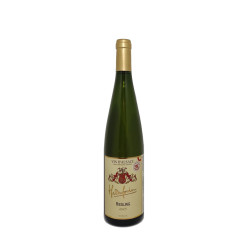
Delivery from €16,90 per winemaker in Europe (excluding the United Kingdom)

Let's eat !
What wine goes with tarte flambée?
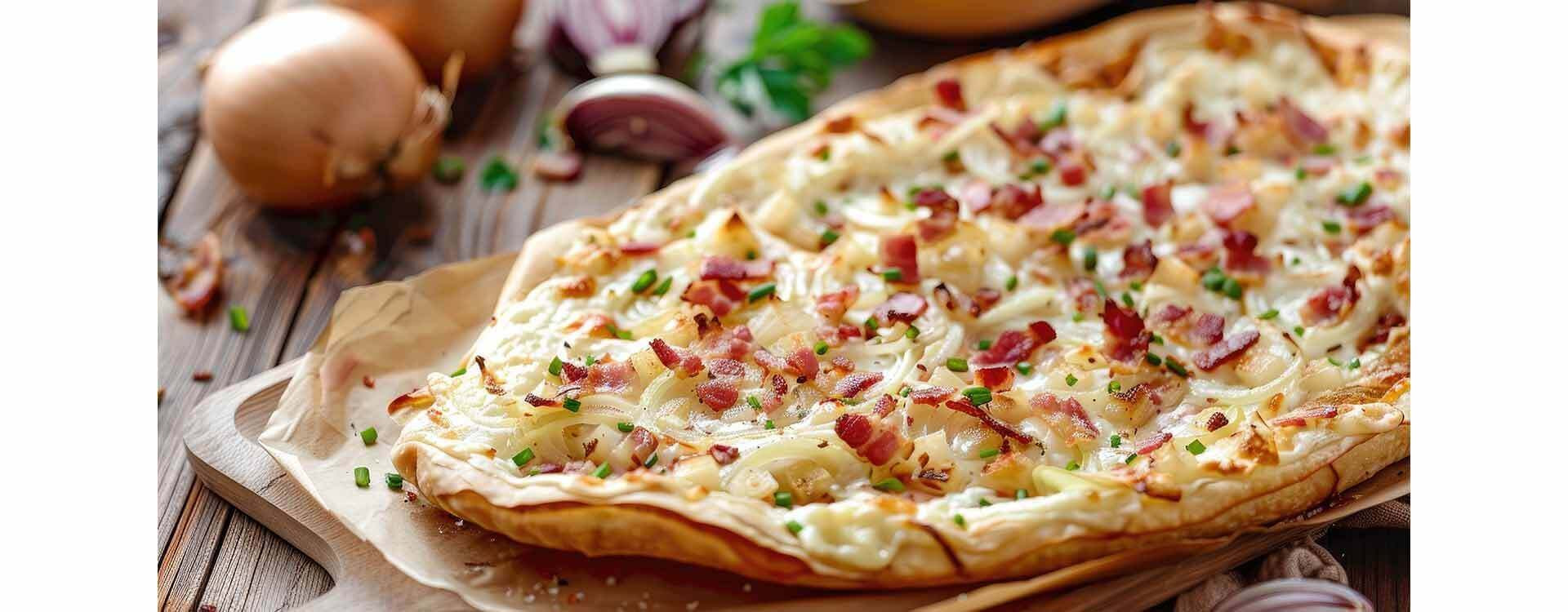
With a tarte flambée, serve a dry, bright Alsace white, a Riesling or a Pinot blanc, or a Crémant d'Alsace: their freshness cuts through the cream and the bacon. A light red works too. Here is the pairing, colour by colour.
Which white wine goes with tarte flambée?
A dry, bright, light white is the go-to match, and Alsace supplies the best. Its freshness cuts through the fat of the bacon and cream, without weighing down this thin, crisp tart.
The local benchmark is a dry Alsace Riesling, taut and mineral. Its drive relaunches every bite.
Rounder and easier, an Alsace Pinot blanc is the classic pairing of the winstub, the Alsatian tavern. An Alsace Sylvaner, light and lively, plays the same tune more simply.
For a party, a Crémant d'Alsace is hard to beat: its bubbles and freshness clean the palate between two slices.
Alsace is no accident: its dry, aromatic, high-acid whites are built for charcuterie and cream. The region invented the dish, and its wines have always gone with it.
Serve the still whites around 8 to 10 °C, and the crémant cooler, near 6 to 8 °C.
Our white wine tips for tarte flambée
Stay with a dry, bright white. A white that is too round or oaky turns heavy against the cream and bacon.
Which red wine goes with tarte flambée?
Red is not the Alsatian reflex, but it works if it stays light, fresh and low in tannin. Firm tannins, for their part, clash with the cream.
Stay local with an Alsace Pinot noir, fine and fruity, or go for a Beaujolais gamay. Serve them lightly cooled, around 14 °C.
Set aside powerful, tannic reds, which crush the finesse of the dough.
Our red wine tips for tarte flambée
Look for a light, fruity red, never tannic. A young pinot noir or gamay stays the benchmark.
Which rosé goes with tarte flambée?
A dry, fresh rosé makes a convivial option, between the drive of a white and the fruit of a red. It keeps pace with a meal where the tarts keep coming.
A dry Côtes de Provence, or an Alsace pinot noir rosé, suits a tarte flambée evening well. Serve it chilled, around 10 °C.
Our rosé tips for tarte flambée
Prefer a dry, light rosé over a heavy one. Freshness makes the pairing.
What are the best wine pairings with tarte flambée?
The best match remains a dry Alsace white, Riesling or Pinot blanc, or a Crémant d'Alsace. A light red and a dry rosé follow, depending on the mood.
Match it to the topping. A cheese-gratinéed flammekueche loves an even tauter Riesling; a forestière version with mushrooms suits a light pinot noir.
For an evening where you share several tarts, one wine is enough. A dry Riesling or a crémant holds from start to finish, and simplifies both service and pairing.
Dry white and sparkling: an Alsace Riesling, a Pinot blanc, a Sylvaner or a Crémant d'Alsace, served at 6 to 10 °C.
Light red: an Alsace Pinot noir or a Beaujolais, served at 14 °C.
Dry rosé: a Côtes de Provence, served at 10 °C.
Our selection of Alsace whites: dry, bright Riesling and Pinot blanc, straight from the estate at cellar-door prices. See the selection →
Bonus: our tarte flambée recipe
Here is a simple tarte flambée recipe for four. The secret comes down to two things: a very hot oven and dough rolled out very thin.
Ingredients (for 4)
For the dough, you will need 250 g flour, 12 cl warm water, 2 tablespoons oil and a pinch of salt. For the topping, plan 200 g fromage blanc, 10 cl crème fraîche, 2 onions, 150 g bacon lardons, salt, pepper and a touch of nutmeg.
Method
Mix the flour, water, oil and salt, then roll the dough out very thin on a baking tray.
Mix the fromage blanc, cream, salt, pepper and nutmeg. Spread this mixture over the dough.
Scatter the thinly sliced onions and the lardons over the whole surface.
Bake in a very hot oven, around 250 °C, for 10 to 12 minutes, until the edges are golden and crisp.
Serve the tarte flambée straight from the oven, cut into squares, shared right off the board.
Remember the essential: with a tarte flambée, freshness leads. A dry Alsace white or a crémant stays the safest choice, a light red the convivial alternative.
Whichever you choose, a wine bought straight from the grower gives you cellar-door pricing and full vintage traceability, with no middleman. Enough to carry the winstub spirit right into the glass.
Frequently asked questions about tarte flambée
Which white wine goes with tarte flambée?
A dry, bright Alsace white, such as a Riesling, a Pinot blanc or a Sylvaner. Its freshness cuts through the cream and bacon without weighing down the dough.
Which crémant with a flammekueche?
A brut Crémant d'Alsace, whose bubbles and freshness clean the palate between two slices. It is the festive pairing par excellence.
Can you drink red wine with tarte flambée?
Yes, a light, low-tannin red, such as an Alsace Pinot noir or a Beaujolais, served lightly cooled. Avoid oaky reds.
Which wine with a cheese-gratinéed tarte flambée?
An even tauter white, such as a dry Riesling, which keeps its freshness against the melted cheese.
Should the wine be dry or sweet with tarte flambée?
Dry, always. The cream and bacon call for freshness; a sweet wine would make the whole thing heavy.
At what temperature should you serve the wine with tarte flambée?
Serve the whites around 8 to 10 °C, the crémant near 6 to 8 °C, and the light red around 14 °C.
Why buy your wine directly from the grower?
Because the wine ships straight from the cellar: cellar-door pricing with no middleman, vintage traceability and support for a family of growers. That is the short-circuit principle.