Delivery from €16,90 per winemaker in Europe (excluding the United Kingdom)


AOC Crémant d'Alsace
On the banks of the Rhine, the winemakers of the Alsace region treat us to their finest vintages. In this region, we find the AOC Crémant d'Alsace. There are two types of Crémant d'Alsace: those made from a single grape variety, and those made from a blend of several grape varieties with different characteristics. Chardonnay brings finesse and lightness, Pinot Gris richness, Riesling lively, fruity notes, and Pinot Blanc, which is most commonly used for Crémants d'Alsace (whites), brings freshness and delicacy to the wine. AOC Crémant d'Alsace sparkling wines represent nearly 25% of total Alsace vineyard production.
Filtrer


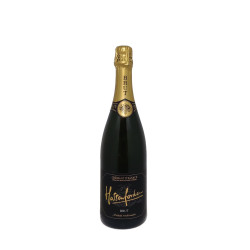


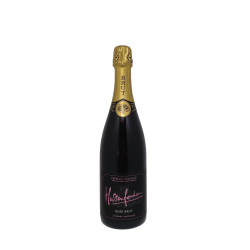


Crémant d'Alsace: Hand-Picked Grapes, Second Fermentation
From grapes picked by hand to the bubbles that form in the bottle, the Crémant d’Alsace rules govern every step. They aim first to keep the grapes intact from harvest on, since clear juice is essential to the quality of the fizz.
From Press to Cork: How Crémant d’Alsace Is Made
White or rosé, every Crémant d’Alsace starts with a hand harvest. The grapes must reach the press within 24 hours of picking. For whites, the bunches go into the press whole. Juice yield is capped: 150 kilograms of grapes (about 330 pounds) give no more than 100 liters (about 26 gallons) of must.
The juice first ferments into still base wines; for rosés, the base wine can come from skin maceration or the saignée method. Bottling for the second fermentation cannot start before December 1 following the harvest. The wine then ferments again inside the glass bottle itself, and that is what creates the bubbles.
The bottles then rest at least nine months on the lees, stacked on laths, and the wine cannot be released until twelve months after bottling at the earliest. This aging, often longer, brings out buttery or toasty notes. Once disgorged and corked, the bottle holds an overpressure of at least 4 atmospheres (about 59 psi), measured at 68 °F (20 °C).
History of the AOC Crémant d’Alsace
The AOC Crémant d’Alsace, an essential appellation of the Alsatian vineyard, is the result of a rich historical expertise. Although the traditional method of sparkling wine production has long been practiced in Alsace, it was not until 1976 that the Crémant d’Alsace appellation was officially established. Today, these white or rosé crémants offer a unique aromatic profile and excellent value for money in the sparkling wine market.
Climate and Terroir of the AOC Crémant d’Alsace
Climate: Alsace benefits from a semi-continental climate, with warm, dry, and sunny summers and cold winters, which are ideal for the proper development of grapes.
Soils: The Alsatian terroir is composed of a mosaic of soils, ranging from granite to limestone, including schist and sandstone, which bring great complexity and diversity of style to the wines.
The Emblematic Grape Varieties of the AOC Crémant d’Alsace
The main grape varieties used to produce Crémant d’Alsace are Pinot Blanc, Pinot Gris, Pinot Noir, Riesling, Chardonnay, and Auxerrois. These varieties allow for a wide range of styles within the AOC Crémant d’Alsace.
Style of AOC Crémant d’Alsace Wines
Eye: Shades range from pale yellow to salmon pink for the rosés.
Nose: Aromas of citrus, green apple, yellow fruits, and white flowers, with occasional brioche notes.
Mouth: Crémant d’Alsace is characterized by its fine bubbles, freshness, finesse, and thirst-quenching finish.
Serving Temperature: 6°-8°C
Aging Potential: Best enjoyed young to appreciate their freshness. However, depending on the estate, some crémants can develop favorably over 3 to 5 years.
Best Food Pairings with AOC Crémant d’Alsace
Here is a list of the best food pairings with a bottle of white sparkling wine from a château or estate in AOC Crémant d’Alsace:
- Aperitif
- Buckwheat galette with ham and comté cheese
- Cheese gougères
- Mushroom risotto
- Fruit clafoutis (for a demi-sec Crémant d’Alsace)
Cork, Magnum, Dosage: Your Crémant d’Alsace Questions
What is printed on a Crémant d’Alsace cork?
A Crémant d’Alsace cork carries the name of the appellation, printed on the part that sits inside the neck of the bottle. This is mandatory, just like the name on the label, so you can read it once the cork is out.
Where does a magnum of Crémant d’Alsace get its bubbles?
A magnum of Crémant d’Alsace goes through its second fermentation in its own bottle, the one it is sold in. The rule covers every size from 37.5 cl (a half bottle) to 150 cl; only smaller or larger bottles are exempt.
Which dosage is most common for Crémant d’Alsace?
Most Crémant d’Alsace is sold as brut, a legal term meaning less than 12 grams of sugar per liter. Other legal terms are allowed, such as extra brut (0 to 6 g/l) or demi-sec, meaning medium dry (32 to 50 g/l).
Where can you buy Crémant d’Alsace direct from the winemaker?
You can buy Crémant d’Alsace direct from the winemaker on Avenue des Vins. Your order ships straight from the producer, with no middleman.
See also: White wines from Alsace - Rosé wines from Alsace - AOC Crémant de Bordeaux