Delivery from €16,90 per winemaker in Europe (excluding the United Kingdom)

Let's eat !
What food goes with Côtes-du-Rhône? Our pairings tier by tier
With a Côtes-du-Rhône, serve rib of beef, roast pork or ratatouille; with a Villages, herb-roasted leg of lamb or a daube, the Provençal beef stew; with a cru, game. The appellation tier decides: our guide, from regional right up to the crus.
Côtes-du-Rhône is a blend of several grape varieties, grown across 172 communes and six departments, from Vienne to Avignon. In the reds, Grenache noir is compulsory, joined by Syrah or Mourvèdre.
Two things govern the pairing. How heavy the dish is, first: a supple red vanishes behind a civet, a slow-cooked game stew. Then the tier, four official steps from regional Côtes-du-Rhône to the crus, whole communes ranked as appellations.
Those steps are not decoration. The rules allow 51 hectolitres per hectare of vines at regional level, 44 for Villages, 41 when a commune name appears on the label. Châteauneuf-du-Pape stops at 35.
The fewer bunches a vine carries, the more concentrated the rest, the Rhône trade body notes. Minimum strength follows: 11 % for a southern regional, 12.5 % for a named-village red. A denser wine wants a denser plate.
What red meats and grills go with a Côtes-du-Rhône?
All of them, from steak to game, provided you climb a tier as the dish gets stronger. Grenache brings fruit, Syrah and Mourvèdre spice and structure.
Rib of beef, sirloin and grilled meats
A rib of beef seared over embers calls for a regional Côtes-du-Rhône at 16 °C. Grenache, alone 42 % of the Rhône vineyard, holds red meat without weighing it down. Grilled sirloin keeps the same bottle.
Leg and rack of lamb with herbs
Lamb with rosemary and thyme is the most obvious pairing in the South. Move up to Villages: its two thirds of Grenache, Syrah and Mourvèdre answer the garrigue, the scented hillside scrub.
Game, wild boar and autumn civets
Here, climb to a named village or a cru. The trade body puts game at the top of its Villages pairings, and a boar civet wants the pebble soils it calls suited to keeping.
What poultry and white meats go with a Côtes-du-Rhône?
A regional red, supple and fresh. The trade body lists roast pork and veal among its Villages pairings: the tier below suits them.
Roast pork, roast veal and stuffed vegetables
Roast pork with apples or oven-roasted veal want a regional red at 15 °C. Stuffed vegetables, also on the trade body's list, follow the same rule: simple and fruity.
Chicken with olives, tagine and North African cooking
Grenache, round and low in tannin, takes mild spice and sweet-savoury dishes. With a lamb and apricot tagine, a couscous or chicken with olives, stay regional and serve cool.
What goes with a white or rosé Côtes-du-Rhône?
Shellfish and poultry in cream sauce with the white, charcuterie and raw vegetables with the rosé. Together they are only 17 % of the regional crop.
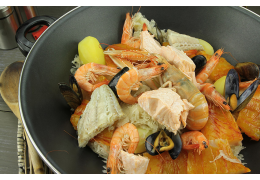
Shellfish, poultry in cream sauce and rabbit gibelotte
The trade body gives the white hot or cold shellfish, poultry in cream sauce and gibelotte, rabbit stewed in wine. Six main white grapes are allowed, Viognier and Roussanne included.
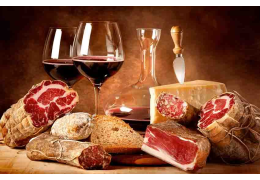
Charcuterie, mixed salads and summer grills
The rosé takes raw vegetables, mixed salads, chicken fillets, charcuterie and grills. Serve it at 10 to 13 °C: below 7 °C the cold flattens the aromas.
Our Côtes-du-Rhône selection: reds, whites and rosés shipped from the estate, at estate prices. See the selection →
What cheeses go with a Côtes-du-Rhône?
Hard and semi-hard cheeses with the red, goat cheeses and blues with the white. That is the trade body's split, and it surprises.
Hard and semi-hard cheeses with a red
Comté, Cantal or a mountain tomme go with a Villages red. Our red wines and cheese selection follows the same principle: the drier the pressed curd, the better it takes tannin.
Picodon, Banon and blues with a white
The white covers the whole board, from blues to fresh goat cheeses. Picodon from the Drôme and Banon from Haute-Provence, two goat cheeses of the vineyard, belong here.
What Provençal and Rhône dishes go with a Côtes-du-Rhône?
Daube, gardiane, sun-ripened vegetables: the cooking of the South was built with this wine, and often inside it. This is the section pairing guides forget.
Daube, gardiane and meats marinated in red wine
The trade body lists daube provençale among its Villages pairings. Gardiane, its Camargue cousin, marinates bull meat in wine, then cooks it three hours. Pot and glass share the bottle.
Ratatouille, tian and sun-ripened vegetables
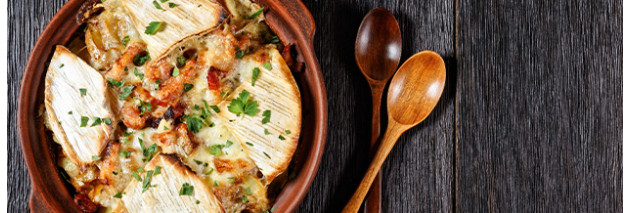
A ratatouille or a tian, a slow-baked vegetable gratin, go with a cool regional red. The generous salads the trade body also puts on the red follow suit.
What are the best food pairings with a Côtes-du-Rhône?
The tier decides, the temperature does the rest. "Room temperature" once meant a room at 17 or 18 °C, not today's living room: a Rhône red is drunk cooler than people think.
The trade body aims for 14 to 17 °C on reds, 10 to 13 °C on whites and rosés. Below 11 °C tannins harden, above 20 °C alcohol covers the fruit.
Regional Côtes-du-Rhône, red: rib of beef, sirloin, roast pork or veal, tagine, chicken with olives, ratatouille, tian, stuffed vegetables.
Côtes-du-Rhône Villages: leg and rack of lamb with herbs, daube, gardiane, generous salads, Comté, Cantal and tommes.
Villages with a geographical name, and crus: game, wild boar, civet, long-braised meats, aged cheeses; open the bottle an hour ahead.
Whites and rosés: shellfish, poultry in cream sauce, rabbit gibelotte, charcuterie, raw vegetables, mixed salads, goat cheeses and blues.
The crus close the ladder, from Gigondas to Châteauneuf-du-Pape. The trade body calls them commune appellations, at the top of the hierarchy: one cru, one appellation.
Bonus: our Camargue bull gardiane in Côtes-du-Rhône
Gardiane is the dish of the gardians, the Camargue's mounted herdsmen: bull meat marinated overnight in red wine, stewed three hours, served with rice.
Ingredients (serves 4)
- 1.2 kg of bull or braising beef, chuck or shoulder
- 75 cl of red Côtes-du-Rhône
- 150 g of smoked lardons
- 3 onions and 3 carrots
- 4 garlic cloves and 2 strips of dried orange zest
- 1 bouquet garni, 4 juniper berries
- 3 tablespoons of olive oil
- 300 g of Camargue rice
- Salt, pepper
Method
The day before, cut the meat into large cubes. Marinate it in the fridge in the wine, with the sliced onions and carrots, crushed garlic, bouquet garni and juniper.
Next day, drain and dry the meat. Oil a casserole, brown the meat, add the lardons, then the drained vegetables. Pour in the strained marinade and orange zest, season.
Cover and simmer three hours on the lowest heat, never letting it boil. The sauce should coat the spoon. Serve over plain Camargue rice, with the cooking bottle.
Why buy direct from the winemaker? No warehouse, no buying group: the bottle leaves the cellar where it was blended with no middleman in between, and reaches you at estate prices. Whoever made it knows the plot, the vintage and the tier on the label.
Côtes-du-Rhône is not a catch-all wine, it is a ladder. A regional goes with grill and roast, a Villages with herb lamb and daube, a named village or a cru with game.
Before you pick the dish, read the label to the end. What follows the words "Côtes-du-Rhône" tells you how many grapes the vine could carry, and how much your plate can weigh.
Our Côtes-du-Rhône selection: from Saturday's grill to Sunday's stew, wines picked at our growers' and sent straight from their cellars, at estate prices. See the selection →
Frequently asked questions about Côtes-du-Rhône pairings
What is the difference between a Côtes-du-Rhône and a Côtes-du-Rhône Villages at table?
One tier of power. Villages drops to 44 hectolitres per hectare against 51, demands 12 % alcohol instead of 11 in the South, and keeps two thirds of the blend for the three main grapes. Save it for lamb and stews.
What food goes with a white Côtes-du-Rhône?
A plate of shellfish, a chicken in cream sauce, a rabbit simmered in wine. The trade body also hands it the whole cheese range, blues and fresh goat cheeses. In Villages, it is three bottles in a hundred.
Should a red Côtes-du-Rhône be served cool?
Yes, cooler than the room. Twenty minutes in the fridge before you sit down: that is the trade body's 20-20 rule. Above 20 °C, the warmth of the alcohol takes over.
What does a village name on a Côtes-du-Rhône label mean?
That the wine comes from a defined terroir inside the Villages appellation. Twenty-one names may appear on the label, from Chusclan to Visan, and their rules drop to 41 hectolitres per hectare. Aim heartier.
Why buy your Côtes-du-Rhône direct from the winemaker?
Because you can ask the person who made it. A grower will tell you which cuvée holds up to the grill and which waits for game, something no label says. And the price stays the estate's.