Delivery from €16,90 per winemaker in Europe (excluding the United Kingdom)

Let's eat !
What food goes with Châteauneuf-du-Pape? What holds up, what drowns
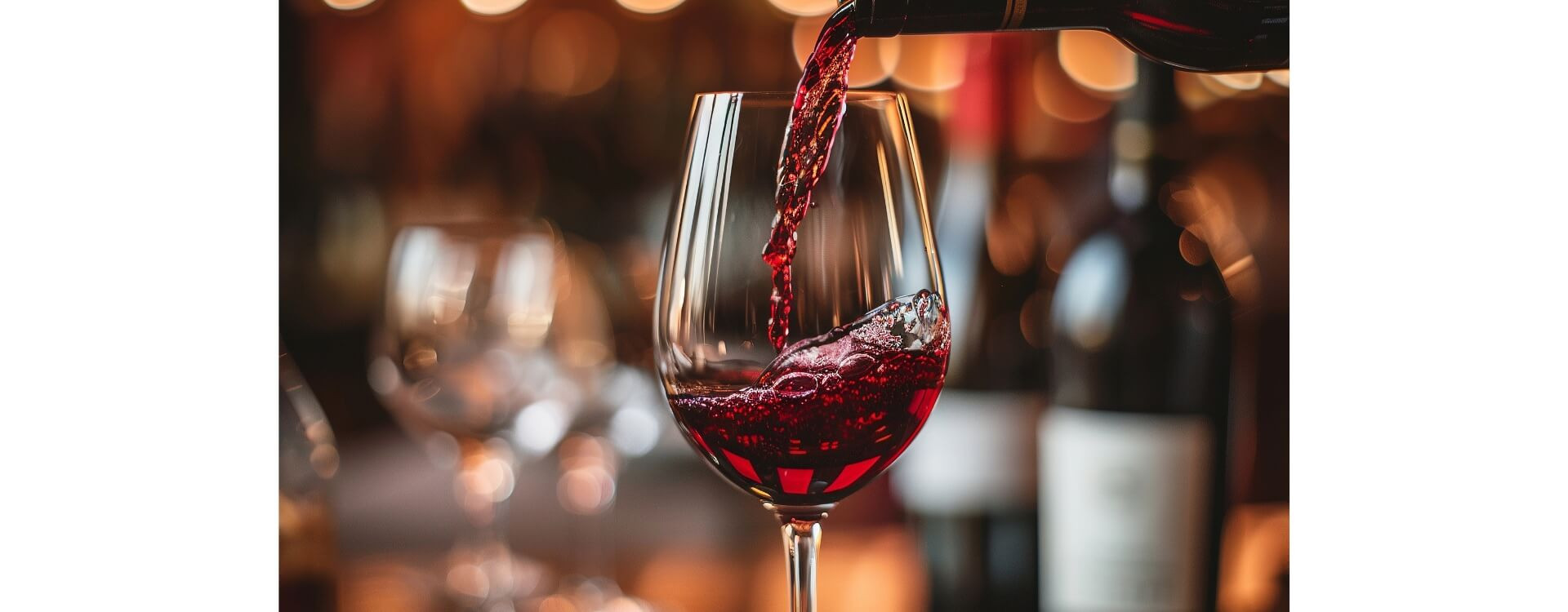
With a red Châteauneuf-du-Pape, serve a rib of beef, a leg of lamb with rosemary, game or Peking duck. With the white, shellfish first, truffle later. The test is not the colour of the wine: it is how intense the dish is.
Châteauneuf-du-Pape comes from five communes in the Vaucluse, between Avignon and Orange, on galets roulés, the big stones the Rhône polished. Its rulebook allows eighteen grape names where local tradition counts thirteen.
Everything starts with power. The crop is capped at 35 hectolitres per hectare, one of the lowest yields in France. Grenache must carry 216 grams of sugar in every litre of must, which is unfermented juice. The red may not be enriched at all.
So the alcohol floor is 12.5 %, every degree of it off the vine. A wine that heavy wipes out anything neutral. Steamed fish, a green salad, a fresh goat cheese vanish behind it. This is not about fat, it is about intensity.
Then a second setting, age. The growers' body of the appellation does not serve a two-year-old red like an old vintage: four temperatures, different dishes each time.
What red meats and game go with a Châteauneuf-du-Pape?
The ones with juice, fat and a long cooking time. The growers' body opens its pairing list for the red with red meat, lamb and game.
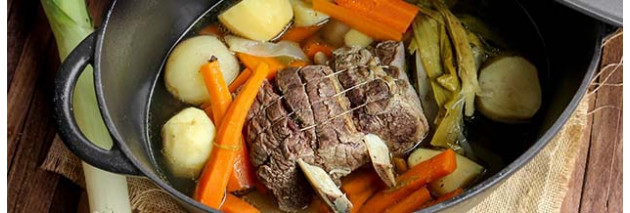
Rib of beef, grilled cuts and short pan juices
A thick rib of beef, served rare in its juices, holds it easily. The growers' body calls its reds drinkable from two years on, on elegant fruit. Serve at around 15 °C.
Leg, shoulder and saddle of lamb
A leg of lamb studded with garlic and rosemary is the local pairing. The growers' body describes its reds on ripe fruit, spice and liquorice: enough to take the garlic. A seven-hour leg wants an older bottle.
Game, wild boar and reduced sauces
Here, open the old vintage. With the years, the growers' body explains, the tannins assert themselves and the nose turns to forest floor. That is what venison, boar civet and long-reduced sauces are waiting for. Serve at around 17 °C.
What slow-cooked dishes and spiced cooking go with a Châteauneuf-du-Pape?
Asian cooking, and the growers' body writes it itself: its reds show another side on dishes built around spice. Nobody ever says so.
Peking duck, nems and five-spice dishes
Peking duck, grilled nems, caramel pork. Grenache, which the growers' body calls low in tannin, takes sweet-savoury food without drying. Stay on a young bottle, served cool.
Confit shoulder, braised beef cheek and long cooking
Hours of cooking melt the collagen and call for a wine that lasts. Confit shoulder of lamb, braised beef cheek or oven-baked rabbit belong on a red of five to ten years.
What goes with a white Châteauneuf-du-Pape?
Shellfish and foie gras on a young white, cèpes and truffle on an old one. It is only 7 % of the crop and pairing guides nearly always forget it.
Shellfish, fine fish and foie gras on a young white
In its first two or three years the white is floral and clean. The growers' body gives it fine fish, white meats, large shellfish and foie gras. Serve it between 11 and 12 °C, no colder.
Poularde, cèpes and winter truffle on an old white
After a few years the wine turns to hazelnut and toasted bread. It then wants a poularde, a pan of cèpes or a winter truffle, and a higher temperature, 13 to 14 °C.
Our Châteauneuf-du-Pape selection: reds and whites that leave the estate cellar itself, at estate prices. See the selection →
What cheeses go with a Châteauneuf-du-Pape?
Pressed cheeses and blues, and on the white rather than the red. That is how the growers' body divides the board, and it catches people out.
Aged Comté, Beaufort and Roquefort on a white
Those three are named outright for older vintages of the white. The hazelnut in the wine answers the hazelnut in aged Comté, and its richness stands up to the salt of Roquefort.
What the red takes off the cheeseboard
The growers' body gives it no cheese. A young red copes with a ewe's milk tomme or an aged Cantal. Avoid fresh goat cheeses and washed rinds: its tannins flatten them.
What Vaucluse dishes go with a Châteauneuf-du-Pape?
Truffle first, because it grows next door. The vineyard sits at the heart of the Comtat Venaissin plain, and the Vaucluse is France's leading black truffle department.
Black truffle from the Comtat Venaissin
Carpentras traces its truffle market back to 1155, Friday mornings, from mid-November to the end of March. On an omelette or a soft-boiled egg, that black truffle wants an aged white.
Sun-ripened vegetables, and what does not hold
Ratatouille, a courgette tian or an aïoli are local dishes. That does not make them able to carry a wine this heavy: they want a lighter Rhône red.
What are the best food pairings with a Châteauneuf-du-Pape?
One question to put to the plate: has it anything to answer with. The growers' body of the appellation publishes four serving temperatures, one per colour and per age.
What holds a young red: rib of beef, sirloin, lamb with rosemary, Peking duck, nems, mildly spiced dishes, a ewe's milk tomme and an aged Cantal. Serve at around 15 °C.
What calls for an older red: venison, wild boar, civets, reduced sauces, confit shoulder, beef cheek. Around 17 °C.
What calls for the white: fine fish, lobster and large shellfish, foie gras on a young one, between 11 and 12 °C. On a white for keeping, poularde, cèpes, truffle and aged cheeses, between 13 and 14 °C.
What drowns in it: steamed fish, green salad, fresh goat cheese, sun-ripened vegetables. The trouble is never the weight of the plate, it is a flavour that cannot answer back.
One detail nobody looks at: sorting the harvest is compulsory, and at least 2 % of the crop leaves the appellation. Your glass is already sorted.
Bonus: our Comtat truffle brouillade
A brouillade is Provençal scrambled eggs, cooked very slowly. It is the treatment that respects a fresh truffle best. It starts the day before.
Ingredients (serves 4)
- 8 very fresh eggs
- 25 to 30 g fresh black truffle
- 30 g butter
- 2 tablespoons thick crème fraîche
- 4 slices of country bread
- A drizzle of olive oil
- Salt, pepper from the mill
Method
The day before, brush the truffle and shut it in an airtight box with the whole eggs, in the fridge. Shell is porous: the scent crosses on its own.
Next day, beat the eggs with a fork, salt and pepper them. Grate two thirds of the truffle in. Melt the butter in a pan over a bain-marie at a bare simmer.
Pour in the eggs and stir without stopping with a spatula, about ten minutes. Off the heat, add the crème: it stops the cooking. Grate the rest of the truffle over, serve with toasted bread.
Why buy direct from the winemaker? In an appellation where the harvest is picked and sorted by hand, the vintage changes everything, and nobody knows it better than the person who made it. They sell at estate prices, with no middleman between their cellar and your table.
Châteauneuf-du-Pape is not an everyday wine and should not be treated as one. Its strength, its yield and its sorting make it dense: the plate needs something to answer with, or it disappears.
Look at what is in the dish before you choose the bottle. Juice, fat, spice or long cooking: the red follows. A truffle, cèpes, something rare: open the white.
Our Châteauneuf-du-Pape selection: from reds for keeping to rare whites, bottles taken at our growers', at the property's own price. See the selection →
Frequently asked questions about Châteauneuf-du-Pape pairings
What food goes with a white Châteauneuf-du-Pape?
Fine fish, large shellfish and foie gras while it is young. After a few years it asks for a poularde, a pan of cèpes or a winter truffle. It accounts for only 7 % of the crop.
What dishes should you avoid with a Châteauneuf-du-Pape?
Mild, lightly scented cooking. Poached cod, raw vegetables or a mozzarella have nothing to set against 12.5 % alcohol at the very least. Save them for a light dry white.
Thirteen or eighteen grape varieties in Châteauneuf-du-Pape?
Both figures are right. The rulebook lists eighteen, tradition claims thirteen: grenache, clairette and piquepoul count as one each, although each exists in several colours.
Should a Châteauneuf-du-Pape be decanted?
A young one, yes: the Rhône trade body advises putting young crus in a carafe to air them. An old vintage, no: you decant it only to leave the sediment behind, gently, and serve it straight away.
Why buy your Châteauneuf-du-Pape direct from the winemaker?
Because the year on the label governs the dish, and the grower knows where their own stands. They will tell you if the bottle is ready or still waiting, and they sell at the property's own price.