Delivery from €16,90 per winemaker in Europe (excluding the United Kingdom)

Unbeatable !
Wine: the 15 grape varieties you really need to know about
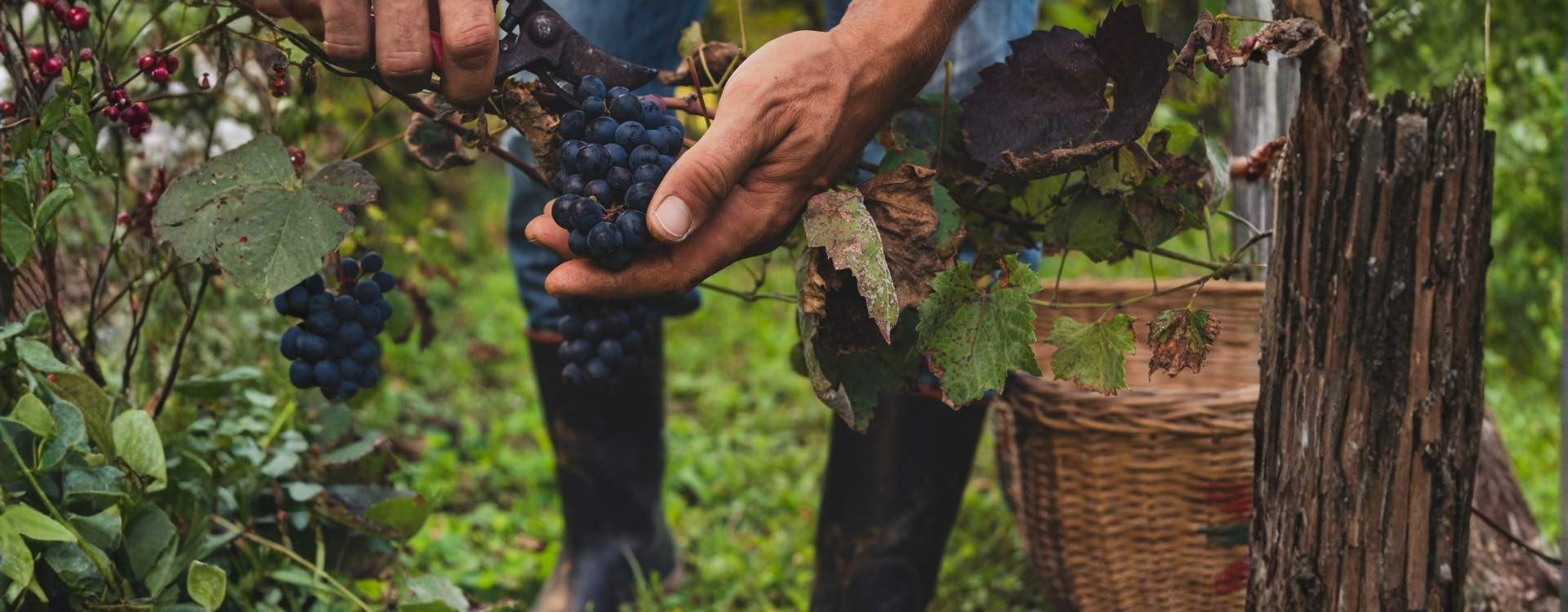
The 15 essential wine grape varieties: complete guide to whites and reds
Guide written by the Avenue des Vins sommelier team.
Among the roughly 10,000 vine varieties recorded worldwide, only a handful shape the vast majority of global wine production. These elite grape varieties, white or red, subtle or expressive, are behind the greatest bottles as well as everyday wines. Whether vinified alone as single varietals or blended to create more complex wines, they define the style, the aromas and the ageing potential of every bottle. Here are the 15 grape varieties you absolutely need to know to choose your future wines with confidence.
What is a grape variety ? A quick definition
A grape variety (or cultivar) is a specific type of vine cultivated to produce wine. Each variety has its own genetic characteristics that directly influence the aromatic profile, structure, colour and ageing potential of the wine. It is the grape variety, combined with the terroir, climate and the winemaker's expertise, that gives each bottle its identity. White grape varieties produce pale-skinned grapes used for white wines and Champagne; red or black grape varieties have pigmented skins rich in anthocyanins that colour the juice during maceration to produce red and rosé wines.
The 15 essential grape varieties - whites and reds
White grape varieties
Burgundy, Champagne · Apple, butter, hazelnut, mineral · Fish, poultry, crustaceans
Loire Valley, Bordeaux · Citrus, cut grass, boxwood · Goat's cheese, seafood
Chenin Blanc
Loire Valley (Vouvray, Anjou) · Honey, quince, apple, acacia · Foie gras, apple tart
Alsace · Lychee, rose, spices, mango · Asian cuisine, Munster cheese
Viognier
Rhône Valley (Condrieu) · White peach, apricot, violet, jasmine · Lobster, scallops, roast chicken
Sémillon
Bordeaux (Sauternes) · Honey, beeswax, candied apricot · Foie gras, Roquefort, desserts
Alsace, Germany · Lemon, petrol, mineral, white flower · Smoked fish, charcuterie, Alsatian cuisine
Red grape varieties
Burgundy, Champagne · Cherry, raspberry, undergrowth, truffle · Duck, game, mushrooms
Bordeaux, worldwide · Blackcurrant, cedar, bell pepper, tobacco · Lamb, ribeye steak, aged cheeses
Merlot
Bordeaux (Pomerol, Saint-Émilion) · Plum, chocolate, mocha, cherry · Duck breast, beef, pasta
Grenache
Rhône Valley, Languedoc · Prune, garrigue, chocolate, spices · Lamb, tagine, southern cheeses
Rhône Valley, Languedoc · Black olive, pepper, violet, smoky · Game, grilled meat, ribeye steak
Cabernet Franc
Loire Valley, Bordeaux · Blackcurrant, blackcurrant leaf, pencil, liquorice · Chicken, rabbit, charcuterie
Gamay
Beaujolais, Loire Valley · Strawberry, raspberry, candy, peony · Charcuterie, light cuisine, poultry
Mourvèdre
Provence (Bandol), Languedoc · Leather, truffle, smoked meat, olive · Game, Provençal daube, character cheeses
The main white grape varieties
Chardonnay
Chardonnay is one of the most prized and widely planted white grape varieties in the world, with over 200,000 hectares cultivated across some fifty countries. It is used to produce great dry white wines as well as Champagne. Its ability to adapt to very different climates, from cool to warm, gives it an exceptionally varied range of expression: mineral and citrus notes in a Chablis, apple and toasted hazelnut aromas in an oak-aged Meursault, or a buttery opulence in Californian Chardonnays. It is the reference variety for understanding how terroir shapes a white wine.
Perfect pairing: grilled fish, creamy chicken dishes, mushroom risotto, crustaceans.
Sauvignon Blanc
Known for its Sancerre and white Bordeaux wines, Sauvignon Blanc is an expressive and immediately recognisable variety. Its notes of citrus (lemon, grapefruit), cut grass and boxwood make it a highly aromatic variety, ideal for lovers of lively, tonic whites. In the Loire Valley, it produces the great Sancerre and Pouilly-Fumé; in Bordeaux, it blends with Sémillon in dry white wines. In New Zealand, Marlborough Sauvignon Blanc has established itself as a global reference for the variety.
Perfect pairing: goat's cheese, seafood, asparagus, Mediterranean cuisine.
Chenin Blanc
Grown mainly in the Loire Valley and South Africa, Chenin Blanc is still too often overlooked by the general public, despite its remarkable versatility. Its naturally high acidity allows it to produce dry wines (Savennières), medium-dry wines (Vouvray), sweet wines (Coteaux du Layon), luscious dessert wines and sparkling wines (Crémant de Loire, Saumur Brut). With age, great Chenins develop complex aromas of quince, honey and beeswax. It is one of the white grape varieties most suited to ageing in France, and one of the most versatile at the table.
Perfect pairing: foie gras in a sweet style, Tarte Tatin, soft-rind cheeses, roast poultry with fruit.
Our Grapes & Regions Selection : Our wines from noble grapes, at estate price and shipped direct from the winemaker. See the selection →
Gewurztraminer
An emblematic variety of Alsace and certain regions of Germany and northern Italy, Gewurztraminer is distinguished by an immediately identifiable aromatic profile: lychee, rose, mango and gentle spices. Its wines are generally rich and generous, with low acidity that makes them particularly well suited to late-harvest and noble rot selections (Sélections de Grains Nobles) in Alsace. Served as an aperitif or with spiced cuisines, it never fails to impress with its assertive personality.
Perfect pairing: Asian cuisine, Munster cheese, foie gras, desserts with exotic fruits.
Viognier
The emblematic variety of the great white wines of the northern Rhône Valley, Viognier is the sole grape of Condrieu and Château-Grillet, two of the rarest and most precious appellations in France. It delivers intense aromas of white peach, apricot, violet and jasmine in full-bodied, unctuous wines. Long confined to near-extinction in the 1960s, Viognier is now planted worldwide and has found a second home in the Languedoc, Australia and California.
Perfect pairing: creamy lobster, seared scallops, herb-roasted chicken, Thai cuisine.
Sémillon
Sémillon is the flagship variety of the great sweet white wines of Bordeaux, notably Sauternes and Barsac. Its thin skin makes it particularly susceptible to botrytis cinerea (noble rot), which concentrates the sugars and aromas to produce wines of exceptional richness and complexity. Blended with Sauvignon Blanc, it also produces great dry white Bordeaux. The finest sweet Sémillons from a great vintage can improve and age gracefully for several decades.
Perfect pairing: foie gras, Roquefort, desserts based on yellow fruits, lobster.
Riesling
Riesling is widely regarded by wine professionals as one of the greatest white grape varieties in the world. Widely grown in Alsace, Germany, Austria and Australia, it produces wines of great complexity, characterised by a taut acidity and distinctive mineral aromas. An aged Alsatian Riesling evolves towards notes of petrol and hydrocarbons, a sign, for connoisseurs, of great terroir and fine maturity. From bone-dry to intensely sweet, it always offers remarkable aromatic precision.
Perfect pairing: smoked fish, choucroute, Alsatian charcuterie, mildly spiced Asian cuisine.
The main red grape varieties
Pinot Noir
Pinot Noir is one of the most complex and most difficult red grape varieties to cultivate in the world. Notoriously temperamental in the vineyard, it demands precise soil and climate conditions to express its full potential. In Burgundy, where it reigns supreme, it produces the most expensive and sought-after red wines in the world, Romanée-Conti, Chambolle-Musigny, Gevrey-Chambertin. It delivers elegant wines of silky texture, with notes of cherry, raspberry, undergrowth and truffle at maturity. It is also one of the three Champagne grape varieties.
Perfect pairing: duck, game birds, mushrooms, truffled poultry, Burgundy cheeses.
Cabernet Sauvignon
The king grape of the great Bordeaux châteaux (Médoc, Haut-Médoc, Pauillac, Saint-Estèphe), Cabernet Sauvignon is also the second most planted red grape variety in the world after Grenache. It produces structured, age-worthy red wines, rich in tannins, with a complex bouquet of blackcurrant, cedar, bell pepper and tobacco. Its ability to age for several decades makes it the grape of choice for collectors of great wines. Present on every continent, it adapts equally well to Bordeaux soils and to the terroirs of Napa Valley or Chile.
Perfect pairing: grilled lamb, ribeye steak, leg of lamb, hard cheeses, slow-cooked dishes.
Merlot
Often paired with Cabernet Sauvignon in Bordeaux blends, Merlot is in fact the most widely cultivated red grape variety in France, with over 115,000 hectares. It produces softer, rounder and fruitier wines than Cabernet, with notes of plum, chocolate and mocha. In Pomerol and Saint-Émilion, it reigns: Pétrus, one of the world's most expensive wines, is produced almost exclusively from Merlot. Accessible in its youth, it appeals to enthusiasts and experts alike.
Perfect pairing: duck breast, côte de bœuf, pasta bolognese, slow-cooked dishes.
Our Grapes & Regions Selection : Our wines from noble grapes, at estate price and shipped direct from the winemaker. See the selection →
Grenache
Grenache is the most widely planted red grape variety in the world, with approximately 180,000 hectares, heavily concentrated in France (Rhône Valley, Languedoc, Roussillon), Spain (where it is called Garnacha) and Australia. It is the star of Châteauneuf-du-Pape, where it can represent up to 100% of the blend in the most prestigious cuvées. It delivers notes of prune, chocolate and garrigue, with a naturally high alcohol level that lends roundness and warmth on the palate.
Perfect pairing: grilled lamb, tagine, Provençal daube, southern cheeses (pélardon, picodon).
Syrah
Syrah is a great red grape variety originating from the northern Rhône Valley, where it produces the most noble wines of the appellation: Côte-Rôtie, Hermitage, Crozes-Hermitage, Saint-Joseph. Contrary to a widely held belief, it is in France that Syrah is most cultivated worldwide (over 70,000 hectares), not in Australia, where it takes the name Shiraz. This variety delivers powerful aromas of black olive, white pepper, violet and smoke. Vinified in Australia as Shiraz, it adopts a more opulent profile, with greater black fruit and vanilla from American oak ageing.
Perfect pairing: game, wood-grilled meats, côte de bœuf, smoked duck breast, character cheeses.
Cabernet Franc
Appreciated in the Loire Valley (Chinon, Bourgueil, Saumur-Champigny) and in Bordeaux (Saint-Émilion, where it is one of the parents of Cabernet Sauvignon), Cabernet Franc produces silky wines of fine aromatic delicacy. Its characteristic notes of blackcurrant, blackcurrant leaf, pencil shavings and occasionally liquorice give it an immediately recognisable identity. Less tannic than Cabernet Sauvignon, it is often more accessible in its youth while still showing good ageing potential.
Perfect pairing: roast chicken, rabbit in mustard sauce, charcuterie, stuffed mushrooms.
Gamay
Synonymous with the Beaujolais region, where it represents almost the entire vineyard area, Gamay produces fruity, charming and immediately accessible wines. The crus of Beaujolais, Moulin-à-Vent, Morgon, Fleurie, Brouilly, demonstrate that Gamay can also produce wines of real character with genuine ageing potential. Best served slightly chilled (14-16°C), it is the ideal companion for convivial, informal meals.
Perfect pairing: Lyonnaise charcuterie, poultry, pizza, everyday cuisine.
Mourvèdre
Less well known to the general public, Mourvèdre is nevertheless one of the noblest red grape varieties of the Mediterranean. The flagship variety of the Bandol appellation in Provence, it is also widely used in blends from the Languedoc and Roussillon. It produces powerful, almost black-robed wines that evolve with age towards complex notes of leather, truffle, smoked meat and olive. It struggles in drought conditions and demands sun and warmth to reach full ripeness. Its wines, often austere in youth, reward the patient collector.
Perfect pairing: furred game, Provençal daube, aged sheep's cheeses, slow-braised dishes.
How to choose your wine by grape variety ?
Knowing the grape varieties is one thing, knowing how to use that knowledge to choose a bottle is even better. Here is a quick guide by tasting profile:
- Fresh and lively white wine
Sauvignon Blanc, Riesling, dry Chenin Blanc - Rich and generous white wineChardonnay, Viognier, Gewurztraminer
- Light and fruity red wineGamay, Pinot Noir, Loire Cabernet Franc
- Powerful and structured red wineCabernet Sauvignon, Syrah, Mourvèdre, Grenache
- Age-worthy wine (10 years and beyond)Cabernet Sauvignon, Burgundy Pinot Noir, sweet Sémillon, grand cru Riesling
Why buy your wines direct from the producer ?
Wines made from noble grape varieties, Burgundy Pinot Noir, Chablis Chardonnay, Châteauneuf-du-Pape Grenache, are often produced in small quantities and distributed through channels that inflate prices at every step. On Avenue des Vins, every bottle is selected directly from the winemaker and shipped from their cellar at estate price. Complete traceability, guaranteed vintage freshness, and prices with no middleman: that is the promise of direct supply applied to the grape varieties you have just discovered.
Our Grapes & Regions Selection : Our wines from noble grapes, at estate price and shipped direct from the winemaker. See the selection →
Frequently asked questions about wine grape varieties
What is a grape variety ?
A grape variety is a specific cultivated type of vine used to produce wine. Around 10,000 varieties exist worldwide, but only a few dozen are grown on a large scale. Each variety brings its own aromatic characteristics, tannic structure, acidity and personality to the wine. It is the grape variety, combined with the terroir and the winemaker's skill, that defines the identity of a bottle.
What is the difference between a white and a red grape variety ?
White grape varieties produce pale-skinned grapes and give rise to white wines. Red grape varieties, also called black grape varieties, have pigmented skins rich in anthocyanins that colour the juice during maceration to produce red wines. A rosé wine can be made from red grape varieties by reducing the contact time between the juice and the skins during winemaking.
What is the difference between Merlot and Cabernet Sauvignon ?
Merlot and Cabernet Sauvignon are the two great red Bordeaux grape varieties. Merlot produces softer, rounder wines with silky tannins and aromas of plum and chocolate, approachable from an early age. Cabernet Sauvignon produces more structured wines with firm tannins and aromas of blackcurrant, cedar and bell pepper, which often need several years of ageing to fully express themselves. Frequently blended together, they complement each other perfectly.
What is the most widely planted red grape variety in the world ?
Grenache is the most widely planted red grape variety in the world, with approximately 180,000 hectares under cultivation. Heavily present in France (Rhône Valley, Languedoc, Roussillon), Spain (where it is called Garnacha) and Australia, it is the base of many powerful and fruity blends, including the great Châteauneuf-du-Pape wines.
Syrah and Shiraz: are they the same grape variety ?
Yes, Syrah and Shiraz refer to exactly the same grape variety. In France, Europe and most wine-producing countries, it is called Syrah. In Australia and South Africa, the same variety is known as Shiraz. French Syrah tends to be more elegant, peppery and spiced; Australian Shiraz leans towards greater opulence, black fruit and vanilla from American oak ageing. France remains the world's leading producer of Syrah, with over 70,000 hectares planted.
Which grape variety should a beginner start with ?
For white wines, Chardonnay is ideal for beginners: versatile, accessible and present in many regions, it demonstrates how terroir shapes a wine. Sauvignon Blanc, with its vivid aromatics, is also an excellent entry point. For reds, start with a Beaujolais Gamay or a lighter Pinot Noir, their gentle tannins and fruit-forward aromas make them immediately appealing before progressing to more complex varieties.
Which grape variety produces the best age-worthy wines ?
Cabernet Sauvignon produces the most celebrated age-worthy wines, particularly the great Médoc Bordeaux which can improve for 20 to 50 years. Burgundy Pinot Noir and Rhône Valley Syrah (Hermitage, Côte-Rôtie) are also outstanding candidates for long ageing. In white wines, grand cru Alsatian Riesling and Sauternes Sémillon are among the most age-worthy wines in existence, sometimes evolving gracefully over several decades.
White or red, light or powerful, for a casual evening or a serious cellar: each grape variety tells a story of terroir, climate and winemaking expertise. The best way to discover them is still to taste them, ideally direct from the producer's cellar, at estate price.