Delivery from €16,90 per winemaker in Europe (excluding the United Kingdom)

Unbeatable !
What does the label on a bottle of wine reveal?
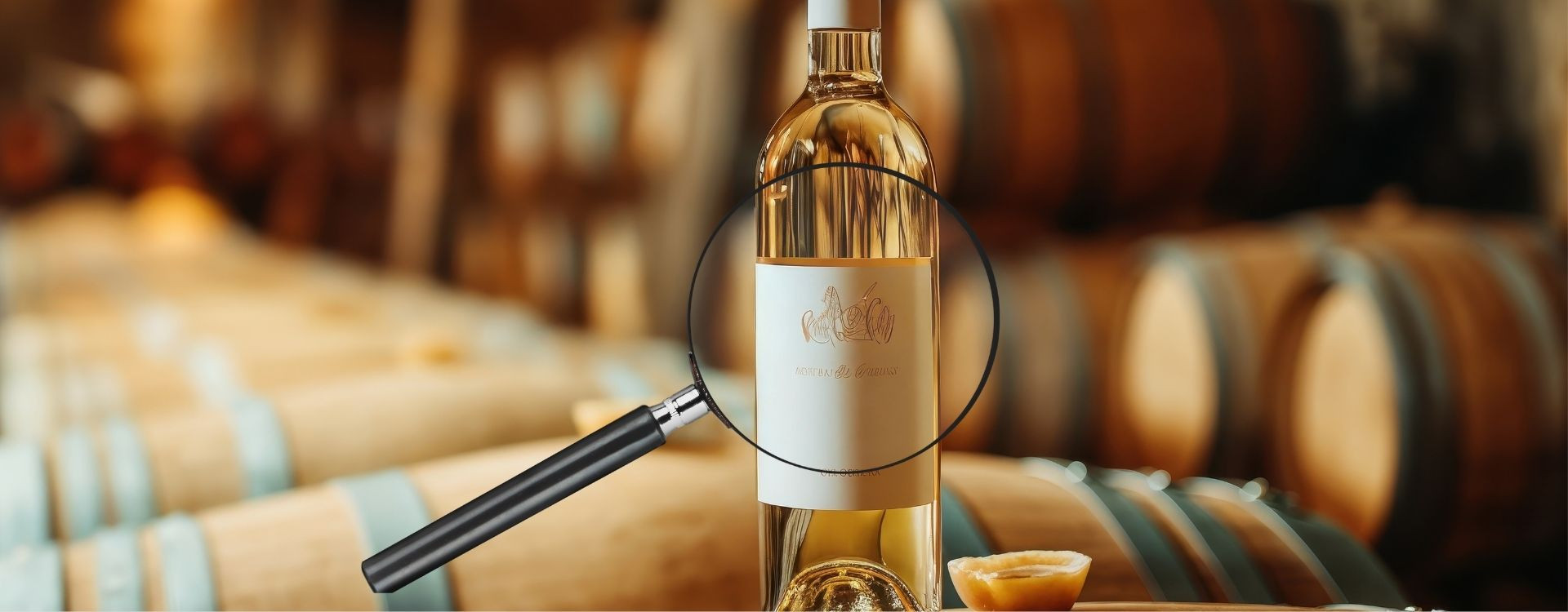
And you are absolutely right, as all the necessary information about a wine is listed there: the domain name, appellation, grape varieties, vintages, awards… It’s essentially the wine's identity card. But understanding it isn’t always easy. That’s why we’re explaining some basic concepts to guide you in your choices.
- The Domain: Behind Every Wine is a Winemaker!
Typically, the domain name is the most prominent element on a wine label. And for good reason: it represents the ultimate identity of a wine. Behind every domain is a (or several) winemaker who works the wine with their own expertise and vineyard culture. In this sense, the mention of the bottling location is also important: if you read “bottled at the property,” “at the domain,” or “at the château,” it reinforces the wine’s identity.
However, know that the term “bottled at the château” doesn’t necessarily mean the wine was made in an actual château! In winemaking, “château” is actually a commercial designation. It gained popularity from the Bordeaux region, where the first wine classification was established (1855). At that time, most owners were châtelains… hence the term château! To remember this, keep in mind that wine is made in a cellar, not a château!
- Appellation and Classifications: The DNA of the Wine
Whether you’re an expert, a knowledgeable enthusiast, or a beginner, you know that a Bordeaux wine is radically different from a Burgundy wine. When reading a label, you need to pay attention to the appellation or classification, which is, in a way, the wine’s DNA. Just like your place of birth, the appellation provides valuable information about the wine’s origins, its soil, terroir, and characteristics. In France, there are two types of appellations: Appellation d’Origine Contrôlée (AOC) or Appellation d’Origine Protégée (AOP) and Indication Géographique Protégée (IGP). Probably the most well-known, AOC is a French label that guarantees the wine was produced in a specific geographical area and that the winemaker followed a precise set of rules, including the exclusive use of local products, which explains why AOC or AOP wines are easily recognizable. IGP is a European label corresponding to a geographical area with a set of rules requiring that the grapes come exclusively from the IGP territory.
Aside from appellations, wine classifications also include AOCs, Appellations d’Origine Contrôlée de Qualité Supérieure (AOCQP), Vins de Pays (which correspond to IGP wines), and Vins de France. The latter category is not tied to any geographical indication and is often considered the “lower tier” of wine. However, it remains interesting as it allows winemakers a great deal of freedom in crafting wines, which can result in quality wines sold at good value-for-money.
-
Grape Varieties: Their Characteristics Vary by Terroir
“Let’s choose a Merlot or a Sauvignon!” Grape varieties generally serve as a good indicator of the type of wine. Easily memorable, they are often used verbally to refer to a type of wine. However, many grape varieties are found in different terroirs. Therefore, they won’t all taste the same from one region to another, as they are subject to different climatic conditions. If you enjoy the Gamay from a Beaujolais wine, you might be surprised (but certainly not disappointed!) by the taste difference with a Gamay from the Loire. And if you swear by Burgundy red wine made from Pinot Noir, take a trip to the Alsace vineyards, which also favor Pinot Noir! -
The Vintage: A Non-Vintage Wine Isn’t Necessarily a Bad Sign!
Another very important element on a wine bottle is the vintage. If you know a bit about wine, you know whether one year or another is preferable. But you may have noticed that some cuvées don’t have a vintage. Is this a bad sign? Not necessarily. It’s true that generally, a vintage wine represents a quality guarantee. But a non-vintage wine refers to a wine made from a blend of grapes harvested in different years. Therefore, it’s quite possible to find true gems even if the year of production isn’t on the label. This practice is quite common in Champagne wines, where 95% of them are non-vintage.
Our Favourites Wines Selection : Our sommeliers have handpicked the wines of the moment, straight from the winemakers at estate prices. See the selection →
FAQ - Reading a wine label
Which mentions are mandatory on a wine bottle label?
The alcohol by volume (the degree), the nominal volume, the origin with the appellation or category, the name of the bottler, the lot number and the presence of allergens such as sulphites are all required. The vintage and the grape variety, on the other hand, remain optional and are left to the winemaker.
What does « bottled at the property » mean?
It means the wine was matured and bottled on the estate itself, by the winemaker, rather than elsewhere. This is a mark of traceability that reinforces the wine's identity and gives you a direct link with the producer.
What is the difference between an AOC (AOP) and an IGP?
The AOC, and its European equivalent the AOP, guarantees a precise origin and compliance with strict specifications, including the exclusive use of local products. The IGP covers a wider geographical area and only requires the grapes to come from its territory, leaving the winemaker more freedom.
Does the word « château » on a label mean a real castle?
No, not necessarily. In winemaking, the term château is a commercial designation, made popular by the Bordeaux region from the 1855 classification onwards. The wine is made in a cellar, not in an actual castle.
Is a non-vintage wine necessarily of lower quality?
Not at all. A non-vintage wine comes from a blend of grapes harvested over several years, a common practice since 95% of champagnes carry no vintage. You can find real gems there, as the absence of a year is not a flaw but a choice of production.


