Delivery from €16,90 per winemaker in Europe (excluding the United Kingdom)

Unbeatable !
Opened bottle: 3 tips to save it
Top 3 Tips to Save an Open Bottle of Wine
Here are three tips to prevent your opened bottle of wine from going down the drain!
1) Re-Cork Your Open Bottle
When you open a bottle of wine, the liquid inside comes into contact with outside air, leading to oxidation. While oxidation initially helps the wine open up its aromas, it eventually weakens the wine and promotes the growth of microorganisms like bacteria. The greater the air space between the liquid and the cork, the higher the risk. This process can be particularly problematic for an opened bottle.
To preserve your wine, the first step is to re-cork the bottle. While using the original cork is the most common solution, there are many effective accessories available. For example, an "air pump" cork, a "champagne" cork, or a screw cap can also be used.
However, it's important to note that some wines fare better than others: for instance, aged wines, sweet wines (like Vin Jaune or Sauternes), and fortified wines (like Pineau des Charentes or Port) will last longer compared to sparkling wines, champagnes, or dry white and red wines, especially if they are young.
2) Store Your Bottle in a Cool Place
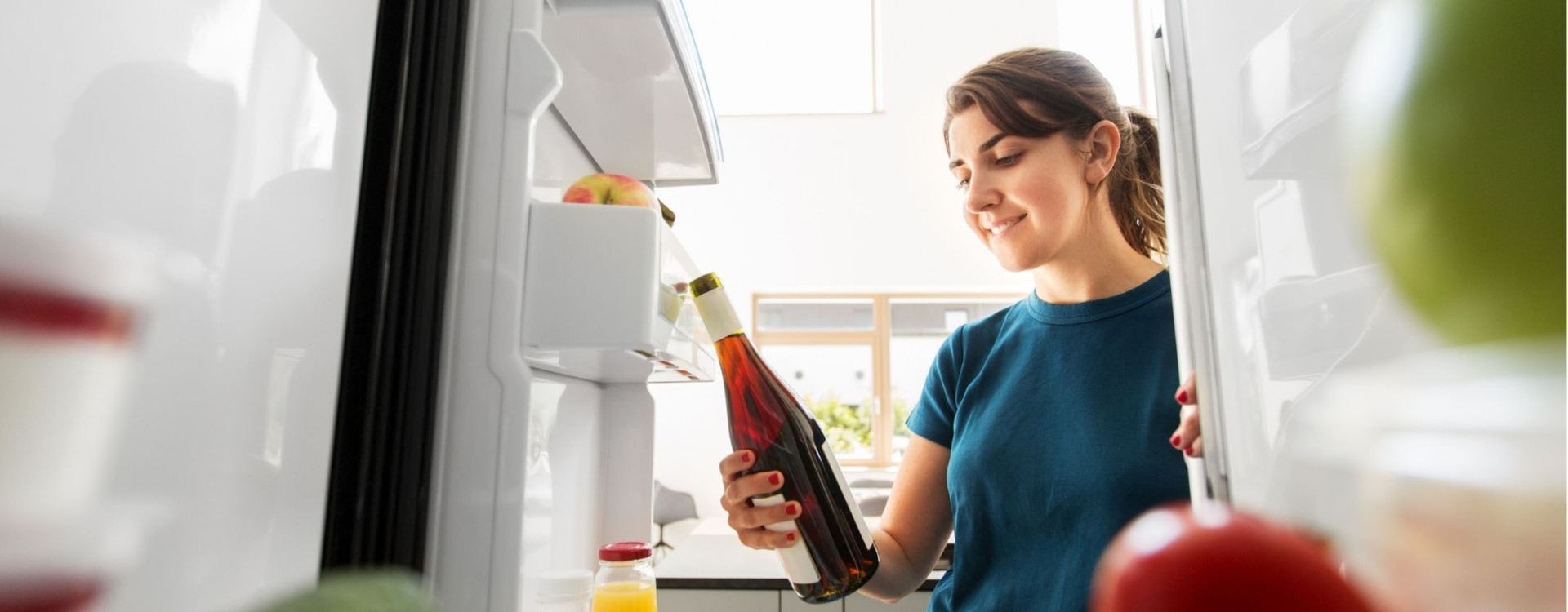
Air isn’t the only enemy of wine. Temperature also plays a crucial role in wine preservation. Wines, including reds, do not react well to temperatures exceeding 15 degrees Celsius (59 degrees Fahrenheit). Once you've re-corked your bottle, store it in a cool place, such as the refrigerator, or in a dry, airtight cabinet.
3) Keep It in the Dark
Wine is a bit like a nocturnal creature: it needs darkness. Sunlight can quickly alter the wine, causing it to spoil faster. This is especially true for champagnes, sparkling wines, and green bottles, as the lighter glass makes them more vulnerable to light. Make sure to keep your bottle away from light, avoid placing it on a windowsill, for instance.
Our Favourites Wines Selection : Our Selections of the Moment, picked straight from independent winemakers at estate prices. See the selection →
FAQ - Opened bottle
How long can you keep an opened bottle of wine?
It depends on the wine. A dry white or red, especially a young one, is best drunk within two or three days of opening. Aged wines, sweet wines and fortified wines like Pineau des Charentes or Port last much longer.
How do you re-cork an opened bottle effectively?
The original cork is the simplest option. You can also use an air pump cork, a champagne cork or a screw cap, which limit contact with air and slow down oxidation.
Should you put an opened bottle of wine in the fridge?
Yes, cool storage slows the wine's evolution. Wines react badly to temperatures above 15 degrees Celsius, reds included. Re-cork the bottle, then keep it in the refrigerator or in a dry, airtight cabinet.
Why does an opened bottle of wine spoil?
Once in contact with air, the wine oxidises. This first opens up the aromas, then weakens the wine and encourages the growth of microorganisms. The larger the air space above the liquid, the higher the risk.
Why keep an opened bottle away from light?
Sunlight quickly alters wine, making it go flat faster. This is especially true for champagnes, sparkling wines and lighter-coloured bottles. Avoid leaving your bottle on a windowsill.