Delivery from €16,90 per winemaker in Europe (excluding the United Kingdom)


AOC Régnié
The Beaujolais vineyards are located in central-eastern France. Celebrated for its famous Beaujolais Nouveau, this region between the Mâconnais and Rhône valleys is home to many other crus, such as the AOC Moulin-à-Vent. Régnié appellation wines, one of the ten classified Beaujolais crus, are fruity red wines of great finesse. They can be kept for 3 to 5 years.
Filtrer


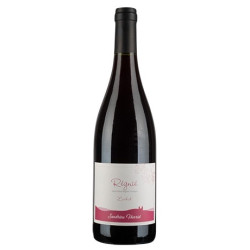


Régnié: The Youngest of the Beaujolais Crus
Régnié comes from the village of Régnié-Durette and a few plots in neighboring Lantignié, north of the Ardières valley in the Rhône department. The village brings together two former parishes, Régnié and Durette, both tied to wine for centuries.
Durette, Régnié and Wine Bound for Paris
In 992, a charter of Cluny Abbey records a gift to the monks: the chapel of Sainte-Marie in the village of Durette, along with the land, vines, meadows and mills the donor owned in the parish. In 1602, Durette's land was still known as "good for wine only."
From 1769, Régnié and Durette were among the sixteen Beaujolais parishes allowed to ship their wines to Paris.
Régnié is also home to the Grange Charton, a set of 19th-century winegrowers' houses and winemaking buildings, partly listed as a historic monument. Bequeathed to the Hospices de Beaujeu, the charity hospital of nearby Beaujeu, in the early 1800s, it serves as the headquarters of the hospital's vineyard estate.
For a look at the village today, read our portrait of a biodynamic grower in Régnié-Durette.
History of the Régnié Appellation
Régnié is the youngest of the Beaujolais crus, having obtained its cru status in 1988. However, despite its relatively recent appellation, vines have been cultivated here for centuries. Located between Brouilly and Morgon, this appellation derives its name from Regniacus, a local lord from the 3rd century. It stands out for its granitic soils and viticultural history shaped by monks and local ecclesiastical communities.
Climate and Terroir of the Régnié Appellation
- Climate: Régnié enjoys a semi-continental climate, moderated by Mediterranean influences. Summers are warm and sunny, while winters are relatively cool.
- Soils: Characterized by mineral-rich pink granite, Régnié's soils are the origin of the wines' unique profile. This granitic terroir allows for optimal drainage, essential for its red grape variety: Gamay.
Gamay: The Emblematic Grape Variety of AOC Régnié
The reigning grape variety of Beaujolais and AOC Régnié is undoubtedly Gamay. It is a low-vigor but productive grape variety that, on this particular terroir, produces wines that are indulgent, fruity, and delicate. Like in AOC Régnié, Gamay can also yield more structured red wines capable of aging in the best crus of Beaujolais.
Style of Régnié AOC Wine
- Appearance: AOC Régnié red wines display a light ruby red color with violet reflections.
- Nose: The bouquet is dominated by aromas of red fruits (strawberry, raspberry, cherry), often complemented by floral notes (violet) and sometimes a spicy touch.
- Palate: On the palate, it is a supple and fruity red wine with refreshing acidity. The tannins, though present, are silky and integrated, making Régnié a wine accessible when young but capable of aging for a few years.
- Serving Temperature: 14°-16°C.
- Aging Potential: Generally enjoyed in their youth, AOC Régnié red wines can gain complexity after 3 to 5 years of aging (or even more depending on the vintage and the estate).
Best Food Pairings with Régnié AOC Wine
Here are some recommendations to achieve the best food and wine pairings with a bottle of red wine from a domaine or château in the Régnié AOC:
- Country terrine
- Ham on the bone
- Beaujolais-style saucisson en brioche
- Roast turkey
- Beaujolais-style andouillette
A Prince, a Village Caveau and a Charity Hospital: Régnié Explained
What Is Régnié's Nickname?
Régnié is nicknamed the "Prince du Beaujolais," or Prince of Beaujolais, by its own producers. The appellation's official INAO profile uses the title too, and the growers promote their village and its wine through festivals, shows and sporting events.
What Is the Caveau des Deux Clochers?
The Caveau des Deux Clochers is where Régnié's producers have jointly offered a selection of their wines since 1967. The name means "two bell towers," and the village church has exactly that: it was built in 1867 to plans by Pierre Bossan, the architect who later designed Lyon's Fourvière Basilica.
How Is Régnié Linked to the Hospices de Beaujeu Wine Auction?
The Hospices de Beaujeu own vines in the Régnié appellation and sell their wines at a charity auction for the hospital, a tradition dating back to 1797. Their vineyard estate was built up over the centuries through bequests. From the start, the proceeds went to caring for the sick and the elderly.
Where to Buy Régnié Direct from the Winemaker?
You can buy Régnié direct from the winemaker on Avenue des Vins. Every wine's page lists its grape varieties.
See also: AOC Morgon - AOC Brouilly - AOC Fleurie