Delivery from €16,90 per winemaker in Europe (excluding the United Kingdom)


AOC Fleurie
Beaujolais Nouveau made the Beaujolais famous, but this corner of east-central France, south of the Mâconnais, also counts many other crus, AOC Fleurie among them. One of the 10 Beaujolais crus, Fleurie covers the village of the same name. Its southeast-facing slopes lend great finesse to wines that are exclusively red wines made from Gamay. They show red fruit and floral notes, with structure and harmony, and Fleurie is often described as the most “feminine” of the Beaujolais crus.
Filtrer


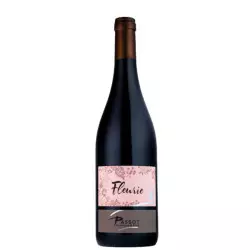


A Cru Prized Long Before Beaujolais Nouveau
Fleurie had made its name long before the Beaujolais Nouveau craze. In the early 18th century, Burgundian wine merchants were already shipping it to Paris. In the 19th century, Jullien, Guyot and Danguy, who studied and described the wines of France, always gave it a place of honor.
History of the AOC Fleurie
Nestled in the heart of Beaujolais, AOC Fleurie is one of the most prestigious among the region's ten crus, alongside Morgon and Moulin-à-Vent. AOC Fleurie derives its name from the eponymous village and is renowned for producing the most feminine and elegant red wines in Beaujolais. Its history, deeply rooted in Beaujolais terroir, spans several centuries, leaving behind a rich legacy and a beautiful reputation among red wine enthusiasts in Beaujolais.
Climate and Terroir of the AOC Fleurie
- Climate: Benefiting from a semi-continental climate, Fleurie enjoys warm summers and cold winters, ideal for the optimal maturation of the Gamay grape.
- Soils: The uniqueness of Fleurie's terroir lies in its pink granite soils, which provide excellent drainage and impart finesse and very distinctive floral notes to the wines.
Gamay: Indispensable Grape Variety of AOC Fleurie
Gamay is the emblematic grape variety of the AOC Fleurie appellation, and more generally of all red wines in Beaujolais. Within the AOC Fleurie appellation, Gamay expresses its full splendor, yielding red wines that are fruity, floral, and delicate.
Style of AOC Fleurie Wines
- Appearance: Deep ruby red color with violet reflections.
- Nose: AOC Fleurie red wine offers enchanting aromas of roses, violets, peonies, red fruits (raspberry, cherry), and sometimes vineyard peach.
- Palate: AOC Fleurie produces harmonious wines with a beautiful texture on the palate, combining finesse and silky tannins. The finish is long and marked by captivating floral notes.
- Serving Temperature: 14°-16°C.
- Aging Potential: 2 to 5 years.
Best Food Pairings with AOC Fleurie Wine
Follow this guide to achieve the best food pairings with a bottle of red wine from a château or domaine in AOC Fleurie:
- Black pudding with apples
- Stuffed quails
- Lyonnais sausage in brioche
- Rabbit hunter-style
- Savory buckwheat pancakes (ham, egg, cheese)
From the Upper Slopes Down Toward the Saône
The appellation is limited to the village of Fleurie, where the vineyard falls into two parts. Above the village center, between 300 and 450 meters (about 985 to 1,475 feet), steep slopes where the bedrock often shows through carry very sandy, poor soils.
Below the village, the slope gradually eases down to 230 meters (about 755 feet) toward the Saône. There the rock lies hidden under colluvium washed down from the slopes, and the deeper soils are richer in clay, fine sand and silt.
Two streams, the Bief de Roclaine and the Presle, rush down the mountain to join the Saône. They cut through this terrain and vary the exposures, though most slopes face southeast, sheltered from westerly winds by the Beaujolais hills.
Halfway up the slopes, the vines usually escape spring frosts and the morning fog over the plain. The sun warms them from dawn, and they enjoy maximum sunshine.
Statue, Legend, Granite: Getting to Know Fleurie
What does La Madone above the Fleurie vineyards represent?
La Madone de Fleurie is a statue of the Virgin Mary watching over the vineyards from its chapel. It stands 425 meters (about 1,395 feet) up, according to Inter Beaujolais. Locals identify with it: it has become the symbol of the village, and most Fleurie labels and promotional materials refer to it.
Where does the name Fleurie come from?
Legend has it that the name Fleurie comes from Florus, a Roman legionnaire who settled on a hill above the vineyards. Inter Beaujolais notes that nothing proves it. Its likeness to “fleur” and “flower” did help the cru: it won over Swiss and English wine lovers.
What is Fleurie granite?
For the appellation, “Fleurie granite” is the pink, porphyritic, mica-poor granite beneath the delimited Fleurie vineyard plots. Inter Beaujolais puts pink granite at 90% of the soils in the appellation, against 8% for foothill soils.
Where can you buy Fleurie direct from the winemaker?
You can buy Fleurie direct from the winemaker on Avenue des Vins. Every wine’s page gives the name of its producer.
See also: AOC Morgon - AOC Chiroubles - AOC Brouilly