Delivery from €16,90 per winemaker in Europe (excluding the United Kingdom)


AOC Lalande de Pomerol Wine
Located in the southwestern quarter of France, the Bordeaux vineyards are renowned for their great wines. Among their many appellations is AOC Lalande-de-Pomerol, which covers 1,200 hectares to the east of Bordeaux. Producing only red wines, AOC Lalande-de-Pomerol uses mainly Merlot, but also Cabernet Franc, Cabernet Sauvignon and Malbec. The wines of this appellation are tannic and powerful, and can be kept for 5 to 10 years.
Filtrer


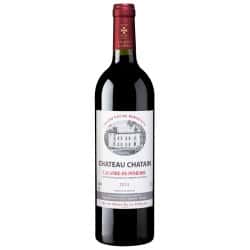


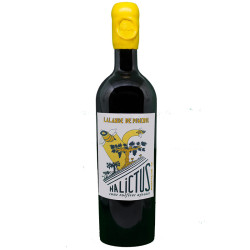


Lalande-de-Pomerol: Gravel Terraces and Iron-Rich Subsoil
In Lalande-de-Pomerol, vines grow on stony terraces built up in the Quaternary period from sediment carried down from the Massif Central. Beneath this free-draining gravel, the subsoil holds iron oxides, locally called crasse de fer, which give the wines distinctive minerals.
History of the AOC Lalande-de-Pomerol
Located just north of its famous neighbor, Pomerol, in the Bordeaux region, AOC Lalande-de-Pomerol boasts a viticultural history dating back to Antiquity. However, like many Bordeaux appellations, it was during the Middle Ages that this region truly began to stand out, thanks to the monastic influence and trade with England. Less publicized than some neighboring appellations, AOC Lalande-de-Pomerol is a hidden gem, offering characterful and accessible Bordeaux red wines for enthusiasts to discover.
Climate and Terroir of the AOC Lalande-de-Pomerol
- Climate: The climate is temperate oceanic, with warm summers and mild winters, ideal for grape maturation.
- Soils: The soils are primarily composed of alluvial terraces and a mosaic of gravel, sand, and clay. This terroir provides excellent drainage and good heat reflection, essential for the optimal development of Merlot, the predominant grape variety of the appellation.
Key Grape Varieties of the AOC Lalande-de-Pomerol
Merlot dominates, bringing roundness and fruitiness. It is often accompanied by Cabernet Franc, which adds structure and complexity, and to a lesser extent, Cabernet Sauvignon and Côt (Malbec).
Style of AOC Lalande-de-Pomerol Wines
- Appearance: Deep ruby red, almost purple hue.
- Aroma: Aromas of red and black fruits (strawberry, blackberry, prune), often complemented by notes of vanilla or spices from oak barrel aging.
- Palate: The red wines are both fleshy and opulent, with velvety tannins. While accessible in their youth, the red wines of Lalande-de-Pomerol gain complexity with age.
- Serving Temperature: 16-18°C.
- Aging Potential: 5 to 10 years (or more, depending on the château and vintage).
Best Food Pairings with a Wine from AOC Lalande-de-Pomerol
Here are some perfect food and wine pairings with a red Bordeaux wine from a domain or château in AOC Lalande-de-Pomerol:
- Black Angus Steak
- Roast Pork with Prunes
- Pheasant Terrine
- Braised Ham
- Sautéed Porcini Mushrooms
Two Communes North of the Barbanne
AOC Lalande-de-Pomerol covers two communes in the Gironde, Lalande-de-Pomerol and Néac, in the northeast of the department, in the Libourne area. To the south, a stream called the Barbanne separates it from Pomerol; to the east, it borders Montagne-Saint-Émilion. The gently rolling landscape mixes vineyards, châteaux set in wooded parks and two small villages of white stone.
The two communes sit on different terraces. Néac lies mostly on the high Günz terrace, made of reddened sand, gravel and pebbles over clay. Lalande-de-Pomerol sits mainly on the middle Riss terraces, where the water table runs deep and vine roots can reach down several yards.
Only still red wines can carry the name. In every blend, the four main grapes, Merlot, Malbec, Cabernet Franc and Cabernet Sauvignon, must make up at least 70%; Carmenère and Petit Verdot, the secondary varieties, are capped at 10% of the vineyard.
Soil guides the choice of grapes. Cabernet Franc and Cabernet Sauvignon do best on the most gravelly ground, while Merlot, the majority grape, ripens fully on gravel with a clay matrix.
A Cross and a Stream: Getting to Know Lalande-de-Pomerol
Why Is the Maltese Cross Linked to Lalande-de-Pomerol?
The Maltese cross of Lalande-de-Pomerol recalls the Knights Hospitaller of Saint John of Jerusalem, who settled in the area in the 12th century. The order later became known as the Knights of Malta. Its commandery helped the vineyard grow, and its badge, a white eight-pointed cross, became the emblem of the appellation's wines.
What Separates Lalande-de-Pomerol from Pomerol?
Lalande-de-Pomerol and Pomerol are two separate AOCs, each with its own area and its own rules, despite their similar names. Pomerol mainly covers the commune of Pomerol and the northern part of Libourne, across the Barbanne stream. One plot in the commune of Lalande-de-Pomerol still produces Pomerol, under a 1928 court ruling.
Where Can You Buy AOC Lalande-de-Pomerol Wines Direct from the Winemaker?
You can buy AOC Lalande-de-Pomerol wines direct from the winemaker on Avenue des Vins. Every wine’s page shows its appellation and region.
See also: AOC Pomerol - AOC Fronsac - AOC Bordeaux