Delivery from €16,90 per winemaker in Europe (excluding the United Kingdom)

Unbeatable !
Everything you need to know about the history of champagne
ALL ABOUT THE HISTORY OF CHAMPAGNE
Who had the crazy idea one day to invent sparkling wine ? How did these little bubbles, now a symbol of celebration and sweet euphoria, come to be in our glasses? And is there an answer to the often-asked question: who invented champagne?
It turns out that the answer both exists and does not exist. Indeed, the history of sparkling wines begins well before the advent of Champagne wines. The latter is primarily the result of French history and the invention of a method: the méthode champenoise, and the history of the kings of France.
The Origin of Sparkling Wines
The origin of sparkling wines is lost in the distant past. What we know for (almost) sure is that neither the Romans nor the Greeks knew about it, as no writings from that era mention it. However, an Egyptian text refers to a canceled sale due to a defect: presenting slight effervescence.
Effervescence was appreciated in France when wines, which seemed to have finished fermenting, were bottled after the harvest. In spring, a second fermentation took place in the bottle, creating this effervescence.
What happened was that the cold winter temperatures stopped the fermentation before the yeasts had completely finished their work. The rise in temperatures in the spring restarted the process, but this time fermentation occurred in the bottles.
Fermentation creates alcohol and CO², and thus bubbles. The first written traces come from Limoux, Gaillac, or the Diois. We are far from Champagne!
The Méthode Champenoise: Mastering Effervescence
So how did we get to Champagne? It turns out that in the face of the appearance of sparkling wines, initially perplexed tasters ended up declaring them invigorating and excellent. This reputation pushed some to seek control of effervescence in bottles to improve quality.
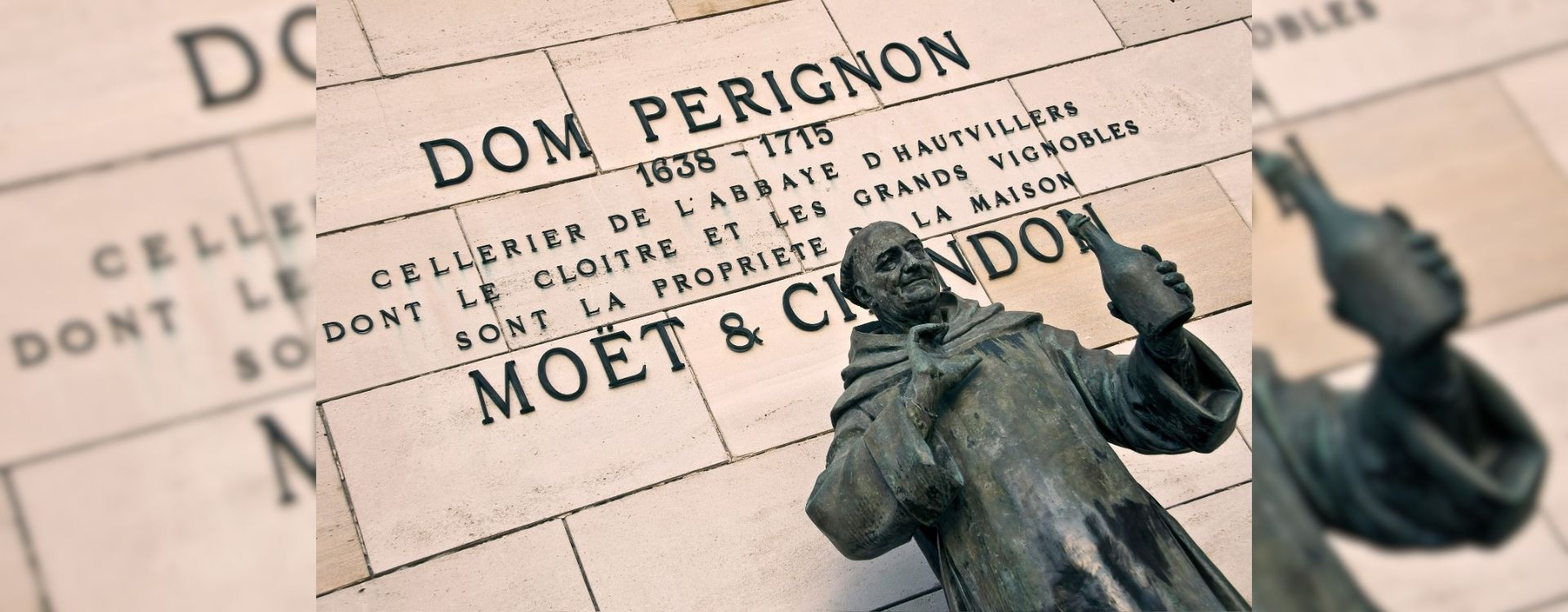
The first successful attempt was in London, by adding cane sugar molasses, cinnamon, and clove. This recipe quickly became popular with the English but would not make history thanks to the intervention of the famous Benedictine monk Dom Pérignon in Champagne.
According to legend, as nothing attests to it for sure, he would be the inventor of the méthode champenoise, also called the traditional method since, allowing the mastery of the sparkling process in bottles. It works by adding sugar, yeasts, and old wine (the tirage) to recreate a second fermentation in the bottle.
The particularity of this method is to leave the wine in contact with its lees, that is, the yeasts that die during fermentation. This offers pastry notes of yeast that blend wonderfully with the aromatic nature of the Champagne grape varieties.
Discover here how champagne is made for more details on this method.
The Fame of the Champagne Region: A Story of Kings
If Champagne wines are today considered the pinnacle of sparkling wines, it is largely due to their exceptional clientele. Another historical heritage of the region is the Cathedral of Reims. It is in Reims that the kings of France are crowned, and during a coronation, Champagne wine is naturally tasted.
It was the kings themselves who bought Champagne wine for the court, making the beverage not only famous but profitable. On numerous occasions and in many royal gifts, Champagne was deemed the only drink worthy of being consumed and offered.
Champagne thus became a rich wine-producing region, capable of investing significant efforts in making its highly acclaimed wines.
Today, the AOC Champagne has the strictest rules regarding sparkling wines compared to all other similar appellations (Crémants, Blanquette de Limoux, etc.). Notably, with aging on lees for at least fifteen months, which gives its characteristic pastry flavors unique to Champagne.
Our Champagne Selection : Champagnes from independent growers, at estate prices, shipped straight from the domaine. See the selection →
FAQ - History of Champagne
Who invented champagne?
No source proves it with certainty. Legend credits the Benedictine monk Dom Pérignon with mastering effervescence in the bottle, in Champagne. The history of sparkling wines, however, goes back well before him.
What is the méthode champenoise?
It is the technique that controls the sparkling process in the bottle, also known as the traditional method. Sugar, yeasts and old wine (the tirage) are added to trigger a second fermentation. The wine then stays in contact with its lees, which gives it its pastry notes.
Where did the first sparkling wines appear?
The earliest written traces of sparkling wine come from Limoux, Gaillac and the Diois, far from Champagne. The effervescence came from a second fermentation that restarted in spring, once the bottles warmed up.
Why is champagne linked to the kings of France?
The kings of France were crowned in Reims, in the heart of Champagne, where the local wine was naturally tasted. The court bought it for celebrations and gifts, which made champagne both famous and profitable.
How long is champagne aged on its lees?
The Champagne AOC requires ageing on the lees for at least fifteen months, one of the strictest rules among sparkling wines. This prolonged contact with the yeasts gives champagne its characteristic pastry flavours.


