Delivery from €16,90 per winemaker in Europe (excluding the United Kingdom)

Unbeatable !
Blanc de Blancs: everything you need to know about sparkling wines
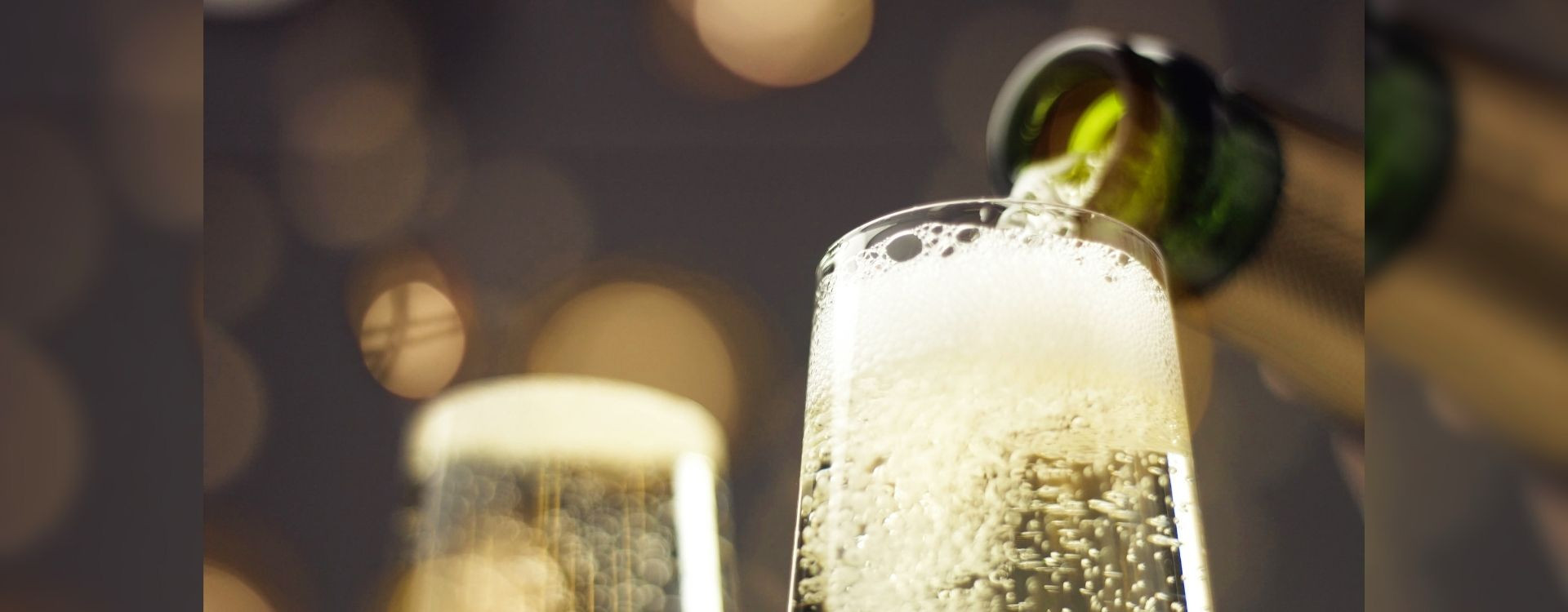
Blanc de Blancs: what is it and why is it so special ?
In the collective imagination, a Blanc de Blancs always marks a special occasion, a moment of exception, refined and elegant. This Champagne is, alongside Blanc de Noirs, more delicate to produce than the most widely available Champagnes. But what makes it so unique, and why does its aromatic profile differ so markedly from a classic Brut?
What is Blanc de Blancs ?
The name instantly evokes an image of superior Champagne. Classic Brut Champagnes, the most widely produced, are made through a carefully crafted blend of several grape varieties and vintages. Like a painter composing with multiple colours to achieve the desired effect, Brut Champagne seeks to reproduce the flavours and aromas that form the house signature. Blanc de Blancs owes its name to the fact that only white grape varieties can be used in its production: generally Chardonnay. The metaphor that best describes a Blanc de Blancs is that of the same painter working this time exclusively with the nuances of a single colour. This sparkling wine draws its distinctiveness from the pure expression of Chardonnay.
The distinctive qualities of Blanc de Blancs
Champagne sparkling wines are traditionally produced from blends of the region's three royal grape varieties: Chardonnay, Pinot Noir and Pinot Meunier. The reputation of the Champagne region is largely built on the work of generations of winemakers who have laboured, like true alchemists, on the different interactions between these three varieties to ensure quality wines year after year. A Champagne winemaker remains constantly attuned to each grape variety and each plot to build their wines.
Throughout Champagne's history, certain styles have emerged with the aim of highlighting one particular aspect: vintage Champagnes, to showcase an exceptional year; single-plot Champagnes, to celebrate a very specific terroir; and Blanc de Blancs and Blanc de Noirs, which put a single grape variety centre stage.
Blanc de Blancs is thus made exclusively from Chardonnay, Arbane or Pinot Blanc, all white-skinned, white-juiced grape varieties of the Champagne region. It is this purity of variety that makes it so singular.
Our Blanc de Blancs Champagne Selection : 100% Chardonnay Champagnes at estate price, shipped direct from independent Champagne growers. See the selection →
Blanc de Blancs vs Brut Champagne: what are the differences ?
Brut Champagne is a blend of juices from both white and black grapes, offering aromas and flavours from both: the lightness of Chardonnay and the warmth of Pinot (Noir or Meunier). Blanc de Blancs is the pure expression of its single constituent grape variety.
Chardonnay gives Champagne its floral notes of acacia and elderflower, its lemon-tinged aromas and its characteristic mineral freshness. In a Brut Champagne, this freshness is usually balanced by the rich, warm flavours of yellow fruits and heady flowers brought by the black grapes. A Blanc de Blancs is therefore distinguished from a Brut Champagne by a lighter, more airy and taut profile, ideal for lovers of finesse and minerality.
| Characteristic | Blanc de Blancs | Classic Brut Champagne |
|---|---|---|
| Grape varieties | Chardonnay only | Chardonnay + Pinot Noir + Pinot Meunier |
| Aromatic profile | Floral, citrus, mineral, airy | Fruity, round, warm, complex |
| Structure | Light, taut, lively acidity | Fuller, more balanced |
| Preferred pairings | Oysters, seafood, sushi | Aperitif, poultry, varied dishes |
| Ageing potential | Excellent (10-20 years) | Good (3-7 years) |
Which foods to pair with Blanc de Blancs ?
This distinctive gustatory profile opens the door to some very interesting food and wine pairings. Its lightness makes it an ideal aperitif, delighting the palate with its vivacity and freshness. Much like the still Chardonnays produced nearby in Chablis, Blanc de Blancs also crowns the iodine flavours of the sea: lobster, oysters, scallops and all manner of seafood.
Blanc de Blancs also pairs beautifully with cheese, bringing an unexpected dimension to this course. Its acidity and bubbles combine particularly well with hard cheeses, and it holds its own very well with soft bloomy-rind cheeses. For special occasions, it accompanies a truffle risotto or lobster thermidor magnificently.
Why buy your Blanc de Blancs direct from the producer?
Blanc de Blancs is among the Champagnes that benefit most from being purchased directly at estate price. Cuvées from independent Champagne winemakers, often not listed in mainstream distribution channels, offer a quality and authenticity that the major houses cannot always match at the same price point. On our marketplace, every Blanc de Blancs is shipped directly from the winemaker's cellar, with no intermediary. You access exceptional cuvées at estate price, with the guarantee of optimal conservation from vine to table.
Our Blanc de Blancs Champagne Selection : 100% Chardonnay Champagnes at estate price, shipped direct from independent Champagne growers. See the selection →
Frequently asked questions about Blanc de Blancs
What is the difference between Blanc de Blancs and Blanc de Noirs ?
Blanc de Blancs is made exclusively from white grape varieties (primarily Chardonnay), while Blanc de Noirs is produced from black grapes (Pinot Noir or Pinot Meunier) from which white juice is extracted by gentle pressing. The result is diametrically opposite in profile: Blanc de Blancs is light, airy and mineral; Blanc de Noirs is more structured, full-bodied and fruity.
Can Blanc de Blancs age well ?
Yes, and this is one of its most underrated qualities. A high-quality Blanc de Blancs from the great Chardonnay plots of the Côte des Blancs can age for 10 to 20 years in the cellar. With time, it develops notes of brioche, honey, white truffle and toasted hazelnut that completely transform its profile. The great vintage Blanc de Blancs are among the Champagnes with the best ageing potential.
Which Chardonnay is used in Blanc de Blancs ?
Champagne Chardonnay comes primarily from the Côte des Blancs, a strip of chalky hillsides south of Épernay including villages such as Cramant, Avize, Le Mesnil-sur-Oger and Oger. These clay-limestone terroirs give Chardonnay exceptional tension, minerality and length. Some winemakers also use Arbane or Pinot Blanc, two accessory white varieties of Champagne, to add nuance and complexity.
At what temperature should Blanc de Blancs be served ?
Between 8 and 10°C for a young, vibrant Blanc de Blancs, to preserve its freshness and floral, citrus aromas. For a vintage or aged Blanc de Blancs, raise the temperature slightly to 10-12°C to allow its aromatic complexity to fully express itself, notes of honey, brioche or dried fruits that reveal themselves more readily with a few extra degrees.
Does Blanc de Blancs exist outside Champagne ?
Yes. The term "Blanc de Blancs" can be used for other sparkling wines made exclusively from white grape varieties: Crémant de Bourgogne Blanc de Blancs, Crémant d'Alsace, Cava Blanc de Blancs in Spain. In these cases, the dominant white variety changes according to the region, Chardonnay in Burgundy, Pinot Blanc or Auxerrois in Alsace. The principle remains the same: a sparkling wine made from a single type of white grape.
Blanc de Blancs embodies the purest and most precise expression of Champagne Chardonnay. Between lightness, minerality and elegance, it stands as the ideal Champagne for palates that seek finesse over power, and the perfect pairing for special occasions centred around seafood or a refined meal.


