Delivery from €16,90 per winemaker in Europe (excluding the United Kingdom)

Portraits of winemakers
Roche des Bancs: Thierry Hellin's Hand-Harvested Burgundy Estate
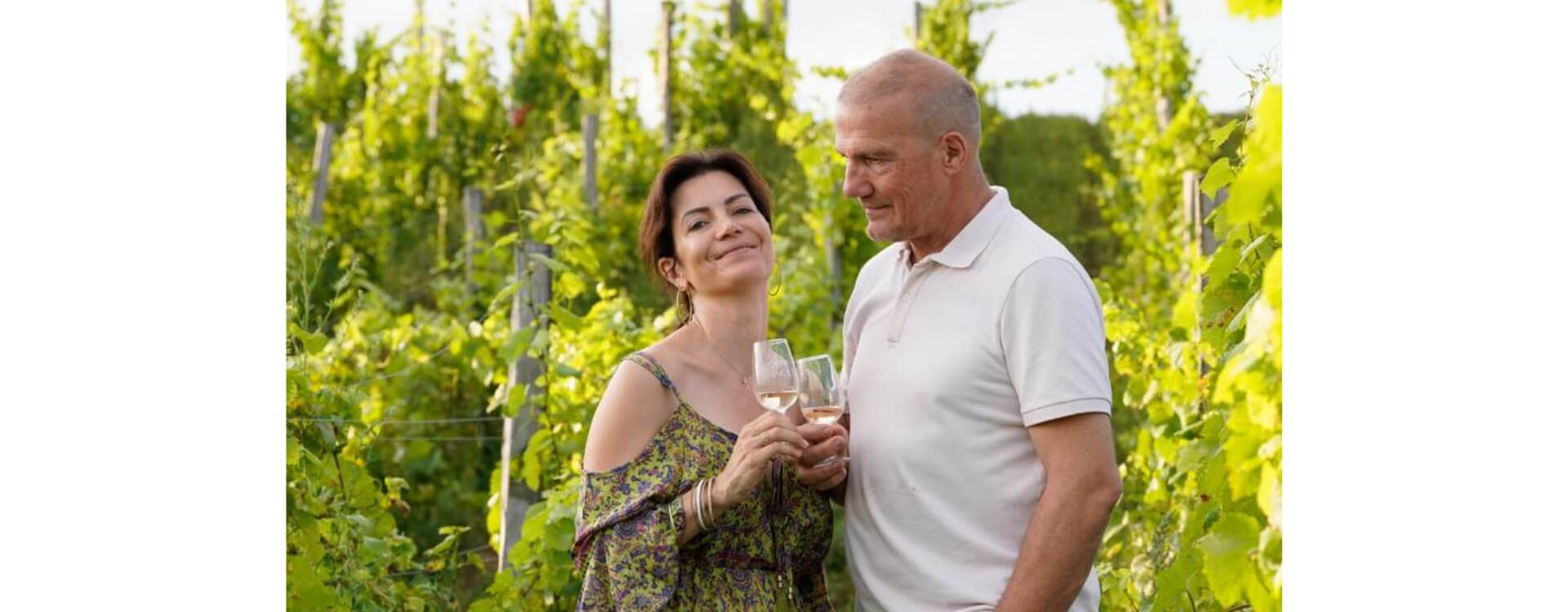
A vineyard that cattle farming replaced, an owner who calls himself an entrepreneur, thirteen and a half hectares farmed organically with no appellation and every row picked by hand: Thierry Hellin on Roche des Bancs, in the Brionnais hills of southern Burgundy.
When Cattle Replaced the Vines
The estate's own site records that the old Brionnais vineyard “disappeared for good after the Second World War and the rise of cattle farming.” The farming press puts phylloxera first.
Slopes at Harvest Daybreak
What comes to Thierry Hellin first is not a number: “The views of the Brionnais hills from my vines, especially when day breaks during harvest.”
The figure for what was lost comes from the estate: its site writes that the old vineyard “had nearly 4,000 hectares of vines” before phylloxera reached it in 1886. The local press repeats the number unchanged, which is not confirmation.
From Jean-Claude Berthillot to Thierry Hellin
The vineyard's return is not its current owner's work: in the 1990s, the site says, Jean-Claude Berthillot “ventured successfully into bringing the old vineyard back to life,” and its key-dates page makes him owner from 1990.
The site spells the old name three ways, among them “formerly Domaine des Fossiles.” We use that one.
Thirty Years, Then October 2020
Thierry Hellin and Sophie Barcella have owned it “since October 1, 2020,” and the site sets them an aim: to “grow and consolidate what Jean-Claude built.” It does not present them as winegrowers: an older team page titles them “Owners et CEO.” The vineyard carries other names, Raphael Baudin, operations manager, and Gilbert Burtin, vineyard manager. Berthillot is still listed as “former winegrower-owner”: a handover made with the seller.
Hail Nets, and a Total Thierry Hellin Adds Up Himself
He announces hail nets “over all our young vines, of which we have planted 5.5 hectares, which are added to the 8 hectares we started with in 2020.” The site gives no net figure but a floor, “more than 8 hectares,” undated. The total of 13.5 hectares rests on his word, and the press counts 5 where he says 5.5.
The Young Vines Cropped for the First Time
Those vines have just started cropping: “They started bearing fruit for the first time this summer.” The site scatters the parcels across five villages, from Mailly to Saint-Julien-de-Jonzy; one press account adds a sixth.
Fossil Marl, and Grapes Outside the Burgundy Duo
The subsoil, which the site describes as “Toarcian limestone marl, extremely rich in fossils,” gave the estate its former name. Its owners add “An altitude of 400 m that gives the wines incredible freshness and limits alcohol levels.”
Auxerrois, Sauvignon Gris and Pinot Gris in Southern Burgundy
The owners treat the missing appellation as an asset: it lets them, they told Arts & Gastronomie, “even without an appellation, belong to the most prestigious winegrowing sphere.”
Alongside Pinot Noir, Gamay and Chardonnay the range lists Auxerrois, Sauvignon Gris and Pinot Gris. Those three step outside Burgundy's classic pair, not outside its rules: Pinot Gris is an accessory grape in AOC Bourgogne, Sauvignon Gris one of two grapes in AOC Saint-Bris, and Auxerrois one of the whites of IGP Saône-et-Loire, which covers the whole department.
One page of its site names that geographical indication, and not for a label. What the bottles declare is published nowhere.
Certified Organic, Without the Natural-Wine Dogma
Thierry Hellin writes he is not blindly after “natural wine and never mind the faults,” but after “translating the Earth into Wine with subtlety,” and a high demand for quality.
One All-Natural Cuvée, and an Instagram Post
The site describes the vineyard as “fully certified Organic Agriculture since 2011” and names the body that “checks and renews” it, Bureau Veritas. The estate is not certified in biodynamics, and one page still announces that “the estate should move to Biodynamics as early as 2021.”
Refusing the dogma did not stop the experiment: just after the acquisition came the estate's first 100% natural wine, “a 50/50 blend of Gamay and Pinot Noir.” Gilles Pudlowski, the food critic of Le Point, tasted a bottle by chance and an Instagram post followed. That is his account, not a verified review.
Everything by Hand, and a Sommelier from La Tour d'Argent
The oldest vines are the ones no machine helps: the site says it works “vines 80 years old” despite “the absence of any possible mechanization.” The rest of it follows, since “the grapes are picked 100% by hand.”
A Winery, Five Rooms, and Pleasure First
At a Sommeliers Dating run by Terre de Vins, Thierry Hellin watched “the amazement of the American sommelier from La Tour d'Argent” in front of L'Aînée, its old-vine Gamay: “wow, a Gamay, this?! Incredible, a great Gamay yes, that should go well with our duck with pears, so hard to pair with wine.”
The estate wants the “five-room guest house that opened there this summer” to become a wine-tourism venue. Its signature line mentions neither terroir nor certification: “Pleasure is the first criterion!” Everything starts there.
Why buy direct from the winegrower? Roche des Bancs wines are shipped straight from the estate: estate prices with no middleman, full vintage traceability and direct support for the estate and its team.
Discover the cuvées of Roche des Bancs direct from the estate, at the estate price, on Avenue des Vins.
Frequently Asked Questions About Roche des Bancs
Does Roche des Bancs Have a Burgundy Appellation?
Roche des Bancs claims no appellation: no AOC, no AOP. Its owners call it a position, claiming a place in “the most prestigious winegrowing sphere” even without one.
What Do Roche des Bancs Wines Taste Like?
Roche des Bancs wines go for freshness before power. Thierry Hellin describes “that fresh frame, without acidity, and that round generosity on top,” and adds: “heavy, complex, alcoholic, tiresome wines are not for us.”
Why Is Roche des Bancs Harvested by Hand?
At Roche des Bancs the whole crop comes in by hand, and the farming press agrees. On its oldest parcels, the estate says, no machine can get through.
Where Are the Brionnais Vineyards in Burgundy?
The Brionnais vineyards, home to Roche des Bancs, lie at the southern end of Saône-et-Loire, where cattle farming replaced the vines after the Second World War. The estate holds parcels around Mailly.
Can You Visit Roche des Bancs?
You can visit Roche des Bancs at its Mailly cellar door “by appointment only,” Monday to Saturday, 10 a.m. to 6 p.m. It is at 225 route de Sarre.


