Delivery from €16,90 per winemaker in Europe (excluding the United Kingdom)

Portraits of winemakers
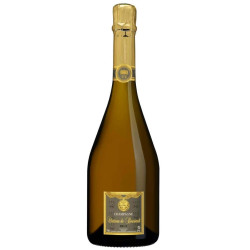
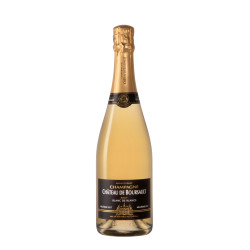
Champagne Château de Boursault: light, fruity and structured wines

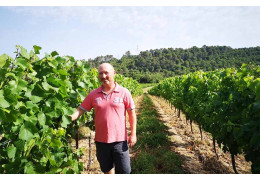
Alex, coming from a family of winemakers, has an unconventional journey. Although he initially pursued a career in the automotive industry, the call of the land and the desire to reconnect with his roots eventually drew him back to winemaking.
Available directly from the estate on Avenue des Vins.
What brought Alex back to the family estate?
A new chapter in a rich legacy
In 2015, Alex left his job to join his father at their Champagne estate.
When my father began talking about retiring, I considered taking over the estate that has been in my family for nearly a century. At the time, I was employed but was craving a change. The idea intrigued me, so I took the leap,
Alex recounts.
How did Alex prepare to run the estate?
An exceptional estate
Upon joining the estate, Alex undertook a year-long distance training course to obtain a professional certificate as a “Vineyard Operations Manager” from the Avise Viti Campus, located close to the Côte des Blancs.
This allowed me to acquire theoretical knowledge that I immediately put into practice at the estate,
Alex explains.
Today, Alex oversees a team of six: an assistant, a cellar master, and a vineyard manager who supervises three vineyard workers.
What makes the vineyard layout so unusual?
Vines surrounding the Château
Founded in 1927 by Alex’s great-grandfather, Champagne Château de Boursault has been passed down through four generations. Spanning 13 hectares, the estate is unique because all the vines surround the Château, an exceptional feature in Champagne.
We have everything on the same site: vines, cellars, presses, and tanks. This is a significant time-saver. Some might say it’s risky to put all our eggs, or rather, our grapes, in one basket. However, being situated in the Marne Valley, we are fortunate to cultivate predominantly Pinot Meunier, a variety that withstands climatic challenges well.
What style of champagne does the estate aim for?
A delicate tasting experience
In addition to Pinot Meunier, which makes up 50% of Château de Boursault’s vineyards, the estate grows Chardonnay (20%) and Pinot Noir (30%), the other key Champagne varieties.
The most important thing for us is to offer consumers a tasting experience focused on lightness, fruitiness, and structure. The key is to provide a tasting that is all about smoothness. This is achieved through the blend of these three varieties: Chardonnay adds floral notes, Pinot Noir provides power, and Pinot Meunier adds fruitiness.
How does the estate approach the environment?
Commitment to sustainable viticulture
With the “Sustainable Viticulture” and “High Environmental Value” certifications, Champagne Château de Boursault is also actively engaged in environmental viticulture.
We are not organic, but we are committed to using pesticides and herbicides as minimally as possible, which is quite rare in Champagne.
What is the history behind the Château itself?
The legacy of Veuve Clicquot
The estate has another significant asset. Built in 1843, Château de Boursault was commissioned by Veuve Clicquot as a wedding gift for her granddaughter. Almost a century later, Alex’s grandfather purchased it and planted the vines around it.
Today, Château de Boursault opens its grounds to guests for champagne tastings. Developing oenotourism at the estate is part of Alex’s major future projects.
The estate has enormous oenotourism potential that we intend to fully exploit.
What comes next for Château de Boursault?
Looking ahead
Currently, Alex’s priority is to expand his range of champagnes. He is preparing to release a new cuvée, expected in 2018. Stay tuned…
Why buy directly from the winemaker? The wines of Château de Boursault are shipped straight from the estate: estate price with no middleman, full vintage traceability, and your support for an independent winegrowing family.
Discover the wines of Château de Boursault directly from the estate, at the estate price, in a short supply chain on Avenue des Vins.
Frequently asked questions about Château de Boursault
Where is Champagne Château de Boursault located?
The estate lies in Champagne, in the Marne Valley near the village of Boursault. Unusually for the region, every plot wraps around the château itself, keeping vines, presses and storage on one single site.
Which grape varieties go into the wines?
Pinot Meunier leads the blend, planted on half of the vineyard. Pinot Noir takes up roughly a third and Chardonnay the remainder, bringing together the three classic Champagne varieties.
What style are the Château de Boursault champagnes?
They aim for lightness, fruit and a firm backbone. Each variety plays its part: Chardonnay brings floral tones, Pinot Noir the frame, Pinot Meunier the fruit, for a smooth and gentle tasting.
Are the wines organic?
The estate is not certified organic. It does hold the High Environmental Value and Sustainable Viticulture labels, keeping chemical treatments to a minimum, which remains uncommon across Champagne.
What connects the château to Veuve Clicquot?
The château was built in 1843 for Veuve Clicquot, who gave it to her granddaughter as a wedding present. Alex Fringhian's grandfather later bought the property and planted the surrounding vineyard.