Delivery from €16,90 per winemaker in Europe (excluding the United Kingdom)

Portraits of winemakers
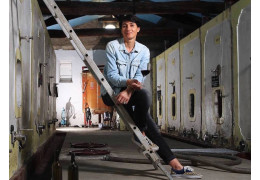
Patrick Saurel, Château Montana: winegrower at the heart of the Aspres terroir
Patrick Saurel did not come from a family of winemakers. However, his passion for wine began in his late teens. "I had the chance to taste great wines from the most prestigious wine regions, and it made me want to go further, with the dream of one day owning my own vineyard." After studying business and marketing, Patrick embarked on a diverse career working for multinational companies in France and internationally. Yet, his dream of becoming a winemaker never left him.
Available directly from the estate on Avenue des Vins.
What made you interested in the Languedoc-Roussillon?
Discovering the region
When Patrick returned to the Languedoc "for business" in the 1980s, he was intrigued by the region:
Things were starting to change in the vineyard, which had just come out of a period of producing everything and anything. Some winemakers were standing out. They had realized that quality should be prioritized over quantity, using the right winemaking methods and equipment. This encouraged me to take a closer interest in the region.
How did you come to buy the estate?
From 11 to 35 hectares
A decade later, Patrick's path crossed with a 19th-century vineyard of 11 hectares located south of Perpignan in the Aspres terroir. The charm and potential of the property immediately captivated Patrick.
I wanted to leave my mark on an 'aging' estate by modernizing it. Since the place fit both my desires and my budget, I began to envision myself there. It didn’t take long for me to purchase the property.
At that time, Patrick and his wife Marie-Claire moved in and restructured the estate, expanding from 11 to 35 hectares. Today, their children Céline and Julien also work at the estate.
How do you farm the vineyard?
A step towards organic farming
Château Montana now spans 35 hectares of vineyards. Its philosophy? "Focus on prevention rather than cure." Certified "High Environmental Value level 3," the estate practices sustainable viticulture, including minimal use of phytosanitary products. Patrick views this approach as "a step towards organic farming," though he is waiting to see how this practice evolves before committing to official certification.
Situated near the Pyrenees, Château Montana’s vineyard thrives within the Protected Geographical Indication (PGI) Vin de Pays des Côtes Catalanes and the Côtes du Roussillon Villages appellation. This terroir, covering 25 hectares, is not the only one on the estate, as Patrick also acquired 10 hectares of vines located about ten kilometers from Château Montana’s cellars, in the heart of the Aspres terroir.
What wines does Château Montana make?
Three distinct wine ranges
This diversity of terroirs allows the winemaker to offer three distinct wine ranges. The traditional range features "smooth, fruity, and easy-to-drink" wines produced in PGI Vin de Pays des Côtes Catalanes (red, white, and rosé). The second range consists of "festive" natural sweet wines from the 10 hectares planted in the Aspres, including Muscats Blancs de Rivesaltes and Rivesaltes reds, which pair perfectly with chocolate desserts or frozen treats.
Finally, the "High-End" red wines undergo a longer and more refined winemaking process and are aged in oak barrels.
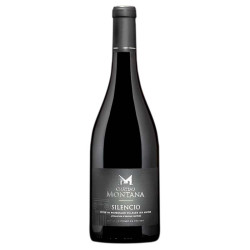
These wines present silky tannins and ripe fruit aromas, like the 'Silencio' cuvée, which is ideal for pairing with robust meats such as game,
notes Patrick.
What can visitors find at the estate?
A museum and guest rooms
Aware of the growing impact of wine tourism, Patrick has converted one of his estate’s barns into a museum to showcase old viticulture tools found when he arrived at Château Montana.
There were objects used in the past to treat the vines, harvest the grapes, and make corks… Initially, we used them, but soon realized they were too old. We didn’t want to throw them away. These objects represent the memory of our winemaking ancestors, so it was important to preserve them. Thus, we decided to create a museum,
says Patrick.
In addition to the museum, which remains open to visitors year-round, Patrick has also set up two guest rooms for tourists passing through the region. And of course, the winemaker is available for tastings in his cellar at any time of day!
Why buy directly from the winemaker? The wines of Château Montana are shipped straight from the estate: estate price with no middleman, full vintage traceability, and your support for an independent winegrowing family.
Discover the wines of Château Montana directly from the estate, at the estate price, in a short supply chain on Avenue des Vins.
Frequently asked questions about Château Montana
Where is Château Montana located?
The estate sits south of Perpignan, on the Aspres terroir close to the Pyrenees. Its 35 hectares fall under the Côtes du Roussillon, with a share in the Côtes Catalanes PGI.
What wine ranges does Château Montana produce?
Three styles coexist: supple, fruity cuvées in Côtes Catalanes PGI, natural sweet wines from the Aspres, and age-worthy reds given a longer vinification. Each suits a different tasting occasion.
Does Château Montana farm organically?
The estate holds High Environmental Value level 3 certification and tends its vines with reasoned farming and few inputs. Patrick Saurel sees this as a step before a possible conversion, which he has not yet begun.
What natural sweet wines come from the estate?
The 10 hectares in the Aspres yield white Rivesaltes Muscats and red Rivesaltes. These festive wines pair readily with a chocolate dessert or an ice cream.
What can you discover when visiting Château Montana?
Patrick Saurel has set up a museum of old winegrowing tools in a restored barn and fitted out two guest rooms. Tastings are available at the estate throughout the year.