Delivery from €16,90 per winemaker in Europe (excluding the United Kingdom)

Portraits of winemakers
Famille Laudet: eight generations between Landes wine and Bas-Armagnac
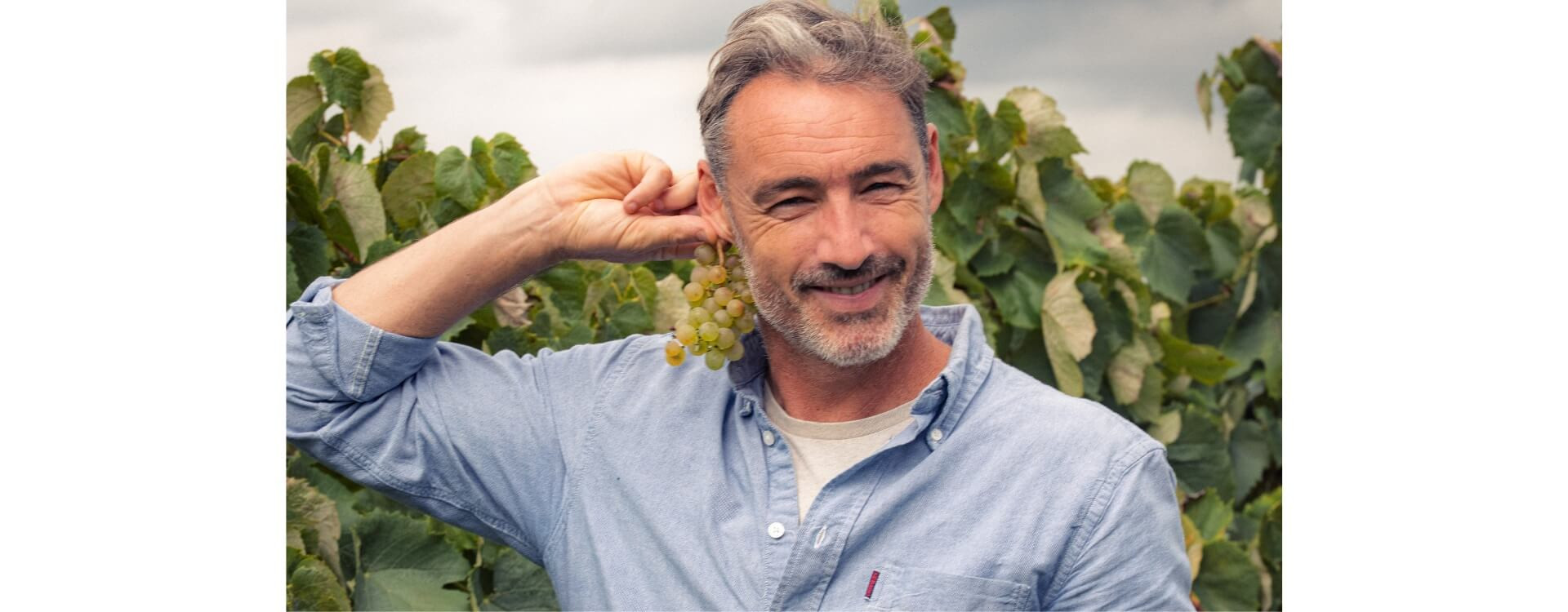
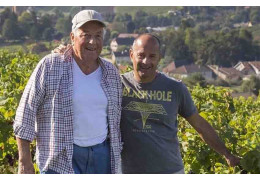
Famille Laudet, a house of wine growers and distillers in the Landes, holds two estates. This portrait stays with Laballe, in Parleboscq, where Cyril Laudet is the eighth generation and the bottle that sums the place up is an Armagnac, not a wine.
How would you describe Domaine de Laballe?
Twenty-five hectares of vines on a band of sand
Famille Laudet holds two estates: Laballe, in Parleboscq, and La Pointe, taken on at Capbreton in 2018. There, east of the department, Laballe covers a hundred and fifty hectares, twenty-five of them vines, among woods, meadows and three lakes. The property came into the family in 1820.
“It is a magnificent spot on the border between the Landes and the Gers, on a band of land called the ‘Sables Fauves,’ a mix of Landes sand and Gers clay.”
That name carries a precise status. “Sables fauves” is one of the four smaller geographical units whose name may be added to the IGP Landes, with the Coteaux de Chalosse, the Côtes de l’Adour and the Sables de l’Océan. The house has vines in two of them: Sables fauves in Parleboscq, Sables de l’Océan at Capbreton.
The specification puts Parleboscq in its harvest zone, where silty-sandy soils cover the same marine formation that runs east under the Bas-Armagnac vineyard. Neither an appellation nor private property: the unit spans three cantons in the eastern Landes.
When did you catch the wine and Armagnac bug?
A retirement given to Armagnac in 1820, a Beychevelle director in 1980
He answers in one line: “Wine is part of my DNA and my family heritage.” It reads better against the timeline the house publishes.
Jean-Dominique Laudet came home from the Caribbean with a spice-trade fortune and spent his retirement on Armagnac: a destination, not a living. In 1980 it took a director of Château Beychevelle, Noël Laudet, to decide to make wine at Laballe.
“I am the first generation to make a living from this estate, and I dreamed up every cuvée in the house.”
The claim is strong, and the timeline backs it. Cyril Laudet took Laballe on as a tenant in 2007, aged twenty-nine, and the land was bought only in 2019, through a farmland holding company set up with seventy-five of his friends.
His sister Sonia, a textile artist, signs the labels.
What philosophy guides your work in the vines and the cellar?
Ocean climate, sandy soils: fresh wines, low in alcohol
He speaks of neither style nor signature but of accuracy, and he credits the place rather than himself.
“We are looking to make honest wines. Wines that reflect our terroir and our taste, but that also answer what people want today. Our ocean climate and our sables fauves terroir give us very fresh wines, low in alcohol, with fine aromatic balance.”
Chenin is his favorite grape, and no import: the IGP Landes specification counts it among the region’s traditional varieties, with Baroque, Colombard and the Mansengs.
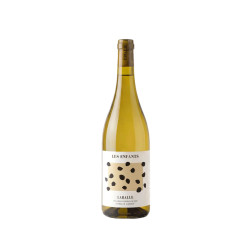
The single-plot wines are organic, l’Enfant du Lac among them, the pure Chenin he opens with friends.
Which wine best represents your estate?
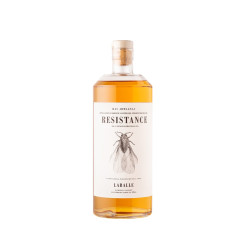
Neither white nor red: Résistance, a Bas-Armagnac from 100% Baco
The question expected a color. The answer left the glass.
“It is not a wine but an Armagnac! Résistance. It is 100% Baco, a grape that belongs to the South-West, aged almost 10 years in barrels of Gascon black oak.”
Two grapes carry the name Baco, and the one that goes into Résistance is Baco Blanc. At Laballe it covers ten of the twenty-five hectares of vines, two hectares in five.
François Baco, a Landes ampelographer, meaning a grape specialist, had selected it in 1898 for its resistance to disease and for the way it suits the sandy soils of the region.
Laballe ties the name of its Armagnac to that story. Baco is not among the IGP Landes main varieties: at Laballe it is the grape of the still.
Which memory at the estate has marked you most?
Tables in the cellar, doors open to all
The memory he keeps is no vintage but an appointment, and it comes back every autumn.
“Every year, distilling season is a moment out of time. We open the cellar doors to everyone, and chefs come and cook over the embers of the still”
Friends, enthusiasts and restaurateurs make the trip, for “the warmest moment of the year,” he says. Laballe has set its calendar: from 20 to 29 November 2026, at lunch and at dinner depending on the date, a restaurateur from Parentis-en-Born takes the stove while the spirit runs.
The Armagnac comes at the close of the meal, and that is when he pours it.
Why follow Domaine de Laballe?
More than two thousand trees planted, and one word for the estate
What he is after reaches past his twenty-five hectares, and he frames it at a regional scale. The 2011 Guide Hachette had already singled out the Sables Fauves 2009 white, a coup de cœur with two stars.
“I want to raise the profile of the wines of the Landes and Gascony, and the revival of Armagnac.”
The rest is patience: agroforestry and mixed farming, more than two thousand trees planted, hedges between the plots, to hand on a livelier estate. The word he picks for Laballe is “Confidence,” and it fits that timescale.
Why buy directly from the winemaker? The wines and Armagnacs of Laballe are shipped straight from the estate: estate prices with no middleman, vintage traceability and support for a Landes house of wine growers and distillers, now in its eighth generation.
Explore the wines and Armagnacs of Laballe straight from the estate, at estate prices, through the short supply chain on Avenue des Vins.
Frequently asked questions about Domaine de Laballe
Can Sables Fauves appear next to IGP Landes on a label?
Yes: “Sables fauves” is one of the smaller geographical units the IGP Landes allows on a label. It covers the sandy eastern edge of the department.
What are the three Armagnac zones?
The Armagnac appellation splits into three zones: Bas-Armagnac to the west, Armagnac-Ténarèze in the center, Haut-Armagnac east and south. It spans parts of Gers, Landes and Lot-et-Garonne.
Is Baco Blanc the only hybrid in the Armagnac appellation?
Baco Blanc is the only hybrid among the ten varieties of the Armagnac appellation. It comes from a cross of Folle Blanche and Noah, and it stands up well to disease.
Why is the Armagnac called Résistance?
Résistance is an Armagnac made from 100% Baco. Laballe ties the name to the grape’s toughness, which holds against late frosts and violent storms alike.
Does the cellar open its doors during distilling season?
Yes, Laballe opens its cellar to the public during the distilling run, every autumn. Meals are served there, at lunch and at dinner depending on the date.