Delivery from €16,90 per winemaker in Europe (excluding the United Kingdom)

The Sommelier's Tips
How to serve wine?
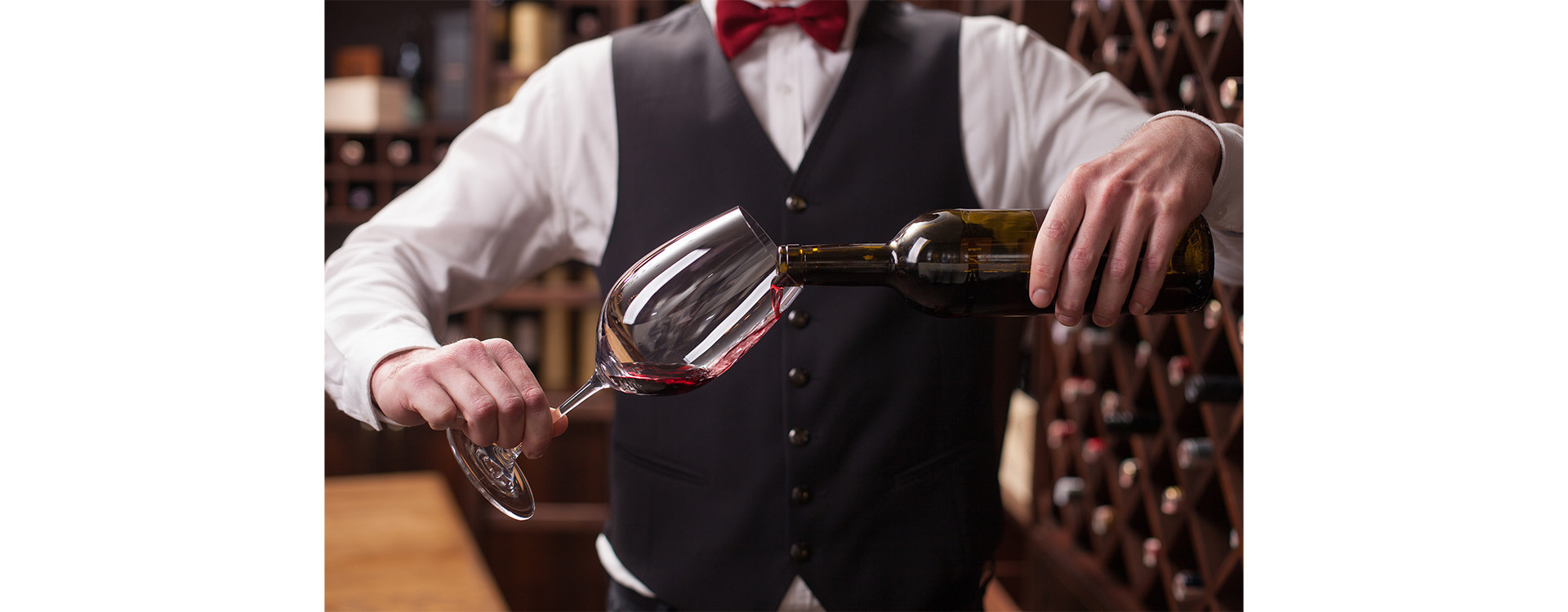
Sometimes, wine can drip onto the glass, tablecloth, or even the label if you lift the bottle too abruptly after serving your guests.
To avoid this, simply rotate your wrist to catch the drop inside the bottle.
If handling the bottle makes you nervous, you can always transfer the wine to a pourer carafe, which will likely be more convenient for your guests. Just make sure to have a wine service cloth on hand to wipe away any small drips. Enjoy your tasting!
How do you present and open the bottle in front of your guests?
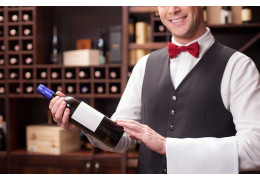
Wine service begins before the first drop: the bottle is shown, then opened at the table, in front of the guests. Name it in a few words, appellation and vintage, label towards whoever chose the wine.
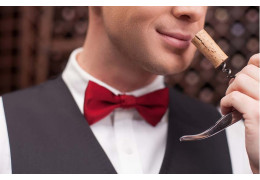
Cut the foil below the lip, the ridge around the neck, so the wine never touches metal. Cork out, quietly, give it a sniff, then set it on a saucer, not the tablecloth. A wipe inside the neck with the cloth removes cork dust: the bottle is ready.
In what order should you serve wine to your guests?
The host pours themselves a sip first, goes round the table, and serves themselves last. That first drop is a check: the wine is free of faults, and any cork crumbs stay with them.
The round starts with the guest of honour, to the host's right, and follows the table without skipping anyone, unless you prefer the classic custom below. Each glass is served from the guest's right, never across a plate. Everyone served, the host tops up their glass and gives the signal.
How much wine should you pour in a glass?
A third of the glass, never more than half: the measure that lets the wine breathe. Above the liquid, the empty bowl gathers the aromas; filled to the brim, the wine has nothing left to say.
That level also lets you swirl without spilling. The glass looks less generous, but you come round more often from a bottle kept cool, so each pour arrives at the right temperature. A restaurant sommelier may go to two thirds, never beyond.
How do you hold the bottle to serve wine without a drip?
Hold the bottle firmly by the body, never the neck, for a steady grip. Turn the label towards the guest, who should see what is poured.
Bring the neck over the glass without touching the rim, pour, then lift with the wrist rotation described above. A folded cloth in the other hand wipes the neck after each glass.
Two more aids: the drip disc, a thin flexible sheet rolled into the neck, which cuts the stream clean, and a moderate tilt, for a thin flow. A magnum takes two hands, one under the base, one at the neck.
Our Must-have Wines Selection : Must-have cuvées from our independent winemakers, at estate-direct prices. See the selection →
In what order should wines be served during a meal?
Lightest to fullest, youngest to oldest, dry before sweet: no wine should make you miss the one before. So white wines open the meal, light, fruity reds follow, full-bodied reds come with the main, and a sweet wine closes.
Three exceptions: sugar, body, tannin. A sweet wine would crush the red after it: keep it for dessert. A rich but dry white sits better after a light red. A young, very tannic red numbs the palate: serve it after the old wine, or aerate it in a carafe.
Two liberties: a dry white with the cheese rather than a red, and champagne from start to finish.
How do you keep the bottle at the right temperature during the meal?
A bucket of water and ice for wines served chilled, the table for a red, drunk a little below room temperature. Fill the bucket with equal parts water and ice, not cubes alone: water wraps the bottle and chills it far faster.
Between rounds, the bottle goes back in the bucket, a cloth around the neck. Without a bucket, a chiller sleeve from the freezer keeps the bottle cool.
The red stays upright on a coaster, away from oven and candles; if it warms in a heated room, ten minutes in the bucket fix it.
How do you pour champagne without the foam overflowing?
Champagne is poured close to the glass, in two stages. A first pour covers the bottom, the foam rises and settles; a second tops it up to half, two thirds at most, never to the brim: the bubbles need room.
Hold the bottle by the body or the base, thumb in the hollow underneath, the other hand free for the glass. Tilting the flute slightly helps. Do not fill glasses ahead unless the table is large, and return the bottle to the bucket between rounds. Same ritual for any sparkling wine, crémant included.
How do you serve an old wine without stirring up the sediment?
An old wine is served slowly, from a bottle stood upright the day before: twenty-four hours lets the sediment, the particles shed over the years, settle at the bottom.
Open without shaking, then pour in one go, tilting the bottle just enough for the wine to flow, without straightening it between glasses. Stop when the sediment nears the neck: the last inch stays behind.
No time to stand it up? The alternative is a wine cradle, which keeps the bottle lying as in the cellar, sediment at the bottom, and you pour from it.
Pour little at a time and keep moving: an aged wine fades fast.
Our Must-have Wines Selection : Must-have cuvées from our independent winemakers, at estate-direct prices. See the selection →
FAQ - How to serve wine at the table?
Should every guest be served the same wine?
No, nothing requires it. Custom calls for one shared wine per course, but a guest may prefer to stay on white, or stick to water: offer, never insist. At the aperitif, two open bottles, a white and a red, leave a choice. Only the round stays shared: every glass is filled on the same pass.
Should women be served before men?
That is the classic custom: women first, from eldest to youngest, then the men in the same order. Many hosts today simply follow the seating, starting from the guest of honour, as described above. Either way: keep nobody waiting, and never refill a neighbour before the round is done.
Can you serve red wine chilled in summer?
Yes, if you pick the right red. A supple, fruity wine with soft tannins takes ten minutes in the bucket before the meal: the chill wakes its fruit. A full-bodied red hardens in the cold, its tannins turn dry. Bring it out a little cooler than you want: the glass warms fast in summer.
Can you top up a glass that is not empty?
Yes, for the same wine, once the glass is nearly empty: a glance is enough, and a guest who covers the glass is declining. Never top up a glass still quite full, nor a slow drinker's. For a different wine, wait until the glass is empty, or offer a fresh one.
Can a guest pour their own wine?
Not straight away: serving belongs to the host, who sets the pace. If they invite you to help yourself, serve your neighbours first, then yourself. At a large table, the host often hands a bottle to a guest at the far end, who serves their side. At a buffet, everyone pours freely.