Delivery from €16,90 per winemaker in Europe (excluding the United Kingdom)

Portraits of winemakers
Domaine Lafont des Odes, Fontarèches: Nicolas Ducros, three organic single-plot reds in IGP Cévennes
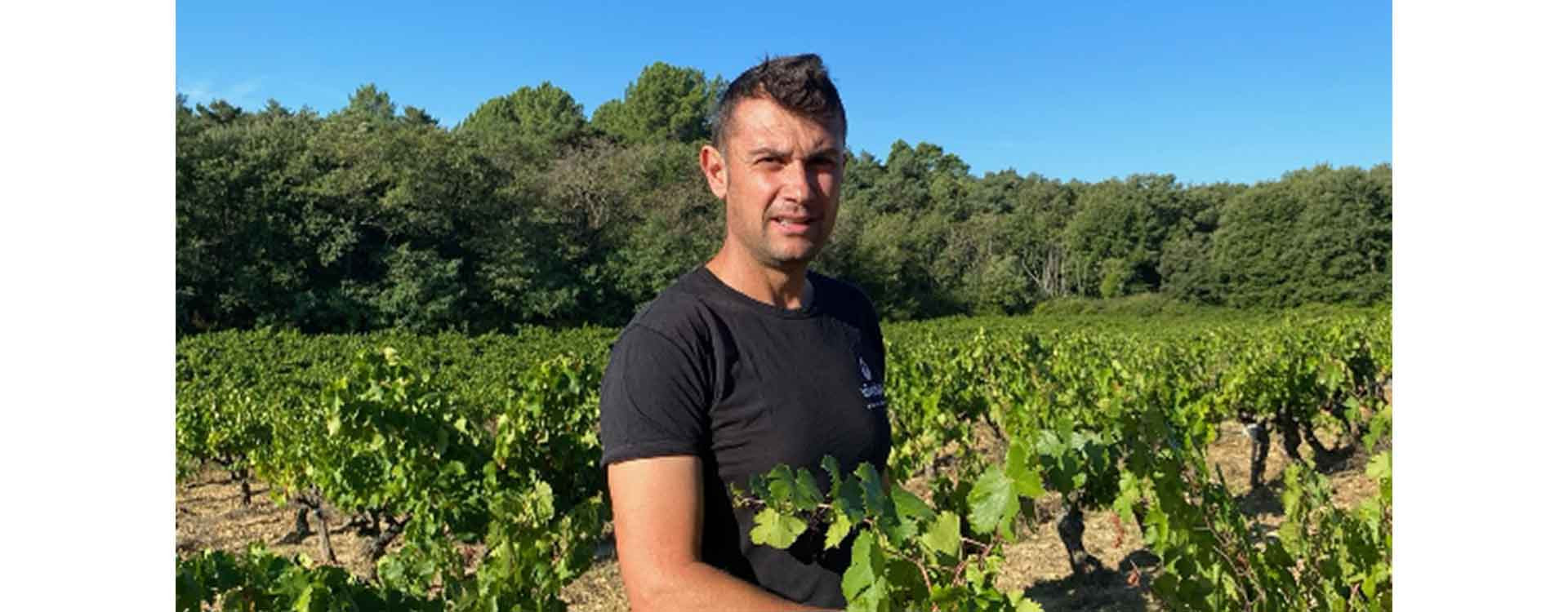
At Domaine Lafont des Odes in Fontarèches, Nicolas Ducros makes three organic IGP Cévennes reds, one per plot: Vialade, Les Bosquets and Marguey. A former cellar master, the winemaker running a cellar, he founded his estate in early 2024 on 2.5 hectares.
How would you describe Domaine Lafont des Odes?
2.5 hectares in three plots, between Fontarèches and La Bruguière
Nicolas Ducros runs Domaine Lafont des Odes in Fontarèches, in the Gard. The vines come from the Lafont side of the family: his great-grandfather lived at Mas Lafont, and his paternal grandmother, born Lafont, worked this land with René Ducros, her husband.
“At the estate everything is very simple: 3 plots, 3 cuvées (single-plot wines); a 100% Cinsault, a 100% Syrah and a 50/50 Grenache/Carignan (same plot, blended as the grapes go into the vat)”
Single-plot means each wine comes from one plot, made apart from the others. He took the family vines back in 2020, then bought very chalky plots in La Bruguière, the next village, at a spot called La Fond des Odes, hence the name. The slopes rise from 260 to 280 metres, facing south.
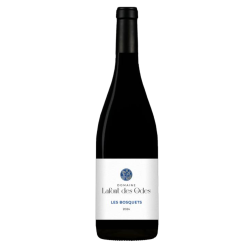
Each cuvée bears its plot's cadastral name: Vialade for the Cinsault, Les Bosquets for the Syrah, Marguey for Grenache and Carignan, combined at vatting, when the grapes go into the tank.
When did you catch the wine bug?
The first smells of fermentation, at the Nîmes-Rodilhan school
Farming, not wine, was Nicolas Ducros's first plan; he knew nothing about wine before his studies.
“From the day I started my winegrowing and winemaking diploma at Nîmes-Rodilhan, I knew nothing at all about the world of wine; from September we began practical work in the school's cellar, and at the first whiff of fermentation, the revelation! That's what I want to do!”
He became a cellar master at several independent wineries, then spent eight years running a premium Costières de Nîmes property's wines, 1.8 million bottles each year. Late in 2023, he left that job.
What philosophy guides your work in the vineyard and in the cellar?
Organic for precision, balance for everything else
Every plot has carried organic certification since the 2023 harvest. Nicolas Ducros sees it less as a selling point than as a precision tool: a lower pH, meaning a wine with more acidity and more freshness, and cleaner aromas. The rest fits in one word.
“Balance! That is what guides me, it is the key to everything: whether in the vineyard (managing competition, leaf surface, working the soil...) or in the wine (alcohol/acidity/structure). Balance is the watchword... as in life!”
Leaf surface is the amount of foliage left on each vine to feed the bunches it carries. In the cellar, no cuvée is fined or filtered, that is, clarified before bottling: the wine keeps its substance and sometimes a light deposit.
Which wine best represents your estate?
Marguey, Grenache and Carignan from one plot, at 270 metres
The Marguey plot covers half a hectare at 270 metres: young vines, bush-pruned with no wires, on chalky sandstone, where Grenache and Carignan ferment together. Carignan has a poor reputation in the region; Nicolas Ducros stands up for it, his favourite grape.
“The Marguey cuvée, Grenache and Carignan, a grape so maligned in our region and yet a model of balance even at full ripeness! And very well suited to our region, it does not fear drought and likes the heat...”
Its sheet lists ripe black fruit, garrigue and sweet spice, for three to five years' ageing. His mother is partly from Lozère: he serves Marguey with a rib of Fleur d'Aubrac beef.
Which memory at the estate has marked you most?
The first juice of 2024, after years working for others
The memory dates from the 2024 harvest, the first under his name, picked by hand from late September, sorted in the vineyard.
“The first juice coming into the estate, after more than 18 years of winemaking, I was finally going to make wine from my own grapes! A mix of stress and excitement...”
The IGP Cévennes allows 90 hectolitres per hectare; the estate harvests 20 to 25, a few thousand bottles across three cuvées. Every tank counts.
Why follow Domaine Lafont des Odes?
White wine in 2026, on the chalk of La Bruguière
The estate is not yet three years old and already changing: white wine is planned on La Bruguière's chalk.
“To expand and develop the estate, so as to work as well as possible in the best conditions, to diversify production, notably with white (Chenin and Roussanne) planted during 2026...”
His children push him on, whether or not they take over. Asked to describe his estate in one word, he looks no further.
“Challenge”
Three cuvées, three soils, a white on the way: the wager plays out vintage after vintage, with a winegrower who spent his career making wine from other people's grapes.
Why buy direct from the winegrower? Domaine Lafont des Odes wines are shipped straight from the estate: estate price with no middleman, full vintage traceability and support for an independent organic winegrower.
Discover the cuvées of Domaine Lafont des Odes direct from the estate, at the estate price, on Avenue des Vins.
Frequently asked questions about Domaine Lafont des Odes
Why are Domaine Lafont des Odes wines labelled IGP Cévennes?
Fontarèches and La Bruguière lie within the IGP Cévennes area, a protected geographical indication set by the INAO in the Gard. Recognised as a vin de pays in 1992, it allows Cinsault, Syrah, Grenache and Carignan.
Why does Carignan have a bad reputation?
Planted for its high yields in the 20th century, Carignan long produced thin, diluted wines. On dry hillsides, with low yields, it gives deeply coloured reds with tannin and freshness.
What is a "vin de copains"?
A fruity red with gentle tannins that you open for no particular occasion, with grilled meat, charcuterie or a picnic. At Domaine Lafont des Odes, that is Vialade, a Cinsault, a light southern grape, served slightly cool.
“Vialade, 100 Cinsault, a wine for friends, picnics, no fuss”
What are garrigue notes in a red wine?
Garrigue is the scrubland of the chalky soils of southern France: thyme, rosemary, bay, rockrose. In a red, it means aromas of dried herbs and resin, as noted on the Marguey sheet.
How long can Domaine Lafont des Odes wines be kept?
Three to five years for Vialade and Marguey, five to seven for Les Bosquets, according to their sheets. Neither fined nor filtered, they may leave a light deposit.