Delivery from €16,90 per winemaker in Europe (excluding the United Kingdom)


Soft and sweet sparkling
Sweet sparkling wines offer a seductive taste experience thanks to their softness and aromas of candied fruit or honey. Their delicate effervescence enhances the flavours of desserts, fresh fruit or pastries, adding a touch of gourmandise and refinement. Ideal for festive occasions or special occasions, this type of sparkling wine adds a joyful, elegant note to your sweet moments. You will find it in demi-sec Champagne as well as in sparkling rosé and ancestral-method wines; the sweetness comes either from a final dosage or straight from the grapes.
Filtrer


- Bio


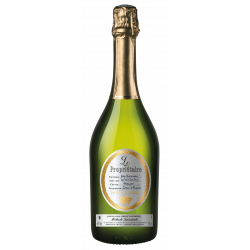


Paul Mas Prima Perla Crémant de limoux Rosé
Château Paul Mas - Domaines Paul Mas Languedoc Roussillon
€12.90

Demi-Sec or Doux: Where Do Sweet Bubbles Get Their Sugar?
On a sparkling wine label, demi-sec and doux are sweetness terms defined by EU Regulation 2019/33. A demi-sec (labeled medium dry in English) holds 32 to 50 grams of sugar per liter, and a doux (sweet) more than 50. Just below them, extra dry (12 to 17 g/L) and sec (17 to 32 g/L) are already sweeter than brut, which tops out at 12 g/L.
In Champagne, that sugar comes in at the very end, through the liqueur d'expédition added after disgorgement. This dosage is what turns the same base wine into a brut or a demi-sec. Ancestral-method wines take another route: fermentation starts in tank, finishes in the bottle, and is slowed down before the yeasts have used up all the grape sugar, so the sweetness is the fruit's own.
From Demi-Sec Champagne to Moscato d'Asti
Demi-sec Champagne is usually a blend of Pinot Noir, Meunier and Chardonnay, just like a brut, finished with a bigger dosage. Crémant follows the same traditional method, with a second fermentation in the bottle, and some Crémant de Loire comes in demi-sec, though less often. Among ancestral-method wines, Clairette de Die relies mainly on Muscat à Petits Grains, which often gives it a floral, Muscat-scented nose.
In the Bugey, Cerdon is a rosé sparkler made by the ancestral method based on Gamay, sometimes with Poulsard, often showing small red berry notes. Near Limoux, Blanquette Méthode Ancestrale, a separate appellation from Blanquette de Limoux, is made from Mauzac alone. Moscato d'Asti, a DOCG from Piedmont, is a lightly fizzy white Muscat that often smells of fresh grapes, with far less pressure than Champagne.
What Food Goes With Sweet Sparkling Wine?
Sweet sparkling wine works well with fruit desserts such as apricot tart or roasted peaches, where the fruit's acidity keeps the sugar in check. With yeasted pastries like brioche or kugelhopf, a demi-sec keeps enough freshness to end the meal on a light note. For more ideas, see our page on sparkling wine with dessert, and our article on wine and chocolate for anything cocoa-based.
Sweetness also works away from dessert. With a blue cheese such as Roquefort or Stilton, the sugar in the wine balances the salt and the strong flavor, a pairing long used with sweet wines. With spicy Thai or Indian food, a demi-sec often helps tame the heat of the chili, while a drier wine tends to let it come through.
How to Serve Sweet Sparkling Wine
Serve sweet sparkling wine well chilled, at 43 to 46 °F (6 to 8 °C): the cold keeps the sugar in balance and the bubbles fine. Choose a tulip glass or a white wine glass over a wide coupe, which lets the bubbles and aromas escape. Moscato d'Asti and Clairette de Die are generally drunk within a year of bottling, while the fruit is still lively.
Sweet Sparkling Wine: Frequently Asked Questions
How much sugar is in a glass of demi-sec Champagne?
A standard 5-ounce (150 ml) glass of demi-sec Champagne holds about 5 to 7.5 grams of sugar, since the wine contains 32 to 50 grams per liter. A doux Champagne goes above 7.5 grams for the same pour.
Can you serve sweet sparkling wine as an aperitif?
Sweet sparkling wine works well as an aperitif, especially with rich or salty bites. It usually pairs with foie gras, melon wrapped in prosciutto or toasted nuts. Switch to a drier wine for the main course so the sugar doesn't tire the palate.
How long does sweet sparkling wine last after opening?
Sweet sparkling wine generally lasts one to two days after opening, kept in the fridge with a sparkling wine stopper. After that, the fizz fades and the sugar feels heavier. Lightly fizzy styles such as Moscato d'Asti are usually finished the same day.
Which sweet sparkling wines are low in alcohol?
Moscato d'Asti is a low-alcohol sweet sparkling wine, with 4.5 to 6.5% ABV under its DOCG rules. Ancestral-method wines such as Clairette de Die or Cerdon often land around 7 to 9% ABV, versus about 12% for Champagne.
Where can I buy sweet sparkling wine direct from the winemaker?
You can buy sweet sparkling wine direct from the winemaker on Avenue des Vins. Each bottle ships from the estate that made it, with no middleman. To widen your choice, browse our sparkling wines page.
Explore also: Wines for desserts - Fine-bubble sparkling wines - Sparkling wines for celebrations