Delivery from €16,90 per winemaker in Europe (excluding the United Kingdom)


AOC Pouilly-Fuissé
Pouilly-Fuissé is a dry white Burgundy made from Chardonnay alone, grown at the southern tip of the Mâconnais, right where Burgundy meets Beaujolais. One of its four villages, Chaintré, also lies inside the Beaujolais appellation area. That close neighborhood is why you’ll find it here, alongside our Beaujolais wines. The appellation also has a page on the Burgundy side, with our Pouilly-Fuissé wines.
Filtrer

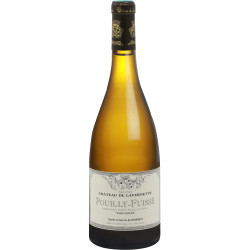
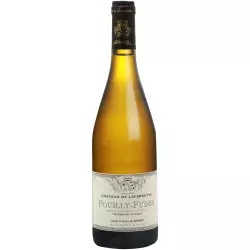
Pouilly-Fuissé: A White Cru Between Two Regions
Seen from Beaujolais, Pouilly-Fuissé is a neighbor to the north: a Chardonnay white grown on limestone, while the crus next door make Gamay reds on granite. Yet the two touch, and even share a village: Chaintré.
Where Does the Mâconnais End and Beaujolais Begin?
The Beaujolais appellation area takes in eleven villages in the Saône-et-Loire department, including Chaintré, which also grows Pouilly-Fuissé. Close by, the village of Saint-Amour-Bellevue makes up the entire Saint-Amour AOC, the northernmost of the ten Beaujolais crus, right on the border with the Rhône department.
Saint-Véran, another Chardonnay white from the southern Mâconnais, blurs the map a little more. Its seven villages form two separate zones, one north and one south of Pouilly-Fuissé. In the southern zone, Chânes, Chasselas, Leynes, and Saint-Vérand also belong to the Beaujolais area, so a white Burgundy and a red Beaujolais can come from the same village.
Mâconnais Limestone, Northern Beaujolais Granite
Pouilly-Fuissé grows mostly on Jurassic limestone and marl. The rocks of Solutré and Vergisson, two limestone outcrops, tower over its slopes, planted at roughly 720 to 1,380 feet and facing the Saône plain. The soils are often thin, stony, and free-draining. In places, rhyolite, an acidic volcanic rock from the Paleozoic era, comes to the surface.
Across the line, northern Beaujolais sits on ancient rock pushed up during the Hercynian mountain building: granite, porphyry, and schist. It breaks down into sandy or clay soils that are acidic. Every vineyard entitled to the Beaujolais-Villages name grows on these acidic soils in the north. Southern Beaujolais goes back to limestone, with heavier, deeper clay soils.
The two regions do share a similar climate, oceanic with a clear southern influence. Hills to the west shelter both from wet westerly winds: the Charollais hills for Pouilly-Fuissé, the Beaujolais hills for its neighbor. And the Saône valley funnels in mild air from the south.
From Chardonnay to Gamay, One Region to the Next
Pouilly-Fuissé comes in one color and from one grape: it is a still white made from Chardonnay alone. Beaujolais is Gamay country first, with Gamay as the key grape in its reds and rosés.
The Pouilly-Fuissé appellation describes wines with a fleshy, fruity character, which it ties to the mild climate of the southern Mâconnais. Beaujolais points to wines that tend to be more powerful and deeply colored in the north, on acidic soils, and fruitier and lighter in the south, on limestone.
At the table, these neighbors make an easy two-course pairing. Pour Pouilly-Fuissé with the appetizer or the fish, then let a cru from northern Beaujolais take over with the main course. To compare it with other whites from the same grape, browse our 100% Chardonnay wines.
Pouilly-Fuissé and Its Beaujolais Neighbors: Common Questions
Is Pouilly-Fuissé a Burgundy or a Beaujolais?
Pouilly-Fuissé is a Burgundy: it comes from the Mâconnais, in the southern part of Burgundy, not from Beaujolais. The appellation covers four villages in Saône-et-Loire: Chaintré, Fuissé, Solutré-Pouilly, and Vergisson. Chaintré also falls within the Beaujolais area; it is the only village the two appellations share.
What is the difference between Saint-Véran and Pouilly-Fuissé?
Saint-Véran and Pouilly-Fuissé are separate appellations for Chardonnay whites from the southern Mâconnais, each with its own area and history. Pouilly-Fuissé, recognized in 1936, covers four villages. Saint-Véran, recognized in 1971, spans seven, split into zones north and south of its neighbor. Solutré-Pouilly belongs to both.
Does Beaujolais make white wine?
Beaujolais does make white wine: under the Beaujolais appellation, with or without the Villages name, it comes from Chardonnay alone. That is the same grape as Pouilly-Fuissé. You’ll find these wines among our Beaujolais white wines. Gamay remains the key grape for the region’s reds and rosés.
Where can you buy Pouilly-Fuissé direct from the winemaker?
You can buy Pouilly-Fuissé direct from the winemaker on Avenue des Vins. Each order is prepared and sent by the producer, not from a warehouse.
See also: AOC Juliénas - AOC Moulin à Vent - AOC Fleurie