Delivery from €16,90 per winemaker in Europe (excluding the United Kingdom)


AOC Pessac-Léognan
Located in the south-western quarter of France, the Bordeaux vineyards are renowned for their great wines. Among its many appellations is the AOC Pessac-Léognan, which covers nearly 1,900 hectares and includes many crus classés, including the famous Château Haut-Brion. The soils, composed of gravel, sand, clay and pebbles, are planted with vines of Cabernet Sauvignon, Merlot, Cabernet Franc, Petit Verdot and Malbec (for the production of red wines) and mainly vines of Sauvignon and Semillon (for the production of white wines). AOC Pessac-Léognan wines are well-balanced, with red fruit and licorice aromas for the reds and great freshness for the whites. They can be kept from 7 to 20 years and from 2 to 5 years respectively, except for certain crus which have greater ageing potential.
Filtrer


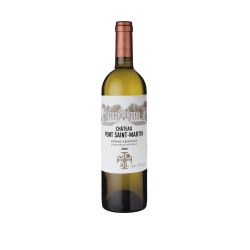


Pessac-Léognan: A Vineyard Won Back from the City
Between the city of Bordeaux and the Landes forest, Pessac-Léognan covers the northern part of the Graves, on the left bank of the Garonne. Its vines spread across ten communes on the outskirts of Bordeaux, and a few estates form green pockets among the houses. The vineyard lost most of its land as the city grew, then gained ground again.
History of the Pessac-Léognan AOC
The Pessac-Léognan AOC is located at the gates of Bordeaux, in the Graves vineyard. It is indeed the most prestigious appellation of the vineyard, although relatively recent. However, while the Pessac-Léognan AOC was officially recognized only in 1987, the viticultural history of this area is ancient, and its wines have been renowned since the Middle Ages. Its most famous château, Château Haut-Brion, is indeed the only red first growth classified in 1855 not from the Médoc. The red and white wines of Pessac-Léognan now enjoy a worldwide reputation, praised for their elegance, complexity, and ability to age gracefully.
Climate and Terroir of the Pessac-Léognan AOC
- Climate: Benefiting from an oceanic climate, the vineyards of Pessac-Léognan receive regular rainfall and enjoy warm summers.
- Soils: The appellation is distinguished by its gravelly soils, rich in pebbles, typical of the Graves vineyard. This terroir offers excellent drainage and nighttime restitution of the heat accumulated during the day, key elements in grape ripening.
Emblematic Grape Varieties of the Pessac-Léognan AOC
The Pessac-Léognan AOC offers blends of red and white grape varieties typical of the Bordeaux vineyard, including:
- Cabernet Sauvignon (red wine)
- Merlot (red wine)
- Cabernet Franc (red wine)
- Petit Verdot (red wine)
- Malbec or Côt (red wine)
- Sauvignon Blanc (white wine)
- Sémillon (white wine)
- Muscadelle (white wine)
Style of Pessac-Léognan AOC Wine
- Red Wine: Deep red color with purple hues. The bouquet is marked by aromas of ripe red and black fruits, leather, and violet, often accompanied by grilled or vanilla notes due to oak aging. Despite its solid tannic structure, Pessac-Léognan AOC red wines offer a balanced and elegant palate with a complex aromatic palette and a long finish.
- White Wine: Golden or greenish color, depending on the dominant grape variety and the age of the wine. The nose presents notes of citrus fruits, white flowers, hazelnut, as well as woody and honeyed nuances. The palate is harmonious and balanced, combining freshness, fullness, and creaminess.
Best Food Pairings with Pessac-Léognan AOC Wine
Here are our recommendations for pairing a bottle of Bordeaux wine from a domaine or château in the Pessac-Léognan AOC, both in white and red:
- Red Wine: Bordeaux cep mushroom sauté, Rossini-style beef fillet with duck foie gras, duck breast with mushrooms.
- White Wine: Pike with white butter sauce, salmon terrine with sorrel, crab or lobster with cream.
From 550 Hectares in the 1970s to the 1987 Decree
Between the early 20th century and the 1970s, the spread of Bordeaux and its suburbs wiped out more than 3,000 hectares (about 7,400 acres) of vines and several hundred estates in what is now Pessac-Léognan. By then, only 550 hectares (about 1,360 acres) were left, and around 100 of those were slated to disappear.
A group of young growers set out to save the vineyard. They asked for a hierarchy within the AOC Graves, modeled on Médoc village appellations such as Margaux and Pauillac. The decree of September 9, 1987, granted their request and recognized the Pessac-Léognan appellation on the land where Graves wine first took root.
Since then, the planted area has grown again, within a delimited area that leaves out plots on recent alluvium, on sand or over impermeable subsoil.
The appellation counted 1,640 hectares farmed by 61 producers in 2010. The Bordeaux Wine Council (CIVB) now reports 1,880 hectares in production, shared among 56 wineries and 70 châteaux.
Pessac-Léognan, from Communes to Label
Which Communes Make Up the Pessac-Léognan Appellation?
The Pessac-Léognan appellation spans ten communes in the Gironde, including Pessac and Léognan, which give it its name. The other eight are Cadaujac, Canéjan, Gradignan, Martillac, Mérignac, Saint-Médard-d'Eyrans, Talence and Villenave-d'Ornon. Its wines, red or white and always dry, must be harvested, made, aged and bottled there.
Which Pessac-Léognan Wines Can Carry the Cru Classé de Graves Mention?
On a Pessac-Léognan label, Cru Classé de Graves identifies one of the 16 estates in the 1959 Graves classification, all located within the appellation. It may replace "Vin de Graves" on the label. These 16 estates account for about a third of the appellation's wineries.
What Is En Primeur Selling in Pessac-Léognan?
In Pessac-Léognan, nearly all producers sell en primeur, in the spring after the harvest, before the wine is bottled. The owner sells to Bordeaux merchants through brokers, then keeps and ages the wine until bottling, which the appellation requires to take place at the estate that grew and made it.
Where Can You Buy AOC Pessac-Léognan Wines Direct from the Winemaker?
You can buy AOC Pessac-Léognan wines direct from the winemaker on Avenue des Vins. Every wine's page gives the name of its producer.
See also: Bordeaux Red Wines - AOC Sauternes - AOC Haut-Médoc