Delivery from €16,90 per winemaker in Europe (excluding the United Kingdom)


AOC Languedoc-Pézenas
In the south of France, the very sunny vineyard of Languedoc-Roussillon extends over more than 240,000 hectares from Nîmes to Leucate (Aude), making it one of the largest vineyards in the world. It includes the AOC Languedoc-Pézenas. The appellation area of this subzone extends over the territory of 15 communes of the Hérault on some 1,500 hectares of soils mainly composed of schist, limestone and alluvium. Grenache, Mourvèdre, Syrah, Cinsault and Carignan vines, subject to the Mediterranean climate of this geographical area, are planted in this subzone and produce red wines. These are wines that are both powerful and delicate, often characterized by a rich and complex aromatic bouquet.
Filtrer


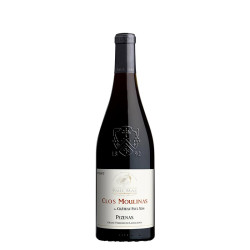
Château Paul Mas "Clos du Moulinas"
Château Paul Mas - Domaines Paul Mas Languedoc Roussillon
€17.50

Languedoc-Pézenas: Hillsides Marked by Basalt
Languedoc-Pézenas is a red AOC Languedoc wine that also carries the name of the Pézenas subzone. It comes from INAO-approved plots, and its standards go beyond those for red AOC Languedoc: a base yield of 45 hectoliters per hectare (roughly 480 gallons an acre), against 50, and grapes with at least 207 grams of sugar per liter, against 198.
A Triangle of Hillsides Rising to the North
The subzone forms a triangle whose southern tip is Pézenas, a town listed as a “Ville d’art et d’histoire.” Its fifteen villages, Pézenas included, sit on the hillsides north of the town, where the slopes grow steeper the farther north you go. The regional wine council puts the vineyards at 65 to 985 feet (20 to 300 meters).
The ground changes from one plot to the next. Alongside schist and limestone, there are gravelly soils and sandstone, and old basalt flows tie this patchwork of soils together; they still mark the landscape. For the wine council, this variety of soils lets growers adapt to the character of each vintage.
Rainfall is low and the gap between day and night temperatures is wide, partly because the sea’s influence fades inland.
Blending Starts in the Vineyard
Three main grapes, Grenache, Mourvèdre and Syrah, define the subzone; Carignan and Cinsault can join them. Proportions start in the vineyard: on each estate, the main grapes cover at least 70% of the vines, none of them more than 75%, while Grenache, and Mourvèdre and Syrah together, each account for at least 20%.
In the bottle, the wine combines at least two varieties, one of them a main grape. The largest share is capped at 80%, and the main grapes make up the majority. After fermentation, at most 3 grams of fermentable sugar per liter remain: it is a dry red.
From Aging to Official Recognition
Aging runs at least until the August 15 following the harvest, close to a year after picking. Oak chips, used elsewhere to mimic the taste of a barrel, are banned, and the grapes may not be heated past 104°F (40°C).
The result is a red with a purple color, concentrated aromas recalling cinnamon or minerals, and soft, well-integrated tannins: power in the aromas, delicacy in the tannins. The appellation credits these wines with good aging potential, which it puts down to that aging period.
The subzone was recognized in the mid-2000s, after the vineyard was mapped plot by plot: only vines identified under location criteria set by INAO, France’s appellation authority, can produce it.
Languedoc-Pézenas: Practical Questions
Which villages produce Languedoc-Pézenas?
Languedoc-Pézenas comes from fifteen villages in the Hérault, on the hillsides north of Pézenas, the town included. They are Adissan, Aspiran, Caux, Fontès, Fouzilhon, Gabian, Lieuran-Cabrières, Montesquieu, Neffiès, Nizas, Paulhan, Péret, Pézenas, Roujan and Vailhan. Cabrières itself is a separate AOC Languedoc subzone.
How old must vines be to make Languedoc-Pézenas?
Vines can make Languedoc-Pézenas from the sixth year after the year they were planted. Plain AOC Languedoc accepts grapes from the second year.
Where is Languedoc-Pézenas made?
Languedoc-Pézenas is made and aged in its fifteen villages or in 27 neighboring villages of the Hérault. They include Montagnac, Alignan-du-Vent and Saint-Thibéry. The grapes always come from the subzone’s approved plots.
Where can you buy Languedoc-Pézenas direct from the winemaker?
You can buy Languedoc-Pézenas, sold by the producer, on Avenue des Vins. Every wine’s page shows its appellation and region.
See also: AOC Languedoc - AOC Faugères - AOC Terrasses du Larzac