Delivery from €16,90 per winemaker in Europe (excluding the United Kingdom)


AOC Castillon Côtes De Bordeaux
Southwestern France's Bordeaux wine region counts many appellations, and AOC Castillon Côtes de Bordeaux is one of them. Its vineyards cover 2,300 hectares (about 5,700 acres) on the doorstep of the Périgord, on soils of sand, alluvial gravel, marl and clay. Merlot is the main grape, alongside Cabernet Sauvignon and Cabernet Franc. Castillon wines are known for their powerful tannins and firm structure.
Filtrer




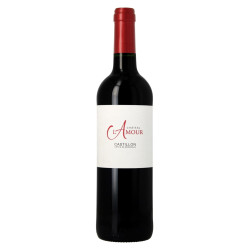

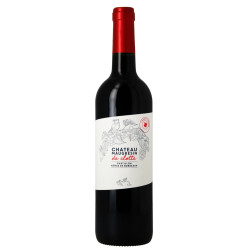
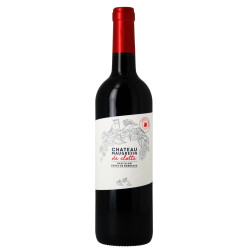
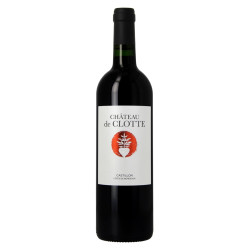



Les Vignobles Arbo - Château Godard Bellevue - Château Puyanche
Bordeaux
€10.00

Castillon Côtes de Bordeaux: Clay, Limestone and Gravel
Three main soil types share the slopes of Castillon. Near the Dordogne River lies sand mixed with gravel; at the foot of the slopes, clay; higher up, a limestone plateau that the Bordeaux Wine Council (CIVB) calls the largest on Bordeaux's Right Bank. Across the appellation, elevation varies by more than 110 meters (about 360 feet).
History of the AOC Castillon Côtes de Bordeaux
Located in the Libournais, on the right bank of Bordeaux, the AOC Castillon Côtes de Bordeaux is steeped in history. In this region, just a stone's throw from the Saint-Émilion vineyards, viticulture has been thriving for centuries. Today, the AOC Castillon Côtes de Bordeaux is considered one of Bordeaux's hidden gems, offering sumptuous red wines with an excellent quality-to-price ratio.
Climate and Terroir of the AOC Castillon Côtes de Bordeaux
Climate: The AOC Castillon Côtes de Bordeaux benefits from a temperate climate with oceanic influences, ideal for optimal grape ripening. Soils: The diversity of soils, composed of clay, limestone, and gravel, gives the wines of AOC Castillon Côtes de Bordeaux their complexity.
Merlot and Cabernet Sauvignon: Emblematic Grape Varieties of the AOC Castillon Côtes de Bordeaux
The dominant grape variety in the appellation is Merlot, known for its roundness and fruity character. The other two flagship red grape varieties of the Bordeaux vineyard, Cabernet Franc and Cabernet Sauvignon, complete the blend. They give the red wines of AOC Castillon Côtes de Bordeaux structure and good aging potential.
Style of AOC Castillon Côtes de Bordeaux Wine
Appearance: The wines have a deep color, often cherry red, with violet reflections. Nose: The bouquet is rich in aromas of ripe black fruits, plums, and cherries, accompanied by hints of tobacco, leather, and spices. The fruity flavors are balanced by a subtle woody and vanilla touch inherited from careful aging. Palate: On the palate, the wine reveals a beautiful, well-defined structure, with silky tannins and a smooth, lingering finish.
Serving Temperature: Ideal between 16°C and 18°C.
Aging Potential: These wines have excellent aging potential, lasting for a decade or more, depending on the estate or the vintage.
Best Food Pairings with AOC Castillon Côtes de Bordeaux Wine
Wines from the AOC Castillon Côtes de Bordeaux pair wonderfully with robust and flavorful dishes. Follow our guide to achieve the best food-wine pairings with a bottle of Bordeaux red wine from an estate or château in AOC Castillon Côtes de Bordeaux:
- Aged beef rib steak à la bordelaise
- Grilled venison steak
- Duck breast with porcini mushrooms
- Lamb tagine
- Black pudding
A Designation Centered on Castillon-la-Bataille
Castillon completes the name of AOC Côtes de Bordeaux for the wines of its sector, just as Blaye, Cadillac, Francs and Sainte-Foy do for theirs. This designation is reserved for still red wines: a white or rosé from these villages cannot carry it.
Nine communes in the Gironde, east of Saint-Émilion in the Libournais, make up the growing area: Belvès-de-Castillon, Castillon-la-Bataille, Gardegan-et-Tourtirac, Les Salles-de-Castillon, Sainte-Colombe, Saint-Genès-de-Castillon, Saint-Magne-de-Castillon, Saint-Philippe-d'Aiguille and the former commune of Monbadon, now part of Puisseguin. Until the early 20th century, these wines were even sold as "Près Saint-Émilion" (near Saint-Émilion), according to the CIVB.
Merlot clearly leads, covering 75% of the appellation's planted area according to the CIVB. Cabernet Franc follows at 14%, ahead of Cabernet Sauvignon at 8%.
The appellation also allows Cot (Malbec), as long as it is blended with another main grape, plus small amounts of Carmenère and Petit Verdot.
Castillon's Name and Past: Your Questions
Why Is the Appellation Named Castillon?
The name Castillon Côtes de Bordeaux points to Castillon-la-Bataille and to the Battle of Castillon in 1453. This French victory over the English ended the Hundred Years' War, as the CIVB recalls. The town is part of the growing area.
Are Côtes de Castillon and Castillon Côtes de Bordeaux the Same Vineyard?
Côtes de Castillon and Castillon Côtes de Bordeaux are the same vineyard under two successive names. First recognized in 1955 as Bordeaux-Côtes de Castillon, the appellation became Côtes de Castillon in 1989, then a designation of AOC Côtes de Bordeaux in 2009. The designation uses the delimited area of Côtes de Castillon.
Did the Castillon Vineyard Once Make White Wine?
The Castillon vineyard made white wines alongside its reds until the early 20th century. Those whites have since disappeared from production.
Where Can You Buy AOC Castillon Côtes de Bordeaux Wines Direct from the Winemaker?
You can buy AOC Castillon Côtes de Bordeaux wines direct from the winemaker on Avenue des Vins. Every wine's page shows its appellation and region.
See also: AOC Francs Côtes de Bordeaux - AOC Fronsac - AOC Côtes de Bordeaux