Delivery from €16,90 per winemaker in Europe (excluding the United Kingdom)


AOC Alsace Grains Nobles
On the banks of the Rhine, the winegrowers of the Alsace region delight us with their best vintages. In this region, we find in particular AOC Alsace Sélection de Grains Nobles wines. The term “sélection de grains nobles” appears on AOC Alsace labels and on Alsace Grand Cru labels as well, always for still white wines. These wines come from grapes affected by noble rot, a fungus that draws water out of the berries and concentrates their sugars and aromas.
Filtrer

- HVE


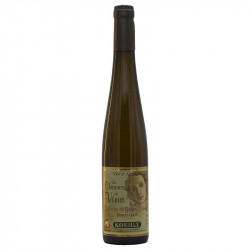


Sélection de Grains Nobles: Grapes Sorted by Hand
The name describes the harvest: a sélection de grains nobles brings together grapes sorted by hand. The appellation requires hand-picking. At harvest, the grower keeps the berries touched by noble rot, and among them the most shriveled. The resulting wine owes more to that concentration than to its grape variety.
When Concentration Comes Before the Grape
Sélection de Grains Nobles is a label term, not an appellation of its own. The wine is still an AOC Alsace, or an Alsace Grand Cru: the term follows that name, then comes the grape variety, Gewurztraminer, Muscat, Pinot Gris or Riesling. It also asks more of the grower, in the vineyard and the winery.
So the grape is still named on the label, but in the glass it takes a back seat. By keeping only the most shriveled berries, the grower gets juice so concentrated that the grape’s own intensity partly fades. The Alsace wine council sees a gain in power, complexity and length on the palate.
In AOC Alsace, these wines are described as concentrated and powerful, often with aromas of fruit paste (pâte de fruits) and long aromatic persistence. When choosing a bottle, the grape name is still a useful guide, but it tells you less about the wine than the term itself.
AOC Alsace Sélection de Grains Nobles wines
Wines from the AOC Alsace Sélection de Grains Nobles must be made from one of the four noble grape varieties: Gewurztraminer, Pinot Gris, Riesling, and Muscat. To produce wines under this designation, winemakers manually sort grapes affected by "noble rot" (Botrytis cinerea). Like AOC Alsace Vendanges Tardives wines, these are powerful, aromatic, and of exceptional quality, adhering to strict guidelines.
History of AOC Alsace Sélection de Grains Nobles Wines
The "Sélection de Grains Nobles" (SGN) distinction in Alsace represents the pinnacle of the region’s sweet wines. Officially established in 1984, this designation refers to AOC Alsace wines made exclusively from one of the four noble grapes (Riesling, Gewurztraminer, Muscat, and Pinot Gris) affected by noble rot. This tradition dates back to the Middle Ages, when these wines were highly prized, embodying the excellence and richness of Alsatian viticulture. These sweet wines, born from the magic of Botrytis, offer a unique tasting experience, leaving a lasting impression on special occasions.
Climate and Terroir of AOC Alsace Sélection de Grains Nobles Wines
Climate: The semi-continental Alsatian climate provides hot, dry summers and long autumns, ideal for the development of noble rot (Botrytis cinerea).
Soils: The diverse soils of Alsace, ranging from clay-limestone to granite, contribute to the complexity and diversity of the region’s wines.
Iconic Grape Varieties of AOC Alsace Sélection de Grains Nobles
The permitted grape varieties for AOC Alsace Sélection de Grains Nobles are the region’s four noble grapes: Riesling, Gewurztraminer, Pinot Gris, and Muscat. These high-quality white grapes develop intense and complex aromas when affected by noble rot.
Style of AOC Alsace Sélection de Grains Nobles Wines
Appearance: These wines feature a golden to copper hue, reflecting their richness and concentration.
Nose: Depending on the grape variety used, they offer an exuberant bouquet of candied fruits, honey, sweet spices, flowers, and sometimes smoky or roasted notes with hints of mushrooms, a signature of noble rot (Botrytis).
Palate: AOC Alsace Sélection de Grains Nobles sweet white wines are remarkably opulent, combining sweetness, creaminess, and freshness, making them vibrant and persistent. Their aromatic complexity is supported by a long finish.
Serving Temperature: Serve these wines between 9°C and 11°C (48°F–52°F) to fully appreciate their aromatic range.
Aging Potential: 20 to 30 years (or more, depending on the vintage and estate).
Best Food and Wine Pairings with AOC Alsace Sélection de Grains Nobles Wines
Here is a guide to pair a beautiful bottle of white wine from a château or estate in AOC Alsace Sélection de Grains Nobles:
- Duck foie gras with fig chutney
- Blue-veined cheese (Roquefort, Bleu de Gex)
- Roasted capon
- Mirabelle plum tart
- Caramelized pineapple
Alsace Sélection de Grains Nobles: Harvest Years, Crop Load and Grapes
Is Alsace Sélection de Grains Nobles Made Every Year?
Alsace Sélection de Grains Nobles depends on the year, and first of all on the autumn weather. The Alsace wine council calls the region’s climate highly favorable to noble rot “in great years,” thanks to dry, sunny autumns. Output can therefore vary from one harvest to the next.
How Much Fruit Can a Sélection de Grains Nobles Vine Carry?
Alsace Sélection de Grains Nobles vines may carry at most 10,000 kg of grapes per hectare (about 4.5 tons per acre), averaged per plot, for every variety. For plain AOC Alsace, a non-irrigated plot can carry 13,000 kg of Riesling or Muscat, and 12,000 kg of Gewurztraminer or Pinot Gris.
Can Sylvaner or Pinot Blanc Be Made as Sélection de Grains Nobles?
In Alsace, Sélection de Grains Nobles is reserved for Gewurztraminer, Muscat (Muscat à Petits Grains or Muscat Ottonel), Pinot Gris and Riesling. Sylvaner, Pinot Blanc, Auxerrois, Chasselas and Pinot Noir are left out, and so are the new trial varieties in AOC Alsace, such as Voltis or Souvignier Gris.
Where Can You Buy Sélection de Grains Nobles Direct from the Winemaker?
You can buy Sélection de Grains Nobles direct from the winemaker on Avenue des Vins. Each wine’s page lists the vintage and the bottle size.
See also: AOC Alsace Vendanges Tardives - AOC Alsace Gewurztraminer - AOC Alsace Pinot Gris