Delivery from €16,90 per winemaker in Europe (excluding the United Kingdom)

Unbeatable !
Why Do We Clink Glasses? The Origin and Meaning of the Toast
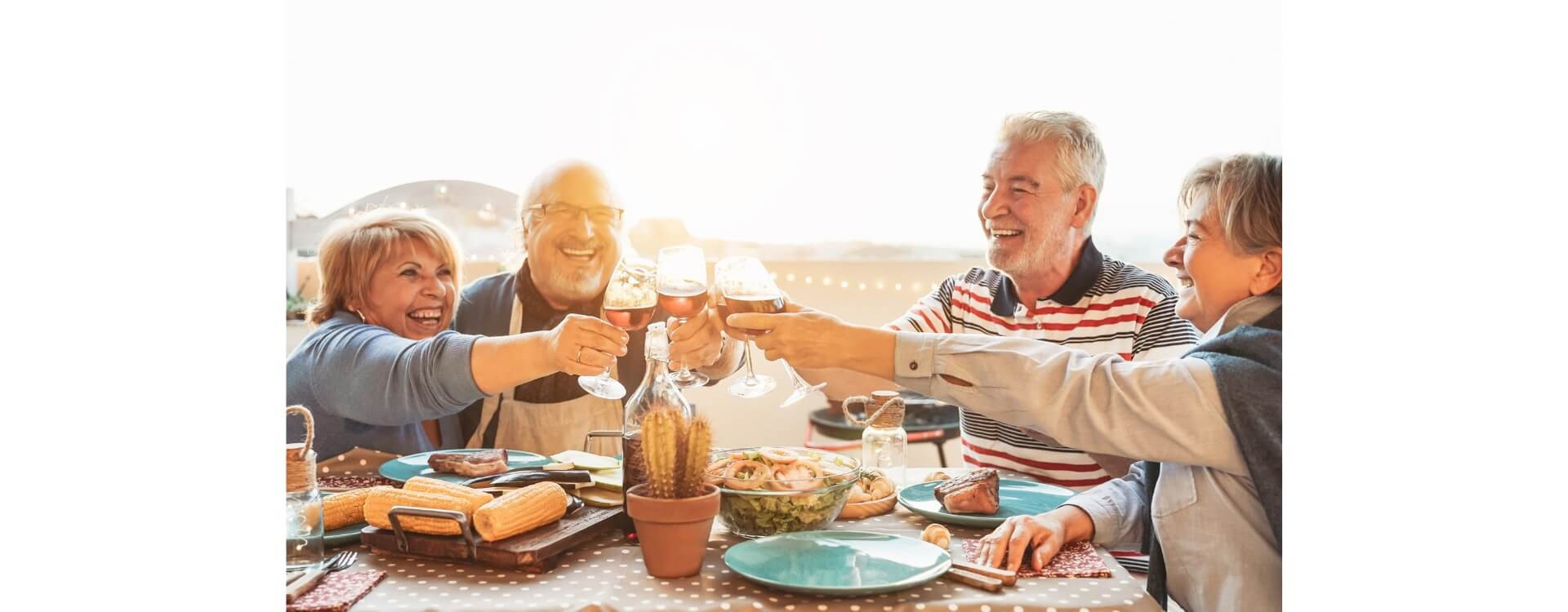
We clink glasses out of conviviality: the gesture seals a shared moment of togetherness around the table. The custom blends a little real history with a few charming legends. Here is what we actually know, and what belongs to myth.
Why Do We Clink Glasses?
We clink glasses to mark a moment together, with a small shared chime. The clink turns a private act, raising your own glass to your lips, into a collective one.
One cultural explanation comes up often: wine fills four senses, sight, smell, taste and touch. The clink would add the fifth, hearing, for a complete celebration.
This five-senses idea is charming and easy to teach, but it is interpretation rather than proof. It does say one true thing: clinking glasses wakes up attention and brings people together.
Where Does the Word "Toast" Come From?
The word toast comes from a real piece of toasted bread. In earlier centuries, a slice of spiced, charred bread was dropped into the cup of wine to soften and flavor the drink.
In time, the person honored at the table became known as "the toast," and the word slid toward the drink raised in someone's honor. That is the commonly accepted origin, dated to around the seventeenth century.
As often with old expressions, exact dates stay fuzzy. Keep the picture in mind: a literal piece of bread in the glass gave its name to the modern toast.
Is the Poison Legend True?
The poison legend is the most widespread, and yet nothing confirms it. It claims that clinking glasses hard made a little wine spill from one into the other, proof that neither was poisoned.
The story does not hold up well. To make wine pour from one glass into another, you would need a violent knock and very full glasses: hardly credible for an everyday ritual.
Above all, no serious old text records this as a real practice. Keep it as a good story to tell, not as the verified origin of the gesture.
Ready to toast with friends? Our sparkling wines, champagnes and crémants, are chosen straight from the growers, at estate prices. See the selection →
Why Do We Make Eye Contact When Clinking Glasses?
We make eye contact when clinking glasses out of politeness, to show attention to the other person. The look says: this toast is really meant for you, not for the table at large.
This custom is a modern rule of good manners, not a law. You often hear it framed as a superstition, but it is above all a mark of respect and presence.
Everyone is free to follow it. At heart, it extends the spirit of the gesture: to toast is to turn toward the other and share the moment fully.
Why Do We Say "Cheers" and "Chin-Chin"?
We say "cheers," "to your health" or "chin-chin" to open the shared moment. These words wish the other person well and give the signal for the pleasure to come.
"Chin-chin" is thought to come from the Chinese qing qing, a polite greeting brought back, so the story goes, by sailors and soldiers in the nineteenth century. This origin is the most cited, best kept in the conditional.
As with many old expressions, the written trail is thin. Hold on to the idea: a word borrowed from far away, adopted for its cheerful sound.
Do People Toast the Same Way Everywhere?
People toast almost everywhere in the world, with varied codes and the same spirit of conviviality. The gesture changes, the intention stays: to celebrate together and wish each other well.
The words differ from one language to the next, and so does the rhythm: sometimes a single clink, sometimes a round of the table. Each culture sets its own little customs around the moment.
In France, a toast goes with the aperitif, the meal and big occasions. It is a warm, simple ritual that speaks of the pleasure of being gathered around a good glass.
An aperitif or a big occasion to plan? Put together your case of champagne to celebrate and toast in style, straight from the grower. See the selection →
To toast is first of all a gesture of conviviality: you raise your glass to share a moment and wish others well. The custom has passed from table to table for centuries.
The legends, like the one about poison, add charm without telling the truth. The essential fits in a single clink: look at the other person, smile, and savor the pleasure of being together.
Frequently Asked Questions About Toasting
Can you toast with water?
Toasting with water is traditionally seen as bad luck, a superstition strongest among sailors and soldiers, where a water toast is said to wish death on the person. It is only folklore, not a rule. If you do not drink alcohol, raise your glass anyway, since the gesture matters more than what is in it.
Can you toast without alcohol or with an empty glass?
You can absolutely toast without alcohol: a juice, a lemonade or an alcohol-free wine are all fine for sharing the gesture. Toasting with an empty glass, by contrast, is considered poor form, since the toast celebrates a drink you are about to enjoy. What counts is taking part in the shared moment.
Why is crossing glasses when toasting thought to bring bad luck?
Crossing glasses when toasting is thought to bring bad luck in an old superstition, especially in a group. The custom is to wait your turn and clink one to one, without arms crossing over the table. It is a point of etiquette born of good manners, not of any real danger.
Do you have to toast with everyone at the table?
Toasting with everyone is mostly done in a small group, where you go around so no one is left out. At a large table, raising your glass to all the guests is enough. The point is to include everyone, not to follow a strict rule.
Which wine do you toast with for a big occasion?
For a big occasion, people most often toast with a sparkling wine, Champagne or Crémant, whose bubbles set the festive tone. A crisp white or an easy-drinking red works too, depending on the meal. Buying straight from the grower, you will find these bottles at estate prices for the moments you want to share.


