Delivery from €16,90 per winemaker in Europe (excluding the United Kingdom)

Unbeatable !
Harvest: 3 things you need to know
Top 3 Things to Know About Harvest Season
Spotlight on One of the Most Important Times of the Year for Winemakers: Harvest Season
1. What Does It Involve?
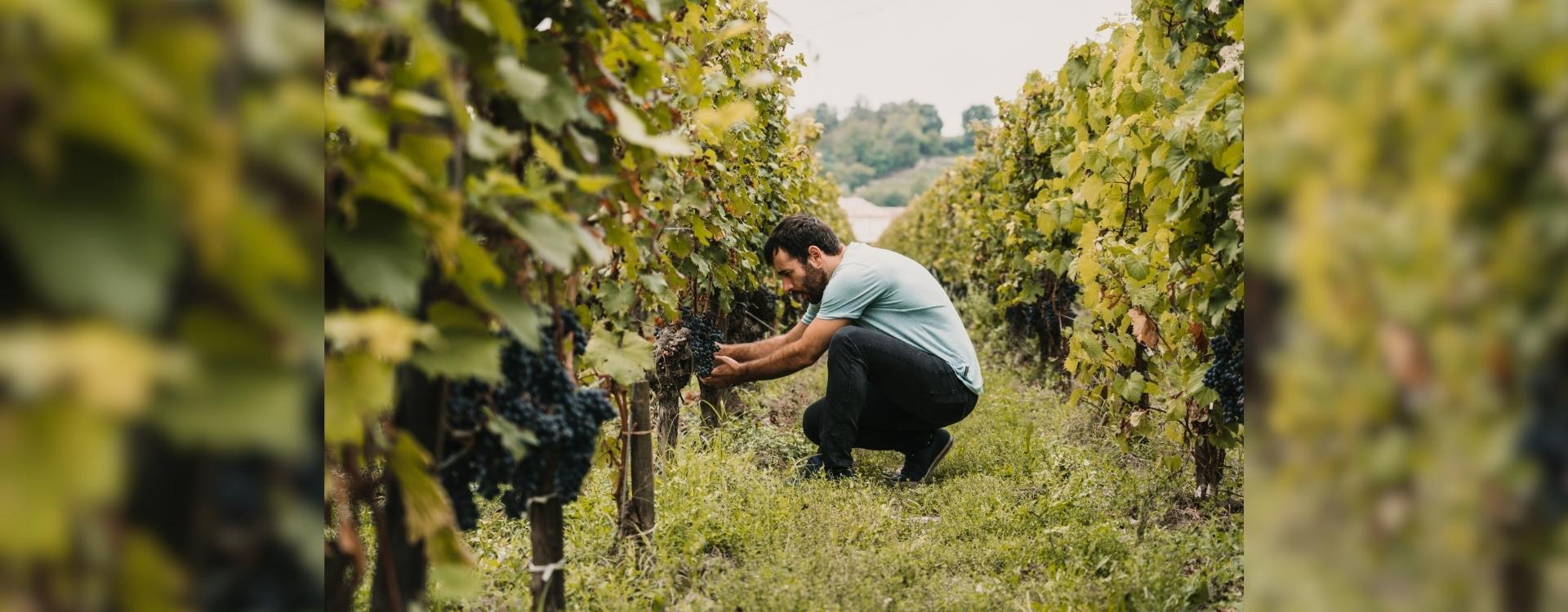
For you, harvest season might be what your seasonal harvester friends have told you: long hours in the sun, crouched in the vineyards, and the camaraderie of evening gatherings around a large table. Rest assured, this image of conviviality is not a myth. But we bet we have a few things to teach you about the harvest. Let's start with the basics: the harvest itself. Grapes, the fruit of the winemaker’s labor, are not picked randomly. This moment is the culmination of a year of patience, vigilance, and care for the vines.
The winemaker must carefully plan how and when to harvest the grapes. There are two ways to harvest: manually or mechanically (some vineyards use both methods). During manual harvesting, which is done by hand, sorting is carried out simultaneously with picking. This involves removing rotten, underripe, or too-small grapes.
In contrast, mechanical harvesting, done with straddle harvesters (tractors designed to straddle one or two rows of vines), does not allow for pre-sorting. In these cases, winemakers place the grapes on sorting tables before pressing them. This final step marks the beginning of winemaking and serves to extract the grape juice, also known as must.
2. When Does It Start?
Do you think the harvest begins whenever winemakers feel ready? Think again! Each wine region must wait for official authorization to start harvesting: this is known as the "ban des vendanges." While the harvest period in France generally spans from late August to early October, regions do not start at the same time due to climatic reasons. For example, in Provence or Languedoc-Roussillon, grapes typically ripen before those in Champagne or Alsace because these regions receive more sunshine.
Generally, grape ripeness is assessed starting 100 days after the first flower appears. However, this criterion varies depending on the grape variety, vineyard location, exposure, and the desired wine style. Regardless, grapes must achieve a balance between sugar and acidity before being harvested. Once the "ban des vendanges" is declared, the winemaker is free to choose the exact start date. Some consult oenologists to ensure grape quality, while others taste the grapes daily to determine readiness. Everyone has their method!
3. How Long Does It Last?
If you've experienced seasonal harvesting or heard about it from a friend, you likely know that the harvest period on a vineyard lasts about 8 to 15 days. However, this varies depending on the vineyard, the size of the area to be harvested, the technique used (mechanical harvesting is faster), and weather conditions (harvesting is impossible in the rain, for example).
Did You Know?
The period from September 22 to October 21 was called "Vendémiaire" in the first French Republican calendar, a term derived from the harvest season...
Our Favourites Wines Selection : Our wines of the moment, chosen straight from independent winegrowers at estate prices. See the selection →
FAQ - Grape harvest
When does the grape harvest take place in France?
The harvest period generally runs from late August to early October. Regions do not all start at the same time: sunnier areas such as Provence and Languedoc-Roussillon usually pick before Champagne or Alsace, where the grapes reach ripeness later.
What is the difference between manual and mechanical harvesting?
Manual harvesting is done by hand, with rotten, underripe or too-small grapes sorted out at the same time as picking. Mechanical harvesting uses straddle harvesters and does not allow pre-sorting, so the grapes are laid on sorting tables before pressing.
How long does the grape harvest last?
On a single estate, the harvest lasts about 8 to 15 days on average. The exact length depends on the area to be picked, the method used (mechanical harvesting is faster) and the weather, since picking is impossible in the rain.
How do winegrowers know the grapes are ready to pick?
Ripeness is typically assessed around 100 days after the first flower appears, though this varies with the grape variety, vineyard location and the wine style sought. The grapes must reach a balance between sugar and acidity. Some winegrowers rely on an oenologist, while others taste the grapes every day.
What is the "ban des vendanges"?
The ban des vendanges is the official authorization setting the date from which a wine region may begin harvesting. Once it is declared, each winegrower is free to choose the exact day they start picking.


