Delivery from €16,90 per winemaker in Europe (excluding the United Kingdom)

Unbeatable !
What does the colour of a white wine reveal?
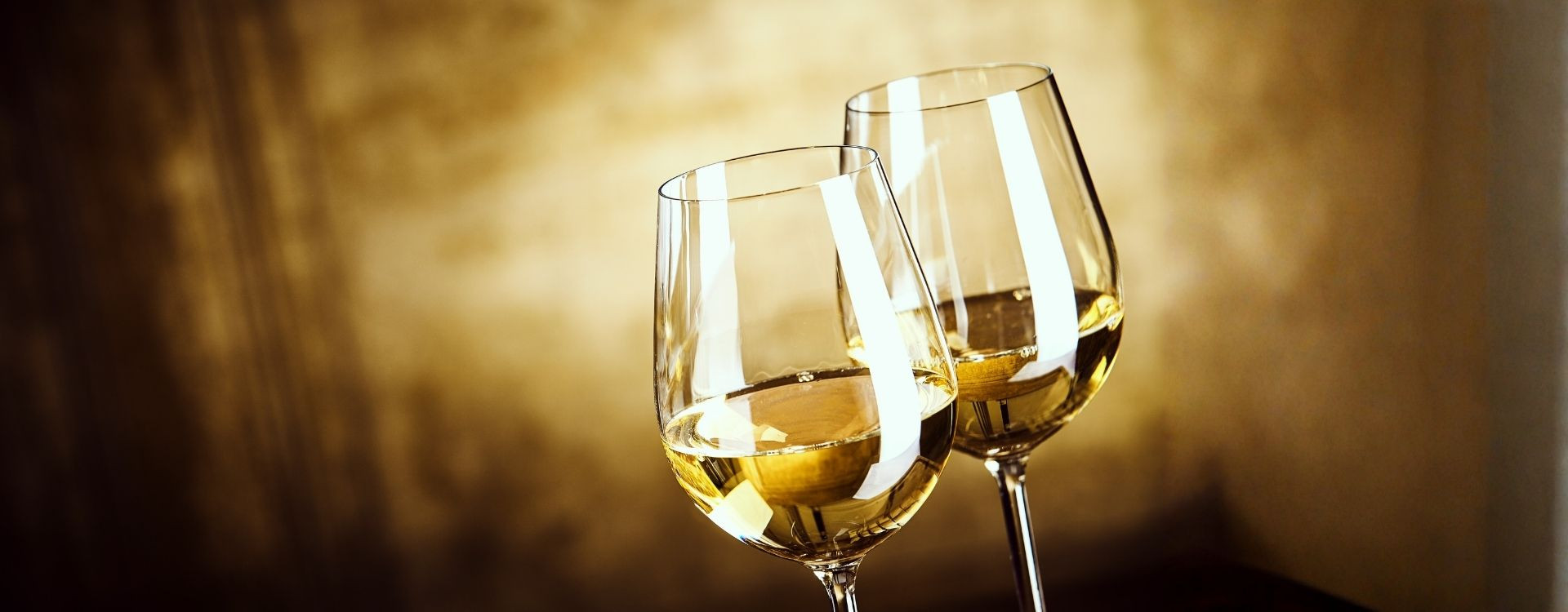
Indeed, the color of a wine can reveal a lot about it. Here’s everything you need to know about the appearance of white wine.
1) Cloudy or Clear?
Let's practice this together: start by holding your glass by the stem (to avoid leaving fingerprints). Next, closely examine the liquid: is it cloudy or clear? If the white wine is cloudy, it might indicate a fault. However, it could also mean that the wine has not been filtered, meaning it still contains its original particles. This is often the case with natural wines. Some winemakers intentionally produce "unfiltered" wines, considering it a mark of quality. To distinguish between an unfiltered wine and one with a defect, check the label: if it doesn’t say "natural wine" or "unfiltered wine," there might be an issue. In such cases, you’ll need to smell and taste the wine to be sure (see our tips for detecting a corked wine). If the wine is clear, there's no problem. You can proceed to step two.
2) A Sign of Youth or Aging!
Now, let’s look at the color of the wine. A useful tip: when examining the color of a wine, try to do so against a white background. Hold your glass at eye level and place a sheet of white paper behind the glass (or do it in front of a white wall). This technique will help you see all the nuances of the wine’s color without interference from other elements in the room. Look carefully at the color. You might notice greenish hues. Don’t worry; this doesn’t mean the wine is bad but simply that it’s young. If it’s a wine meant for aging, its greenish tinge will fade over the years. Conversely, a white wine with a yellow-brown color indicates that it is aging. Besides aging potential, the color of a wine can also hint at its grape variety: for example, Chardonnay-based white wines often have yellow hues, while Sauvignon Blanc or ou sauvignon gris- based wines tend to show greenish reflections. This is valuable information to impress at a gathering, don’t you think?
3) Observe Its Legs
Wine jargon can sometimes lead to misunderstandings. Imagine: you’re at a party, tasting wine, and suddenly someone mentions "thin legs." Naturally, you wonder: "Are they talking about the stem of their wine glass, or are they looking at the legs of someone next to them through their glass?" In reality, the legs of a wine refer to the droplets that cling to the sides of the glass. They are also known as "tears." Swirl the wine in your glass with small wrist movements and observe the streaks on the rim. If the legs (or tears) are thin and fall quickly, it means the wine is low in alcohol and/or sugar. Conversely, if they are thick and flow slowly down the glass, it indicates a wine high in alcohol and/or sugar (typically a sweet wine if it’s a white). Since alcohol comes from the fermentation of sugar (which turns into alcohol), these characteristics vary depending on the fermentation yield, roughly 17g/L of sugar for 1% alcohol.
So, now you know the main techniques for examining the appearance of white wine. You can find our articles on step 2 (smelling the wine) and step 3 (tasting the wine) of the tasting process here.
Our White Wines Selection : Bright, expressive white wines picked straight from our independent growers at estate price. See the selection →
FAQ - The colour of a white wine
Why is a white wine sometimes cloudy?
A cloudy white wine can point to a fault, but it often simply means the wine was left unfiltered and kept its original particles, as with natural wines. Check the label: the words "natural wine" or "unfiltered" clear up any doubt.
What do green hints in a white wine mean?
Greenish hints reveal a young wine that still lacks maturity. On a wine built for ageing, this tinge fades over the years, while a yellow-brown colour shows a wine that is getting old.
Does a white wine's colour reveal its grape variety?
Partly. A Chardonnay often shows yellow hues, whereas a Sauvignon Blanc leans towards green. The colour gives a clue about the grape, though it does not confirm it on its own.
What are the legs or tears of a white wine?
They are the droplets that run down the sides of the glass after you swirl it. Thin, fast legs point to a wine low in alcohol or sugar, while thick, slow ones signal a wine rich in alcohol or sugar.
How should you look at the colour of a white wine?
Hold the glass by the stem and tilt it at eye level against a white background, a sheet of paper or a wall. This neutral backdrop reveals every nuance of the colour without the room's tones distorting it.


