Delivery from €16,90 per winemaker in Europe (excluding the United Kingdom)

Unbeatable !
Focus on three wine-growing regions
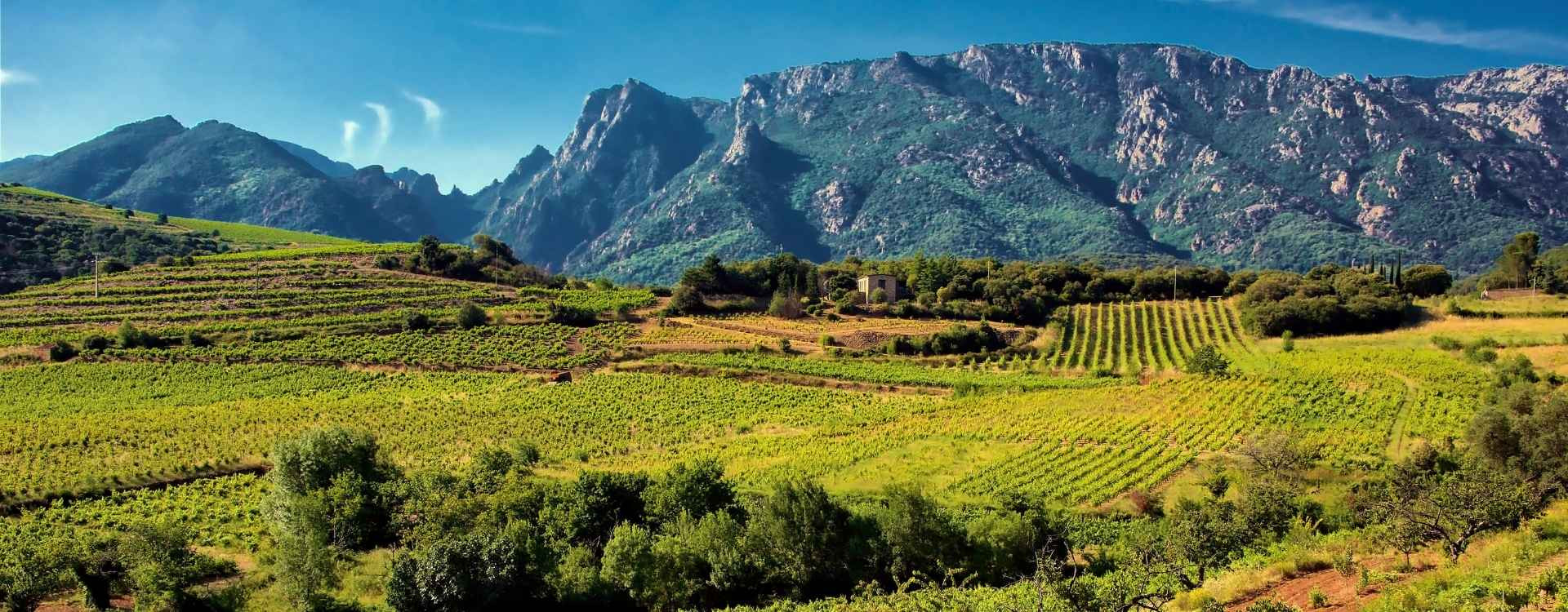
Who are they and where do they come from? Here’s a brief overview of what you need to know about these three wine regions.
- Savoie and Bugey: Mountain Wines
We know about Savoie wines, but much less about those from Bugey. This sub-region of Savoie and Bugey, located in the department of Ain between Jura and Haute-Savoie, covers an area of 490 hectares spread across Cerdon, Montagnieu, and Belley, at more than 200 meters above sea level. Its origins date back to Roman times, but it was during the Middle Ages that the vineyard truly gained recognition, reaching its peak in the 19th century.
Unfortunately, it was weakened by both World Wars and a phylloxera epidemic (a vine disease) and had to wait until the 1950s for the appearance of the Bugey and Roussette du Bugey appellations, which contributed to the vineyard's revival. Bugey wines are made from typical regional grape varieties such as Mondeuse, Poulsard (red wines), and Altesse (white wines), as well as more well-known varieties like Gamay, Pinot Noir (red wines), and Chardonnay (white wines).
Find our wines from the Savoie-Bugey region.
- Poitou-Charentes: A Renowned Liqueur Wine
The Poitou-Charentes region is known for the Futuroscope, the famous Fort Boyard show, and Cognac, but much less for its wines. However, this part of France is one of the 17 official wine regions. Bordering the prestigious wine regions of the Loire Valley and Bordeaux, its vineyard dates back to Antiquity. It gained significant success starting in 1579, particularly abroad, in England and Holland. As the wines didn’t travel well by sea, the Dutch had an idea: distilling the wine into brandy. The concept was popular, and thus Cognac was born. In the 19th century, the Poitou-Charentes vineyard was affected by phylloxera.
While the Charentes vines suffered some damage that was not irreversible, the Poitevin vineyard experienced more serious losses. Today, the Poitou-Charentes wine region covers 4,200 hectares of vineyards. Its Pineau des Charentes appellation remains famous for its eponymous liqueur wine (wine mixed with brandy), typical of the region. Red, rosé, and white wines can still be found in the Haut Poitou vineyard under the VDQS (Vins De Qualité Supérieure) designation, but this production remains quite niche.
- Lorraine: A Vineyard Rising from the Ashes
Many know the Alsace wine region for its world-renowned wines, but few are aware that its neighbor Lorraine is also a wine region. Comprised of 3 appellations, the Lorraine vineyard extends over the Côtes de Moselle, Côtes de Toul, and Côtes de Meuse. In 1833, its vineyard spanned 34,000 hectares. Today, only around a hundred hectares are cultivated, making the Lorraine vineyard one of the smallest in France.
However, the wine region is gradually rising from the ashes, particularly in recent decades with the introduction of the AOC Côtes de Toul (1998) and AOC Moselle (2010). To this day, one of Lorraine's most renowned wines remains the vin gris. Produced in AOC Côtes de Toul (though found in other wine regions as well), this salmon-colored wine closely resembles a rosé but is paler with slight grayish reflections (hence its name). Made from Gamay Noir, it is characterized by its red fruit aromas and pronounced acidity.
Our Favourites Wines Selection : Cuvées by independent growers, straight at estate prices. See the selection →
FAQ - Wine regions
Which grape varieties are grown in the Bugey vineyard?
Bugey relies on typical regional grapes such as Mondeuse and Poulsard for its reds and Altesse for its whites, alongside better-known varieties like Gamay, Pinot Noir and Chardonnay.
What is Pineau des Charentes?
It is the flagship appellation of Poitou-Charentes: a liqueur wine made by blending wine with brandy. It is best served well chilled, often as an aperitif.
What is the vin gris of Lorraine?
Made mainly in AOC Côtes de Toul from Gamay Noir, vin gris has a salmon-coloured robe that is paler than a rosé, with slight greyish reflections. It stands out for its red-fruit aromas and pronounced acidity.
What are the appellations of the Lorraine vineyard?
The Lorraine vineyard spans three areas: the Côtes de Moselle, Côtes de Toul and Côtes de Meuse. It holds two recent appellations, the Côtes de Toul (1998) and Moselle (2010).
How many official wine regions does France have?
France counts 17 official wine regions. Poitou-Charentes is one of them, even though it remains better known for Cognac than for its wines.


