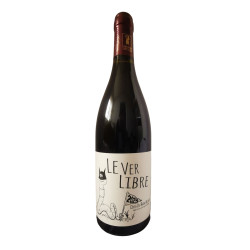
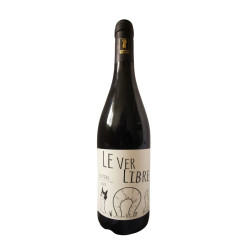
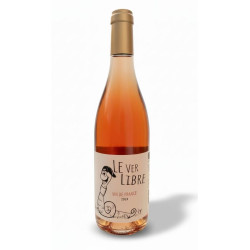
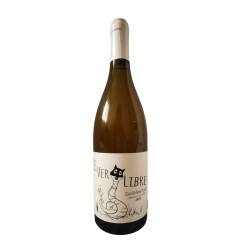
Delivery from €16,90 per winemaker in Europe (excluding the United Kingdom)

Portraits of winemakers
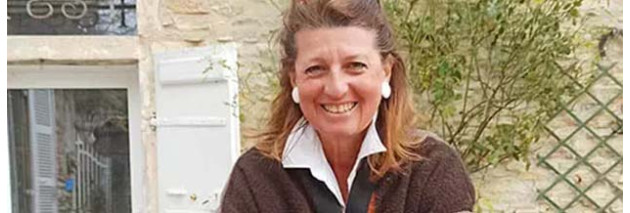
Domaine Le Ver Libre, Tiphanie and Gregory's living wine
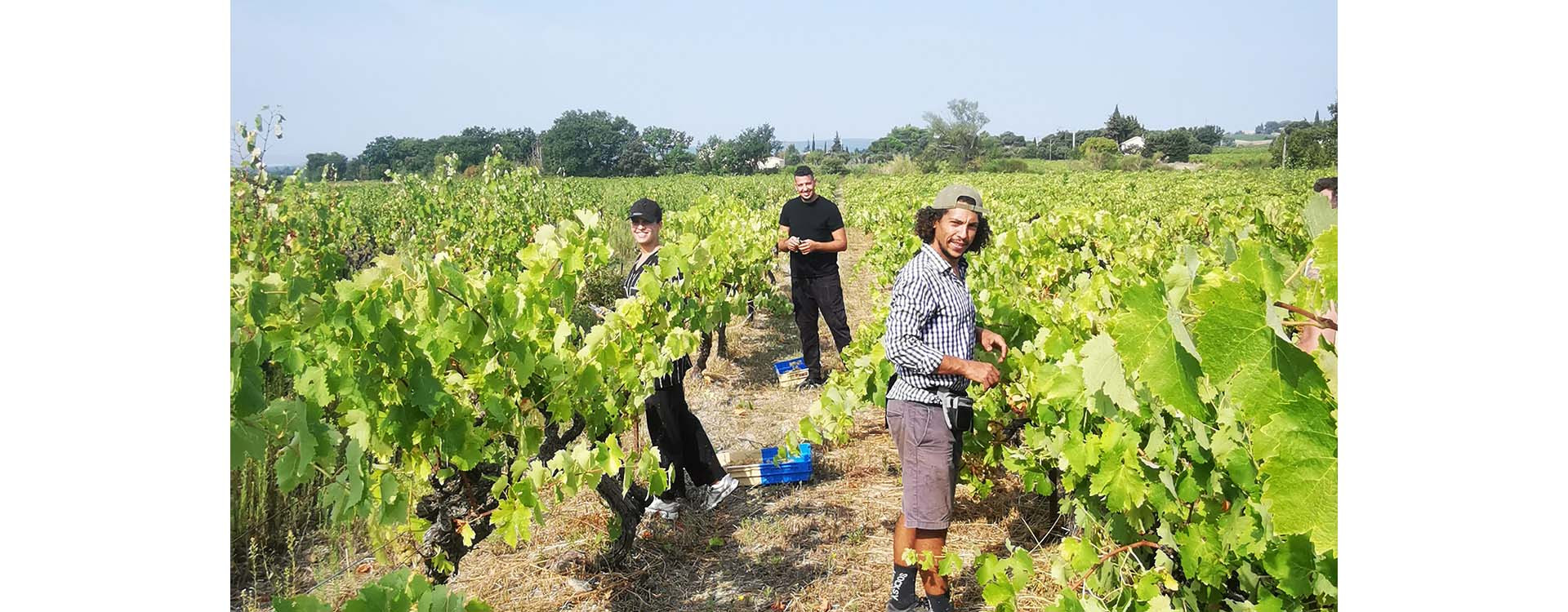
In Rasteau, in the northern Vaucluse, Domaine Le Ver Libre farms five single-block hectares organically and biodynamically. Behind this name, a play on the earthworm, Tiphanie and Gregory stand for a living wine, born of a living soil in the southern Rhône.
How would you describe Domaine Le Ver Libre?
Five single-block hectares in Rasteau, organic since 2022
Domaine Le Ver Libre is a small, single-block estate of about five hectares, in the commune of Rasteau, in the northern Vaucluse. It has been farmed organically since it was bought in 2022, the conversion having been carried out by the previous owners before Tiphanie and Gregory.
The couple then added biodynamic, agroecological and regenerative approaches. The estate's name sums up this vision on its own.
Le Ver Libre is a play on words: it refers to the earthworm, but it also carries the idea of the green of nature and the landscape, the verse of poetry and even the glass you drink from.
When did you catch the wine bug?
From New Zealand to Châteauneuf-du-Pape
The spark came from far away. In 2016 and 2017, Tiphanie and Gregory spent a year and a half in New Zealand, where they discovered work in the vines. An experience that shaped what followed.
Back in France, the couple shared the learning: training in bottling and conditioning with a service provider for one, a year at Château de Mont-Redon, in Châteauneuf-du-Pape, for the other. Two complementary schools before setting out on their own.
What philosophy guides your work in the vines and the cellar?
A philosophy of the living, for living soils
Everything starts with the soil. At Domaine Le Ver Libre, it must stay alive: no invasive soil work, no destructive chemicals, no very heavy machinery.
We seek to preserve the micro-fauna and to recreate a true ecosystem, with birds, mammals, insects, fungi and bacteria. The aim is a natural balance that brings resilience to the system.
This search for balance guides every decision, from the vine to the cellar. The wine then becomes the expression of a living place, rather than a product to be manufactured.
Which wine best represents your estate?
The 2023 Côtes du Rhône red, a first statement
The cuvée that best embodies the estate is the 2023 Côtes du Rhône red. With a little more perspective and anticipation, it conveys a style the couple loves and marks the start of their own signature.
It is a wine more in our image than our 2022s. It reflects a style we love and marks the beginning of our own statement in our wines.
Low in tannins and very easy to drink, this red suits every season. It goes as well with red and white meats as with vegetable dishes, ratatouille, tian or a simple sauté, and slips happily onto world dishes such as couscous, paella or chilli con carne.
What are your ambitions for the estate?
A cellar to enlarge and, later, a living farm
The estate is still young, in full launch, with a sales network to build. Ideas, on the other hand, are not lacking.
The cellar will need to be enlarged and renovated. Then may come a wine-tourism project with a restaurant and eco-lodges, along with animals, to recover the true meaning of a farm and extend the ecosystem logic dear to the estate.
Why follow Domaine Le Ver Libre?
Craft work, at the service of the living and the drinker
Following Domaine Le Ver Libre means supporting a young Vaucluse estate that puts the living world at the centre of everything, from Grenache Noir, the king of the region, to the glass.
An estate full of ambition, which stands for craft, quality work, while protecting the environment and the health of the consumer as best it can.
A story that is only just beginning, in Rasteau, and that makes you want to follow it, vintage after vintage.
Why buy directly from the winemaker? The wines of Domaine Le Ver Libre are shipped straight from the estate: estate prices with no middleman, vintage traceability and support for a family of winegrowers committed to its terroir.
Explore the cuvées of Domaine Le Ver Libre directly from the estate, at estate prices, through the short supply chain on Avenue des Vins.
The wines of Domaine Le Ver Libre: direct from the estate, at the estate price, with no middleman. See the wines →
Frequently asked questions about Domaine Le Ver Libre
Where is Domaine Le Ver Libre located?
The estate is in the commune of Rasteau, in the northern Vaucluse, in the Rhône Valley. It is a small, single-block estate of about five hectares.
Is Domaine Le Ver Libre organic?
Yes. The estate has been farmed organically since it was bought in 2022, with complementary biodynamic, agroecological and regenerative approaches.
What does the name Le Ver Libre mean?
It is a play on words around the earthworm, a symbol of living soil, but also the green of nature, the verse of poetry and the glass you drink from.
Which cuvée should you discover at Domaine Le Ver Libre?
The 2023 Côtes du Rhône red, a low-tannin, very easy-drinking wine that the estate sees as the truest to its style.
Which dishes go with the estate's Côtes du Rhône red?
It pairs with red and white meats, vegetable dishes such as ratatouille or tian, and world dishes such as couscous, paella or chilli con carne.