Delivery from €16,90 per winemaker in Europe (excluding the United Kingdom)

Portraits of winemakers
Domaine L'Autre Bout du Monde
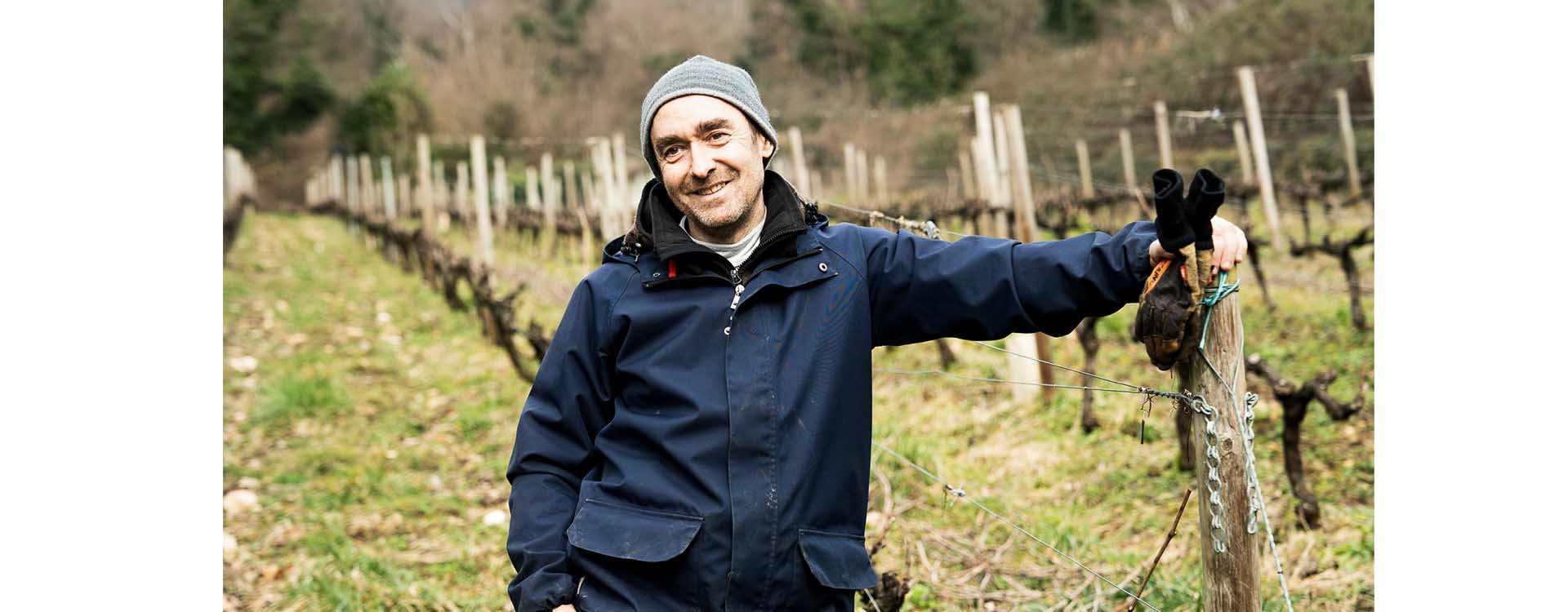
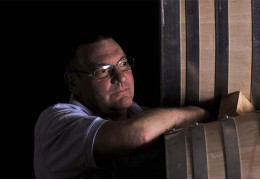
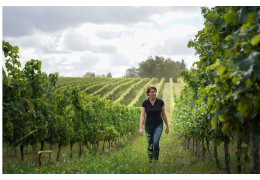
The Domaine L'autre Bout du Monde is a micro-estate closely connected to the landscapes of Savoie. Christophe Perret, the winemaker, speaks with emotion about these images of vines stretching across micro-plots, bathed in calm light and surrounded by omnipresent biodiversity. The estate’s history is rooted in a carefully considered career change. After years spent in Africa, “at the other end of the wine world”, followed by a period in Belgium, Christophe settled in Savoie and trained with professionals who passed on their expertise to him. In 2023, he took over parcels located on the edge of Lake Bourget and created his estate with the ambition of crafting precise and authentic single-varietal wines.
Available directly from the estate on Avenue des Vins.
How did the estate come to life?
A deeply rooted micro-estate
I was immediately drawn or even captivated by the cellars, their atmosphere, and the materials used in winemaking… it’s something that can’t be explained, it’s a matter of feeling.
Farmed organically from the very beginning, the estate covers around 2.5 hectares, spread between Brison-Saint-Innocent and Grésy-sur-Aix. Together, they form a true mosaic of terroirs with clay-limestone soils and varied exposures, offering the vines freshness, complexity and resilience in the face of climate change. Seven grape varieties are present or being introduced, including Chardonnay, Mondeuse, Pinot Noir and Altesse (emblematic grapes of Savoie) recently joined by Jacquère, Persan and Johanniter (a disease-resistant hybrid variety). The estate’s philosophy is built on a clear conviction: farm organically, limit inputs to the bare minimum, and let the terroir speak. This approach guides both vineyard and cellar work, where each action aims for finesse and balance.
How does Christophe work the vines?
A vision guided by observation and the environment
Vineyard work follows a logic of respecting nature and living ecosystems. Christophe maintains spontaneous or sown plant cover, enriches the soil with natural fertilizers, and strengthens the vines with plant extracts such as nettle or horsetail. All tasks are carried out manually, much like tending a garden, allowing each intervention to be adapted to the specific needs of every micro-plot. The presence of clay, underground water and especially the nearby forest creates a naturally cool environment, essential in a warming climate. The winemaker likes to share, with humour, an anecdote that perfectly illustrates this preserved environment:
Chamois love to eat the young, tender shoots, but also the leaves, and why not the grapes. Even though they don’t cause as much damage as birds on my plots, they regularly wander through the vineyards. They even set their sights on one particular plot farmed by a neighbouring winegrower, who eventually decided to stop working it because of the devastation to the vines. It’s the angels’ share… or rather the chamois’ share!
With this same spirit of observation, the estate is also carrying out a comparative project between organic and biodynamic practices. Christophe is gradually testing preparations 500 and 501 to measure their real impact on the soil and the vines, without preconceived beliefs, only the desire to understand and adapt. Among short-term projects, a new planting is planned for 2025, highlighting local varieties such as Persan and Jacquère, as well as a resistant grape variety, Johanniter, chosen for its environmental interest. Indeed, the winemaker places great hopes in hybrid varieties, which could become part of the future of viticulture, combining quality and adaptation to climatic constraints.
What defines the wines of the estate?
Precise wines, shaped by their terroir
Marked by delicacy, finesse and deep minerality, the wines of Domaine L'autre Bout du Monde reflect the character of their winemaker: humble and discreet. In the vineyard, harvesting is done manually and transported in small crates to preserve the berries. In the cellar, fermentations rely on indigenous yeasts thanks to pied-de-cuve starters, and malolactic fermentations occur spontaneously. Aging takes place in stainless-steel tanks or ceramic vessels depending on the desired profile, with limited use of sulphur.
My signature in the wines is finesse, delicacy, elegance in the reds, with a good touch of minerality.
says Christophe.
His commitment to finesse is reflected both in his wines and in the image he conveys of himself. This intimate connection with nature and winemaking, combined with his humility and desire to craft wines without artifice, naturally shapes his style. His cuvées display purity, precision and a unique minerality that express both their terroirs and the personality of their winemaker. The first vintages have already found their place on fine local tables, including starred restaurants in the region, a memorable milestone that confirms the authenticity and quality of his work.
Why buy directly from the winemaker? The wines of Domaine L'autre Bout du Monde are shipped straight from the estate: estate price with no middleman, full vintage traceability, and your support for an independent winegrowing family.
Discover the wines of Domaine L'autre Bout du Monde directly from the estate, at the estate price, in a short supply chain on Avenue des Vins.
Frequently asked questions about Domaine L'autre Bout du Monde
Where is Domaine L'autre Bout du Monde located?
In Savoie, on the shores of Lake Bourget, across the villages of Brison-Saint-Innocent and Grésy-sur-Aix. Christophe Perret farms around 2.5 hectares of micro-plots on clay-limestone soils there.
Which grape varieties are planted at the estate?
The estate brings together seven varieties, planted or being introduced. They include Chardonnay, Mondeuse, Pinot Noir and Altesse, typical of Savoie, alongside Jacquère, Persan and Johanniter, a disease-resistant hybrid.
Are the wines organically farmed?
Yes. The estate has been run organically since it was founded in 2023. The winemaker keeps inputs to a strict minimum and strengthens the vines with plant extracts such as nettle and horsetail.
What is the style of Christophe Perret's wines?
Whites and reds shaped by finesse, delicacy and a clear minerality. Fermentations rely on indigenous yeasts, with aging in stainless-steel tanks or ceramic vessels and a limited use of sulphur.
What is the Johanniter grape grown at the estate?
It is a disease-resistant hybrid variety. The winemaker plants it for its environmental value, betting on this kind of grape to combine quality with adaptation to a warming climate.