Delivery from €16,90 per winemaker in Europe (excluding the United Kingdom)

Portraits of winemakers
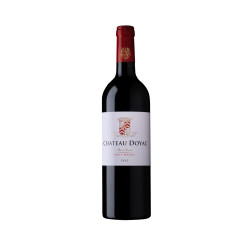
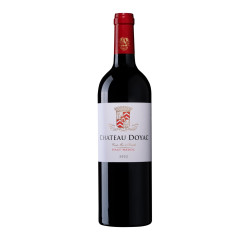
Château Doyac, Saint-Seurin-de-Cadourne: a biodynamic Haut-Médoc admitted to Biodyvin
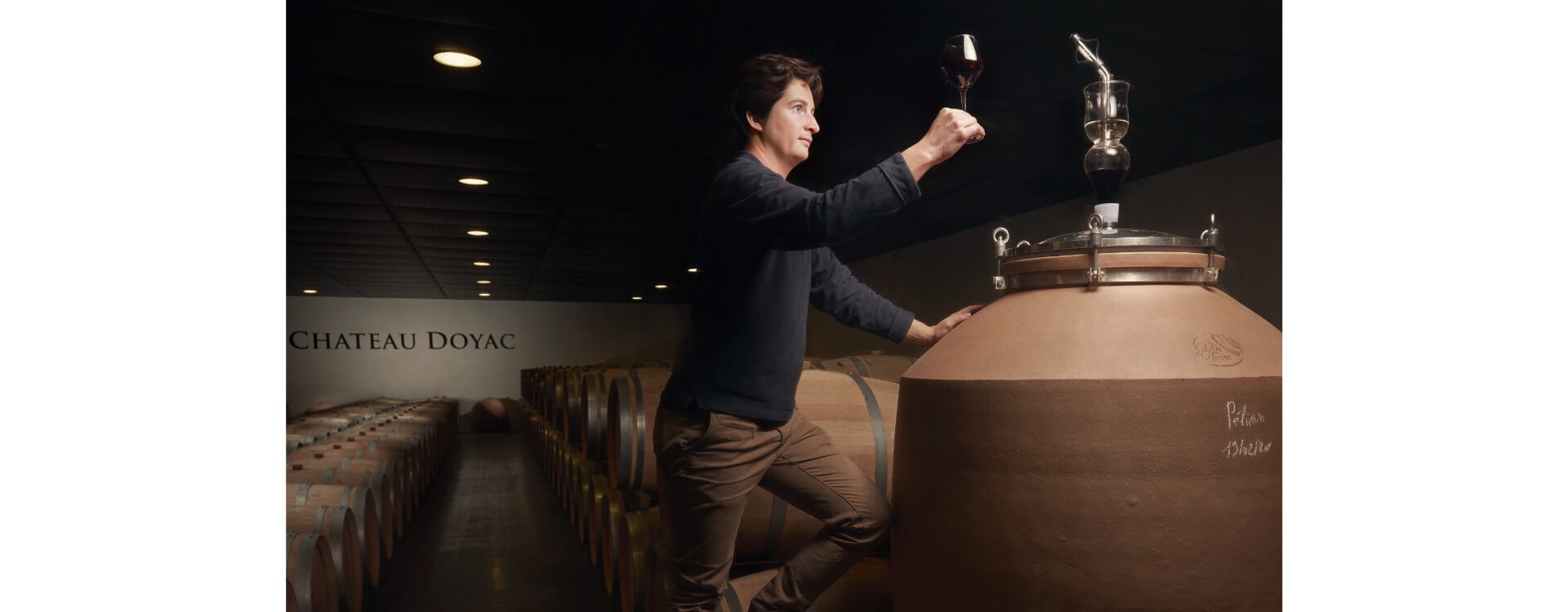
At Saint-Seurin-de-Cadourne, in the Haut-Médoc, Château Doyac farms 27 hectares biodynamically. Kunekune pigs keep the soil of a few plots down through the cold season, and Max de Pourtalès, who came from banking, sells under two AOCs and one IGP.
How would you describe Château Doyac?
27 hectares of clay and limestone, olives and parasol pines
Château Doyac covers 27 hectares of clay-limestone at Saint-Seurin-de-Cadourne, in the Haut-Médoc appellation, owned by the de Pourtalès family since 1998.
“Château Doyac really is tucked away in a haven of biodiversity.”
The Haut-Médoc is usually told through its gravel, but the INAO also describes the clay-limestone the estate favours. The trees here are not scenery: oaks, parasol pines and even olive trees line the plots.
When did you catch the wine bug?
Banking left behind for the Médoc, at a father-in-law's suggestion
Max de Pourtalès discovered wine at his parents' table. The trade came later: his father-in-law suggested he learn it in the Médoc, and he left banking without hesitating.
“What gets us up every morning is knowing that through our work every day, in the vineyard and in the cellar, we are raising the quality of our wines, and that they will pass on that particular feeling to wine lovers.”
The vineyard and the cellar: that is where everything is settled.
What philosophy guides your work in the vineyard and in the cellar?
From “Doyac (Chabannes)” in 1850 to living soil
The estate traces its origins to “Bordeaux et ses vins” from Éditions Féret, 1850 edition. On page 224 the guide lists “Doyac (Chabannes)” and its crop: Chabannes in 1850, Pourtalès since 1998, the place lasted and not a family.
“We made the ecological choice to convert our vineyard to biodynamic farming.”
Biodynamics is organic farming taken further, tending the life of the soil. The website dates it from 2019, the year of the first Demeter-labelled vintage, which implies an earlier conversion.
“Our aim is to recreate a natural ecosystem and to have vines with deep roots in living soil, to produce balanced, vibrant wines.”
The soil first, the plant second.
Which wine best represents your estate?
Cabernet Franc, Chardonnay, Pinot Noir: two AOCs and one IGP
The answer names no cuvée, but a style of wine.
“The kind of wine everyone here agrees on is usually a wine with charm, fruit and good balance.”
The route it has chosen is unusual in the Médoc.
“We have started to develop a whole range of single-varietal wines: Chardonnay, Cabernet Franc and Pinot Noir.”
Cabernet Franc stays inside the appellation, which counts it among its varieties. Chardonnay and Pinot Noir cannot stay: the Haut-Médoc is reserved for still reds, and its list excludes them.
So both go out under IGP Atlantique, which covers the Gironde, the Dordogne, the Charentes and western Lot-et-Garonne.
People read an IGP as taking in whatever an appellation turns down. Its specification, approved by order of 14 April 2023, contradicts that: the wines are made “exclusively” from varieties it names. Chardonnay and Pinot Noir are on that list.
The IGP also allows the variety name on the label, and the estate reports one hectare of each, planted four years ago.
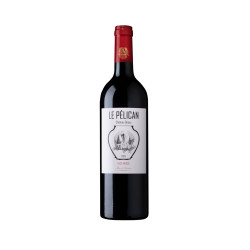
The white changed label without leaving the Médoc: “Le Pélican”, a Sauvignon Blanc off one and a half hectares, was AOC Bordeaux. The website now lists it as AOC Médoc blanc, opened to whites by the order of 31 July 2025, in the Journal officiel on 5 August.
Which memory at the estate has marked you most?
Admitted to Biodyvin in 2022, an approval re-earned every year
The memory put forward is not a vintage, but an admission.
“Our finest memory is when our wines were admitted to Biodyvin in 2022.”
Biodyvin is the Syndicat international des vignerons en culture bio-dynamique, and its specification covers both growing and winemaking. It reports 235 members in 2026.
The union does not inspect itself: Ecocert does, and the certificate holds for one year.
“It was wonderful recognition for our work in the vineyard and for our wines.”
The estate also carries AB organic certification, required by Biodyvin, and the Demeter label, issued by a separate body.
Why follow Château Doyac?
Kunekune pigs at work in winter, and a Latin motto
The estate names two things it is known for.
“At Château Doyac we are as well known for Max's pizzas as for the estate's wines.”
The second is more serious.
“We are also very well known for our Kune Kune pigs, which work the soil of a few hectares of vines in winter.”
The motto the estate gives as the de Pourtalès family's is “Quid non dilectis”. It translates as “What would one not do for those one loves”, and answers “Wine!”
A Latin motto, pigs and a Pinot Noir in the Médoc: Doyac looks nothing like the usual idea of the Haut-Médoc, and that is what makes it worth following.
Why buy directly from the winemaker? The wines of Château Doyac are shipped straight from the estate: estate prices with no middleman, vintage traceability and support for a biodynamic Haut-Médoc estate, admitted to Biodyvin.
Explore the wines of Château Doyac straight from the estate, at estate prices, through the short supply chain on Avenue des Vins.
Frequently asked questions about Château Doyac
Which AOCs and which IGP does Château Doyac sell under?
Château Doyac sells under two AOCs and one IGP: Haut-Médoc for its reds and its Cabernet Franc, Médoc blanc for its Sauvignon, Atlantique for Chardonnay and Pinot Noir.
Which grape varieties does AOC Médoc blanc allow?
AOC Médoc blanc allows Muscadelle, Sauvignon, Sauvignon Gris and Sémillon, plus five adaptation varieties capped at 5 % of plantings and 10 % of the blend. Its specification sets no rule of dominance between them.
What do the Kunekune pigs do at Château Doyac?
At Château Doyac, Kunekune pigs keep the vegetation of a few hectares down in winter. The estate calls them natural helpers that graze instead of a machine.
How does an estate become a Biodyvin member?
Biodyvin approval is issued after four years of conversion to biodynamic farming. Ecocert inspects vineyard and cellar, and every member is also certified AB organic.
How many tonneaux does the 1850 Féret guide credit Château Doyac with?
The 1850 Féret guide credits Doyac with 80 tonneaux, on page 224. The whole commune supplied 2,500 to 3,000 of them, and the guide lists each cru's crop, commune by commune.