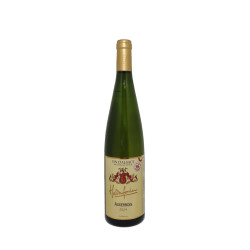
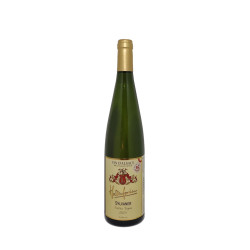
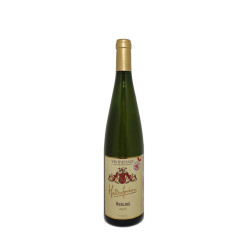
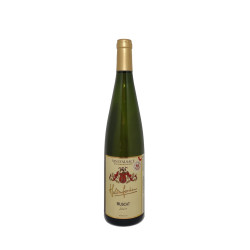
Delivery from €16,90 per winemaker in Europe (excluding the United Kingdom)

Portraits of winemakers
Domaine Hassenforder, Nothalten: Grand Cru Muenchberg, HVE certification and vines tied with willow
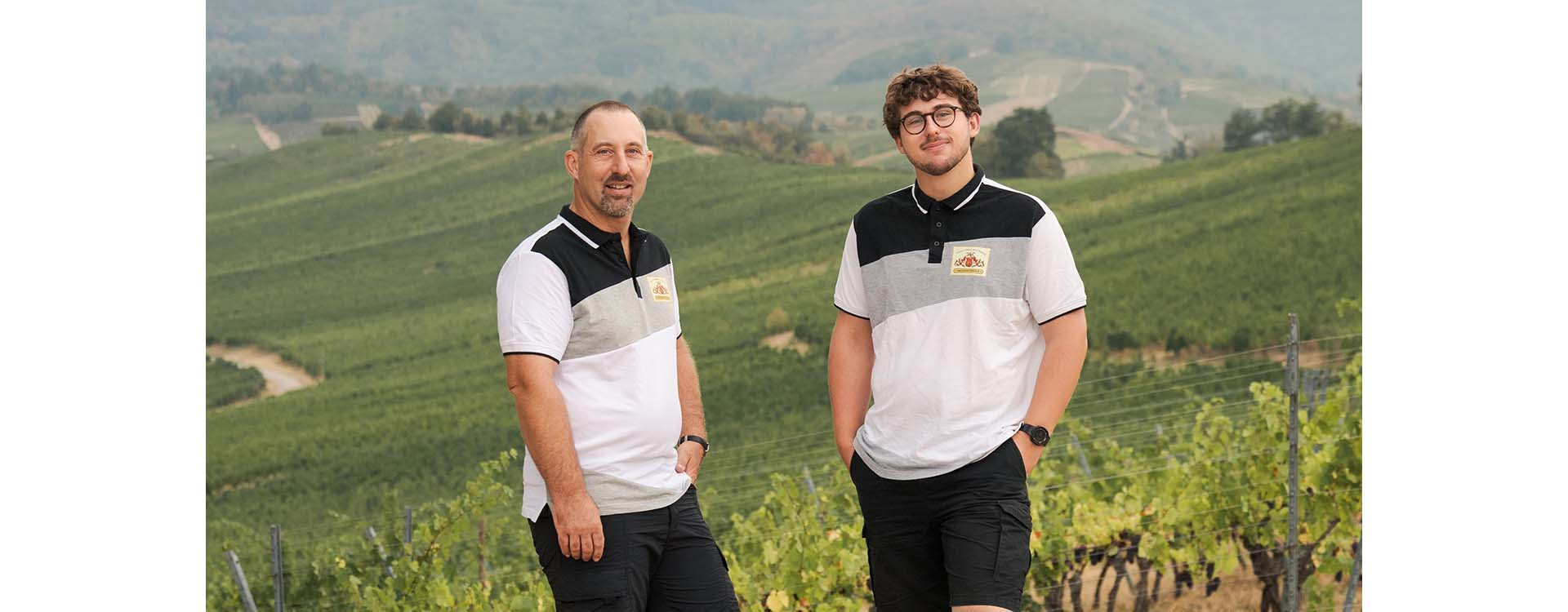
At Domaine Hassenforder in Nothalten, Ludovic Hassenforder still ties every vine with willow and farms Grand Cru Muenchberg, one of Alsace's 51 grands crus. A grower-producer certified HVE, High Environmental Value, he talks about nine hectares, seven grapes and a son trained in Beaune.
How would you describe Domaine Hassenforder?
Nine hectares in 80 plots, in Nothalten on the Wine Route
Domaine Hassenforder is run by Ludovic Hassenforder in Nothalten, a village in the Bas-Rhin on the Alsace Wine Route. The family has lived from the vine alone since 1962, when his grandparents, Germaine and Alphonse, closed their bakery.
“Located on the Wine Route in the heart of Central Alsace, the family business farms 9 hectares of vines scattered over different hillsides, and produces varietal wines, terroir wines, its Grand Cru Muenchberg de Nothalten, its specialities and Crémants, while respecting the environment.”
As a grower-producer, he makes wine only from his own grapes. His parents, Marie-France and Gilbert, have given him a free hand to experiment since 1996; he officially took over in 2011. Nine hectares across nearly 80 plots: the scattered hillsides of his answer.
When did you catch the wine bug?
Born and raised between the Heissenberg, the Zellberg and the Muenchberg
Ludovic Hassenforder does not put a date on his wine bug, and his answer fits on one line.
“I was born and grew up in this magnificent setting.”
The setting is the three hillsides of Nothalten where the estate has plots: the Heissenberg, the "warm hill" above the church, the Zellberg, facing south-east, and the Muenchberg, the "monks' hill", classified Grand Cru. A short answer, a precise setting.
What philosophy guides your work in the vineyard and in the cellar?
Weighing every action, the whole range HVE certified
The whole Domaine Hassenforder range is HVE certified, for Haute Valeur Environnementale, a French public certification scoring biodiversity, spraying, fertilisation and water. Every other row is grassed over, and the plots are lined with flowering banks, dry-stone walls and beehives.
“To be in harmony with nature and its biodiversity by weighing our actions in the vineyard, to question our practices at all times, to carry on the thread handed down by our ancestors.”
Some of the tools are built in-house. In the cellar, the whites are aged in tank on their lees, that is, in contact with the yeast that settles after fermentation, which keeps the aromas and limits the sulphites.
Which wine best represents your estate?
The whites first, from Sylvaner to Grand Cru Muenchberg
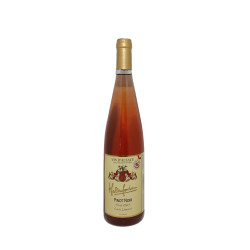
Seven grape varieties are planted at the estate: Sylvaner, Auxerrois, Riesling, Pinot Gris, Muscat, Gewurztraminer and Pinot Noir, the only red, also made as a rosé. Ludovic Hassenforder singles out none of them and answers with the range.
“Alsace, rich in its seven grape varieties and its different appellations, makes it possible to offer a complete and diverse range for every taste, one that goes with all of French and foreign cooking. Naturally, the whites stand out in particular.”
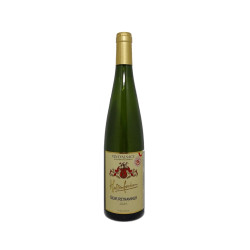
His favourite grape is Riesling, the variety that reigns over Grand Cru Muenchberg, one of the 51 named sites classified Grand Cru in Alsace. With friends, he opens a dry Muscat. The 2026 Guide Hachette des Vins lists a Gewurztraminer Vieilles Vignes 2023 from the estate, a white once again.
Which memory at the estate has marked you most?
Willow strands to tie every single vine
His memory is not a date but a winter gesture. With Guyot pruning, one or two canes are kept, the long shoots that will carry the crop, then the trunk is tied to the wire and the canes are arched over.
“We are probably the last winegrowers in Alsace to grow osier willow to tie all our vines and to bind the canes we prune during the winter with natural ties.”
Osier is willow, the strands basket-makers use, cut in the estate's own willow beds. According to VinéoNews Alsace, which interviewed him in 2023, the practice had almost vanished from Alsace by 1900, and the estates that took it up again from the 1980s mostly keep it for young vines.
Why follow Domaine Hassenforder?
Léonard, six years at the Beaune wine school, joins the estate
The ambition has a first name: Léonard, the younger son, entered the Beaune wine school after year nine, in 2020, to see other vineyards and other ways of making wine.
“Léonard, one of my sons, has just finished six years of study at the Beaune wine school. He is joining the family estate to develop our business and bring a fresh burst of youth, full of enthusiasm and energy.”
Florent, the elder, went to engineering school and built the estate's website. What comes next rests on two sons and the thread of the ancestors. Asked to sum up his estate in one word, he gives just one.
“Tradition.”
A word that looks towards the bakery of 1962 as much as towards Léonard.
Frequently asked questions about Domaine Hassenforder
Where is Domaine Hassenforder?
Domaine Hassenforder is in Nothalten, in the Bas-Rhin, at 53 and 57 route du Vin, between Haut-Koenigsbourg castle and Mont Sainte-Odile. The cellar receives visitors by appointment.
What is Grand Cru Muenchberg?
The Muenchberg is a hillside in Nothalten and one of the 51 Grands Crus that Alsace counts. Its stony soil of volcanic origin is planted mostly with Riesling, grown there since the monks of Baumgarten in the 12th century.
Why tie vines with willow?
Osier is a supple willow strand, knotted by hand around the trunk and the cane. Biodegradable, it leaves no plastic or metal in the row. Domaine Hassenforder uses it on all its vines.
Which Alsace wine goes with which food?
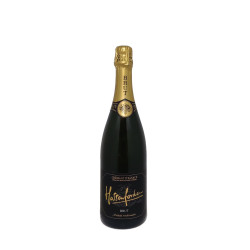
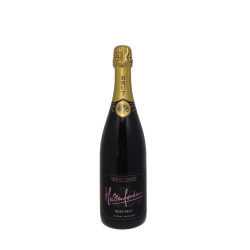
In Alsace, the grape guides the pairing: Riesling with fish and choucroute, Pinot Gris with white meat, Gewurztraminer with spicy food and Munster, dry Muscat with asparagus, Crémant, the Alsace sparkling wine, as an aperitif. Ludovic Hassenforder goes further.
“Our Alsace wines, so diverse, pair easily with dishes from here and elsewhere. The food and wine pairings are many and endless.”
Does Domaine Hassenforder make Vendanges Tardives?
Yes. Its Vendanges Tardives, overripe grapes picked late in the season, come from vines over forty years old, sorted in mid-November. Its Sélection de Grains Nobles comes from repeated pickings of grapes touched by noble rot, the fungus that concentrates sugar.