Delivery from €16,90 per winemaker in Europe (excluding the United Kingdom)

Domaine Hassenforder
Domaine Hassenforder in Nothalten: HVE Alsace wines, Riesling, Pinot Gris and Gewurztraminer, direct from the estate...
Lire plus
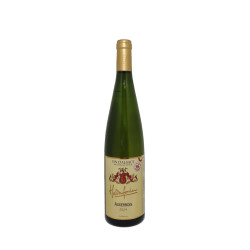
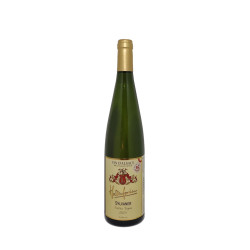
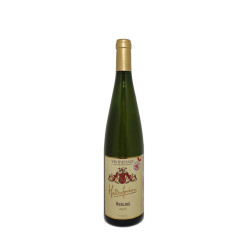
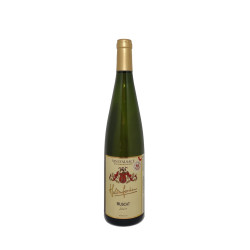
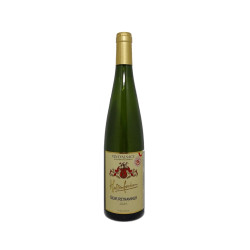
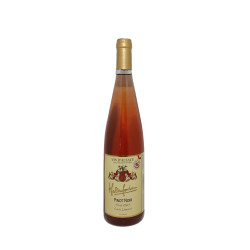
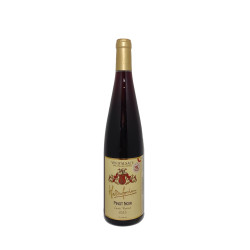
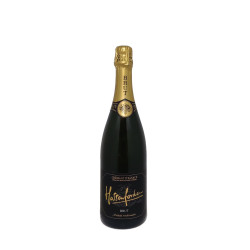
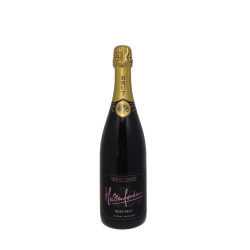
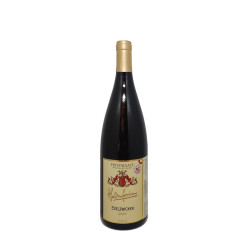
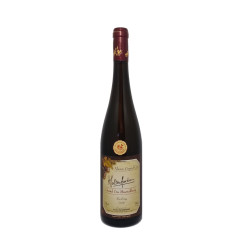
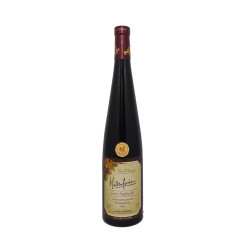
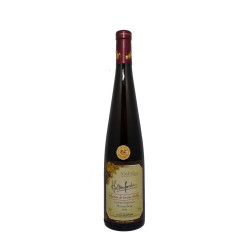
- HVE
Discover Domaine Hassenforder in photos
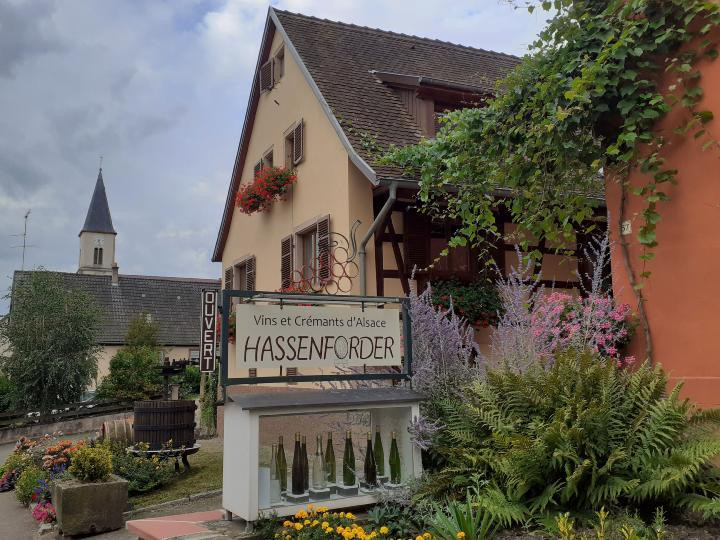

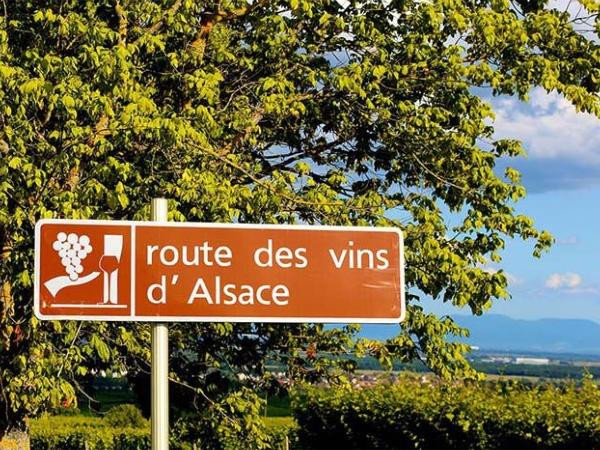

Domaine Hassenforder, Alsace wines and Cremants in Nothalten, from the Heissenberg to Grand Cru Muenchberg
Domaine Hassenforder - AOC Alsace, Alsace Grand Cru and Cremant d'Alsace (Nothalten, Bas-Rhin)
The Domaine Hassenforder is a family estate of vigneron-recoltant based in Nothalten, in the Bas-Rhin, on the Alsace Wine Route between the Haut-Koenigsbourg and Mont Sainte-Odile. Ludovic Hassenforder runs nearly 9 hectares certified High Environmental Value since 2018, from which come dry and sweet Alsace wines, a Riesling Grand Cru Muenchberg and Cremants d'Alsace.
In Nothalten, you only need to raise your eyes above the bell tower to understand where the Hassenforder family's wines come from. Up there, the Heissenberg, literally "the warm hill", offers its south-facing rows of Riesling and Gewurztraminer. A little further, the Grand Cru Muenchberg, where monks already worked the vine in 1125, unrolls its amphitheatre of pebbles. Since 1962, the family has lived on grapes alone, and the Guide Hachette 2026 awarded a star to its Gewurztraminer Vieilles Vignes: sincere, generous Alsace wines, to discover direct on Avenue des Vins.
From the family bakery to the fourth generation of winegrowers
The estate's story begins with a change of trade. Before 1962, Germaine and Alphonse Hassenforder shared their time between the oven of their bakery and their vine plots. That year, the couple closed the bakery: from then on the family would work only the grape. This choice founds the estate as we know it today, that of a vigneron-recoltant who grows his vines, vinifies his grapes and bottles his wines himself.
Gilbert and Marie-France then took over, with an already very current attention to the life of the soils. In the 1980s, Gilbert let the grass grow spontaneously between the rows, where until then people ploughed. He thus extended the restraint the elders already applied to the treatment of the vine. The result soon shows: the earth breathes better, the earthworms aerate it, and the tractors find better grip.
Since 2011, it is their son Ludovic Hassenforder who officially runs the estate. The next generation is already preparing. Florent, the elder, trained in an engineering school and keen on computing, designed the house's website himself. Leonard, the younger, joined the Beaune wine school in 2020 to learn about alternative approaches to viticulture and winemaking. Their two first names are found, moreover, on the labels of the estate's Pinot Noir.
|
||
|
||
|
||
|
||
|
Nothalten and its three hillsides: Heissenberg, Zellberg and Grand Cru Muenchberg
Nothalten is a wine village of the Bas-Rhin set on the Alsace Wine Route, between the Haut-Koenigsbourg castle and Mont Sainte-Odile, not far from Barr. In summer, its facades are covered with geraniums; all year round, its hills tell of a very fragmented geology. The estate's some 80 plots are spread there like the pieces of a mosaic.
The Heissenberg, "the warm hill", overlooks the village church at 300 metres altitude. Its steep slope, turned full south, stores the heat and brings the grapes to fine ripeness on a silty-clay subsoil. The estate works six plots there, about one hectare of the 19 that the lieu-dit counts, mostly in Riesling and Gewurztraminer.
The Zellberg owes its name to an old monastic cell (Zelle) set at its foot. Its 35 hectares of marl-limestone conglomerates, facing south-east, give wines that are generous in their youth and gain in minerality over the years. It is one of the three terroirs shown on the Nothalten coat of arms, and the family has planted there almost only Gewurztraminer.
Alsace Grand Cru Muenchberg — Nothalten (Bas-Rhin)
Permian sediments - south-facing amphitheatre - 17.70 hectares
The "monks' hillside" is one of the 51 Grands Crus of Alsace. Backed against the Ungersberg massif (901 m), which shelters it from the winds and rains from the west, it forms a south-facing cirque with a singular microclimate. Its soils, inherited from the Permian some 250 million years ago, blend pebble conglomerates, gravel, porous rocks and volcanic ash: a stony, filtering ground that warms up quickly and stays naturally poor. Riesling gains density there and signs a great white cut out for ageing.
HVE viticulture, restrained and largely by hand
The estate is certified High Environmental Value (HVE) since 2018. Carried by the Ministry of Agriculture, this certification is the third and highest level of the environmental certification of farms. It rests on four pillars: preserving biodiversity, reasoning the protection of the vineyard, mastering fertiliser inputs and saving water. At the Hassenforders', an independent body checks the practices every 18 months.
Concretely, the estate's treatment frequency index (IFT) is four times below the Alsatian reference. The soils are fed with cattle manure, applied by rotation over about a dozen years, and the edges of the vines leave a wide place to hedges, flower strips, banks, dry-stone walls and beehives.
In the rows, the hand remains the main tool. Pruning is done in single or double Guyot and the canes are tied with strands of willow drawn from sallows, an ancestral technique handed down in the family and applied to all the plots. In spring come the de-suckering and the repair of the trellising; in June and early July, the lifting slides the shoots between the wires, then the leaf-thinning frees the bunches to aerate them better and limit disease pressure.
One inter-row out of two is left in grass, the other worked at the surface to limit competition. Each year, about twenty ares are replanted: satellite-guided planting, an acacia stake for each young vine, and tools designed or modified on site, such as a hydraulic post-driver that stays level on the slopes. In Alsace, irrigation of the vine is forbidden: each vintage therefore faithfully reflects the rain and the sun of its year.
In the cellar: direct pressing, ageing on lees and sulphur at its fairest
Most of the crop is harvested by hand. The white grapes reach the press as soon as picked, to keep all their freshness. From the next day, the clear juice is separated from the lees by settling, the debourbage, then its fermentation stretches over several weeks.
All winter, the wines rest in tank on their lees. This prolonged contact enriches their aromatic palette and naturally protects them from oxidation, which allows the addition of sulphites to be kept to a minimum. Bottling takes place in the spring following the harvest, in the traditional flute d'Alsace.
Reds and roses follow their own path: the Pinot Noir of the Cuvee Florent macerates five to eight days in tank, while the rose Cuvee Leonard stays only 4 to 24 hours in contact with the skins, depending on the colour the vintage delivers. The Cremants d'Alsace take their bubbles in the bottle, by the traditional method. All of it is tasted in the family cellar, between walls of Vosges sandstone and under a fir ceiling with heavy beams, accessible on the level.
The wines of the Domaine Hassenforder, from Sylvaner to noble grapes
The range covers the whole Alsatian spectrum: seven grapes, a lieu-dit, a Grand Cru, late-autumn sweet wines, a red, a rose and two Cremants. For each wine, the estate communicates its residual sugar content, a precious marker in Alsace, where the same grape can give a dry or a sweet wine. Here is how to find your way.
Riesling Grand Cru Muenchberg
Riesling - Alsace Grand Cru - dry - 13% vol.
The estate's flagship wine. Born of the Permian pebbles of the monks' hillside and of deliberately modest yields, this Riesling shows fine concentration and a real vocation for ageing (2020 vintage: 6.3 g/L residual sugar, a dry profile). Its tension makes it the partner of elaborate tables: stuffings, rabbit or a fine piece of Comte.
Riesling Heissenberg and Riesling
Riesling - AOC Alsace - dry - 12.5% vol.
On the warm hill, the Riesling Heissenberg (2022 vintage, 1 g/L sugar) offers citrus on the nose and a lithe, refined palate that stretches out with elegance; it calls for seafood and the great Alsatian classics. The appellation Riesling, livelier still, plays freshness and citrus: it is the wine for coq au Riesling, choucroute, baeckeoffe, oysters and cheeses such as Comte or Abondance.
Gewurztraminer and Gewurztraminer Vieilles Vignes
Gewurztraminer - AOC Alsace - off-dry and medium-sweet
Two readings of the most spiced of Alsatian grapes. The appellation Gewurztraminer (2025 vintage: 13.5% vol., 11.1 g/L) blends rose, spices and exotic fruits with measured sweetness. The Vieilles Vignes cuvee (2023 vintage: 14.5% vol., 24.2 g/L), frankly medium-sweet, was starred in the Guide Hachette des Vins 2026: pineapple, passion fruit and orange reveal themselves little by little. Both work wonders with a Munster, snails, Thai, Indian or Moroccan cooking, duck a l'orange or an exotic-fruit dessert.
Gewurztraminer Heissenberg, Cuvee Spatherbst and Selection de Grains Nobles
Gewurztraminer - Heissenberg lieu-dit - medium-sweet and sweet
Spatherbst means "late autumn": this cuvee is picked in mid-November on old vines, on a fine late-autumn day. The 2022 vintage (14% vol., 52.3 g/L) blends candied fruits, currants and spices in a creamy palate; serve it as an aperitif, with a foie gras, a powerful cheese or a chocolate dessert. Rarer, the Selection de Grains Nobles 2024 is born of successive sortings of berries touched by noble rot, harvested in early November after a month without rain. Powerful yet fresh, on fruit paste, it comes in 50 cl and 75 cl.
Pinot Gris Vieilles Vignes
Pinot Gris - AOC Alsace - off-dry - 13% vol.
Toasted and smoky, with a touch of undergrowth and dried fruits, this old-vine Pinot Gris (2024 vintage: 8.9 g/L) offers a round, generous palate. It is the wine of autumn tables: foie gras, veal or pork, duck, game, cep risotto or a pan of chanterelles.
Sylvaner Vieilles Vignes and Auxerrois
Dry whites - AOC Alsace - 12 to 12.5% vol.
Two thirst-quenching whites, both selected in the 2027 edition of the Guide Hachette. The old-vine Sylvaner, fruity, fresh and slightly spiced, goes with seafood, onion tart, quiche, raclette or Savoyard fondue. The Auxerrois, tender and floral, wins with its roundness: country terrines, savoury tarts, omelettes, grilled fish, young cheeses and even the buffet knacks.
Muscat and Edelzwicker
Dry whites - AOC Alsace - 12 to 12.5% vol.
The Muscat blends two varieties: Muscat Ottonel for the fruit, Muscat a petits grains for the liveliness. Dry (2.4 g/L), floral and crisp, it enjoys asparagus, vegetables, vegetarian dishes or goat's and sheep's cheeses. The Edelzwicker, a blend of Sylvaner, Auxerrois, Riesling and Muscat, is the convivial white par excellence: as a kir, as an aperitif, with charcuterie or salads.
Pinot Noir Cuvee Florent and Pinot Noir Rose Cuvee Leonard
Pinot Noir - AOC Alsace - red and rose
The estate's red, the Cuvee Florent (12.5% vol.), unfolds black fruits and a vanilla touch on silky tannins; it goes with poultry, duck breast, game and red meats, but also a lamb tagine or a couscous. Its 2009 vintage won a star in the 2012 edition of the Guide Hachette. The rose Cuvee Leonard (12% vol.), salmon-hued and crisp, on small red fruits, drinks well chilled: picnic, barbecue, stuffed vegetables or tarte flambee.
Cremants d'Alsace Brut, white and rose
Cremant d'Alsace - traditional method - brut - 12% vol.
The white Cremant, all in finesse, evokes a basket of fruit, white, yellow or dried, and a floral bouquet: shellfish, crustaceans, poultry or Alsatian pastries suit it well. The rose Cremant, 100% Pinot Noir, plays small red fruits with tenderness; think of it for an aperitif, a terrine, a roast poultry or a cherry clafoutis.
Formats and markers: the Edelzwicker comes in a one-litre bottle, the Selection de Grains Nobles in 50 cl and 75 cl. The degrees and sugar contents shown correspond to the cited vintages and may vary from one year to another. All the wines fall under the AOC Alsace, Alsace Grand Cru or Cremant d'Alsace.
What the Guide Hachette des Vins says
The Guide Hachette des Vins has distinguished the Domaine Hassenforder several times. Latest distinction: a star in the 2026 edition for the Gewurztraminer Vieilles Vignes 2023, a sweet wine praised for its balance and aromatic complexity. Earlier, the guide had already starred the Auxerrois 1998 (2001 edition), the Gewurztraminer 1999 (2002 edition), the Riesling Grand Cru Muenchberg 2000 (2003 edition) and the Pinot Noir Cuvee Florent 2009 (2012 edition). In the 2027 edition, the Auxerrois 2024 and the Sylvaner Vieilles Vignes 2024 appear in turn in the selection.
Riesling, Gewurztraminer, Grand Cru Muenchberg and Cremants d'Alsace shipped from Nothalten - delivery France and Europe
Why choose the Domaine Hassenforder?
A family story over four generations. From baker grandparents turned full-time winegrowers in 1962 to Ludovic, at the helm since 2011, and his two sons already involved: the know-how is handed on from hand to hand.
Three Nothalten terroirs, including a Grand Cru. The south-facing Heissenberg, the marl-limestone Zellberg and the Permian Muenchberg give the wines a legible origin, plot by plot.
A restrained, controlled and living vine. HVE certification since 2018, treatments four times less frequent than the Alsatian reference, willow ties, grass cover and beehives.
All of Alsace, from dry to sweet, with no bad surprise. Seven grapes, a red, a rose, two Cremants and late-autumn sweet wines, with a sugar content communicated for each cuvee.
Direct from the winegrower. No intermediary between the Nothalten cellar and you: your bottles leave the estate, with no stay in a warehouse, and travel only once, to your door, in France as in Europe.
Frequently asked questions about the Domaine Hassenforder and its Alsace wines
Where is the Domaine Hassenforder located?
The Domaine Hassenforder is at 53-57 route du Vin, in Nothalten (67680), in the Bas-Rhin. The village lies on the Alsace Wine Route, between the Haut-Koenigsbourg and Mont Sainte-Odile, near Barr. The estate's vines stretch over the Nothalten slopes, notably the Heissenberg, the Zellberg and the Grand Cru Muenchberg.
Who runs the Domaine Hassenforder?
Ludovic Hassenforder has run the family estate since his official installation in 2011. He succeeded his parents, Gilbert and Marie-France, themselves heirs of Germaine and Alphonse, who made the vine their only activity in 1962. His sons Florent and Leonard represent the fourth generation; the younger, Leonard, turned to viticulture by joining wine studies in Beaune in 2020.
Which wines does the Domaine Hassenforder produce?
The estate produces wines in AOC Alsace, Alsace Grand Cru and Cremant d'Alsace. The range brings together dry whites (Sylvaner, Auxerrois, Riesling, Muscat, Edelzwicker), a Pinot Gris and Gewurztraminer from off-dry to medium-sweet, a Riesling Grand Cru Muenchberg, a Cuvee Spatherbst and a Selection de Grains Nobles of Gewurztraminer from the Heissenberg, a red Pinot Noir, a rose Pinot Noir and two Cremants d'Alsace brut, white and rose.
What is the Grand Cru Muenchberg?
The Muenchberg is one of the 51 Grands Crus of Alsace, in Nothalten. Its name means "monks' hillside": the monks of Baumgarten abbey grew vines there from 1125. This south-facing amphitheatre of 17.70 hectares, sheltered by the Ungersberg massif, rests on Permian sediments (pebbles, gravel, volcanic ash) that give concentrated Rieslings for ageing. The Domaine Hassenforder produces a dry Grand Cru Riesling there.
What does Heissenberg mean and which wines are produced there?
Heissenberg means "warm hill". This 19-hectare lieu-dit overlooks the Nothalten church at 300 metres altitude, on a steep, south-facing slope and a silty-clay subsoil. The Domaine Hassenforder grows about one hectare there, split into six plots, from which it draws a dry Riesling, a Gewurztraminer Cuvee Spatherbst and a Selection de Grains Nobles.
Are the Domaine Hassenforder Gewurztraminers dry or sweet?
They range from off-dry to sweet depending on the cuvee. According to the estate's data, the Gewurztraminer 2025 contains 11.1 g/L residual sugar, the Gewurztraminer Vieilles Vignes 2023 24.2 g/L, the Cuvee Spatherbst Heissenberg 2022 52.3 g/L and the Selection de Grains Nobles Heissenberg 2024 88.3 g/L. For a truly dry white, prefer the Riesling Heissenberg (1 g/L) or the Muscat (2.4 g/L).
What is the difference between late harvest and selection of noble grapes?
These are two official mentions reserved for the great sweet wines of Alsace. Vendanges tardives (late harvest) come from overripe grapes, picked well after the classic harvest. The selection de grains nobles goes further: it requires successive sortings of berries affected by botrytis, noble rot, a fungus that concentrates the sugars by making the grape lose its water. At the Domaine Hassenforder, the Cuvee Spatherbst of the Heissenberg, picked in mid-November, embodies the late-autumn style, and the Selection de Grains Nobles is born of successive sortings of noble grapes.
Is the Domaine Hassenforder organic?
The estate does not claim an organic certification: its commitment runs through the High Environmental Value (HVE) certification, obtained in 2018. This public label of the Ministry of Agriculture, checked here every 18 months by an independent body, rests on four criteria: biodiversity, crop protection, fertilisation and irrigation. The estate shows a treatment frequency index four times lower than the Alsatian reference, grasses its vines and ties its canes with willow.
Does the Domaine Hassenforder make red wine and Cremants?
Yes. The estate makes a red Pinot Noir, the Cuvee Florent, macerated five to eight days in tank, with black-fruit aromas and silky tannins, as well as a rose Pinot Noir, the Cuvee Leonard. On the bubbles side, it offers a Cremant d'Alsace brut white and a Cremant d'Alsace brut rose 100% Pinot Noir, made by the traditional method.
Which Domaine Hassenforder wine to serve with choucroute, Munster or foie gras?
With a choucroute or a baeckeoffe, choose the Riesling, lively and mineral. With a Munster, opt for the Gewurztraminer or Gewurztraminer Vieilles Vignes, whose spices answer the character of the cheese. For a foie gras, two options: the Pinot Gris Vieilles Vignes, toasted and generous, or the Cuvee Spatherbst of the Heissenberg for a more opulent pairing. Tarte flambee goes well with the rose Cuvee Leonard.
Which Domaine Hassenforder wine to give as a gift?
For a lover of great whites, the Riesling Grand Cru Muenchberg, an ageing wine of the "monks' hillside", remains the most prestigious gift. The Gewurztraminer Vieilles Vignes, awarded a star in the Guide Hachette 2026, will please lovers of aromatic wines. For the festive season, the Selection de Grains Nobles of the Heissenberg, which comes in 50 cl, or the rose Cremant d'Alsace always make an impression.
Is the Domaine Hassenforder in the Guide Hachette des Vins?
Yes. The Gewurztraminer Vieilles Vignes 2023 won a star in the Guide Hachette des Vins 2026. The guide had already starred the Auxerrois 1998, the Gewurztraminer 1999, the Riesling Grand Cru Muenchberg 2000 and the Pinot Noir Cuvee Florent 2009, and the Auxerrois 2024 as well as the Sylvaner Vieilles Vignes 2024 appear in the 2027 edition.
What is an Edelzwicker?
The Edelzwicker is an Alsace white wine from a blend of several Alsatian grapes; its name translates as "noble blend". At the Domaine Hassenforder, it brings together Sylvaner, Auxerrois, Riesling and Muscat for a dry, supple, thirst-quenching white, to serve as a kir, as an aperitif, with charcuterie or salads. It comes in a one-litre bottle.
Can the Domaine Hassenforder be visited and its wines tasted in Nothalten?
Yes. The estate's cellar welcomes visitors every day, Monday to Sunday, from 10:30 am to 7 pm, preferably by appointment. Tasting is free, guided tours are possible for individuals and for groups of up to 20 people, and the welcome can be in German. On Whit Sunday, the estate also holds a tasting picnic with a walk in the vines.
Where to buy the Domaine Hassenforder wines direct?
You can buy the Domaine Hassenforder wines direct on Avenue des Vins, a marketplace dedicated to independent French winegrowers. The bottles are shipped from the estate, with no intermediate storage, then delivered throughout France and the served European countries. Each order directly supports a winegrowing family from Nothalten.
Alsace wines and Cremants from Nothalten, direct from the Hassenforder family
Domaine Hassenforder: vigneron-recoltant in Nothalten (Bas-Rhin), on the Alsace Wine Route, nearly 9 hectares certified HVE since 2018.
Riesling Grand Cru Muenchberg, Riesling and Gewurztraminer from the Heissenberg, Pinot Gris, Sylvaner, Pinot Noir and Cremants d'Alsace