Delivery from €16,90 per winemaker in Europe (excluding the United Kingdom)

Portraits of winemakers
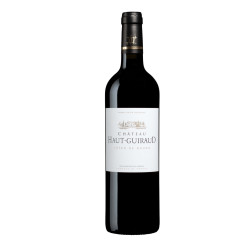
Château Haut-Guiraud: Christophe Bonnet and the King's Peaches
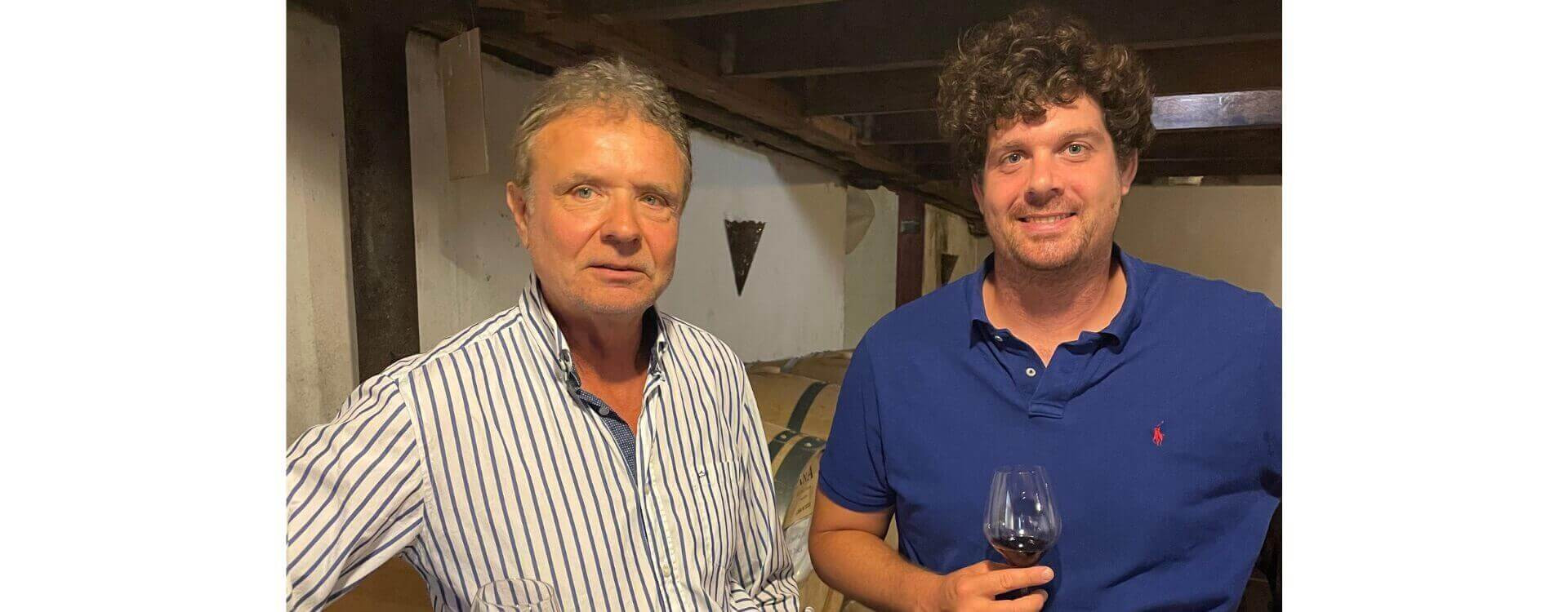
A peach orchard served to a twelve-year-old king, a vineyard the estate dates to 1630 or to the late 1600s, and a grower who describes himself through his own cuvée: Christophe Bonnet on Château Haut-Guiraud, in the Côtes de Bourg appellation.
A Stone House Above the Gironde Estuary
The questionnaire reaches us signed EARL Bonnet et Fils; the estate's own site names Christophe Bonnet, who took over from his father in 1987.
A Wooded Park, Vine Slopes, and Water Below
The first image that comes to his mind is not a wine: “a beautiful cut-stone house, typical of the region, a lovely wooded park in fall colors, a magnificent setting perched on slopes dressed in vines overlooking the Gironde estuary, with its incredible sunsets.” Landscape, here, is part of the job.
Saint-Ciers-de-Canesse, the estate's address, is one of the fifteen villages of the Côtes de Bourg appellation, where the Dordogne and the Garonne open the estuary. The estate works in the A.O.C. Côtes de Bourg and carries the French HVE environmental label on its bottles.
Peaches for a Twelve-Year-Old King
Start with the record. Louis XIV stayed at Bourg during the Fronde, the revolt against royal authority, from August 27 to October 2, 1650. The royal declaration pacifying the Bordeaux troubles is dated October 1, 1650, at Bourg. The king, born September 5, 1638, was twelve.
What the Archives Date, and What the Estate Tells
The estate places the scene on October 3, 1650, in its questionnaire and on its site alike, and describes a king for whom “fruit and sweets were his guilty pleasure.” The boy of twelve was served “peaches from the Haut-Guiraud orchard, which he greatly enjoyed.” That date falls two days after the declaration, one day after the king left.
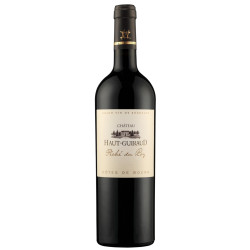
The site adds more than a legend: “Since then, the vine has completely replaced the orchards at Haut-Guiraud.” The peaches came before the wine, and “it is in tribute to this story that the Péché du Roy cuvée was born,” a name that plays on two French words a breath apart, pêche, the peach, and péché, the sin.
1630 or the Late 1600s: Two Dates From One Estate
The estate gives the age of its vineyard twice. Its site puts the start in 1630, “according to our archives.” The questionnaire says the late 1600s. Half a century apart, at least, and we do not pick for them. Jean Bonnet bought the vineyard in 1950, Christophe Bonnet took over in 1987.
The Tractor, the Vines, the Trade Fairs
He dates his taste for the work to childhood, “when my father took me along on the tractor, into the vines or to trade fairs.” The father turns up twice in the questionnaire: driving the tractor then, and “helped in this task by my father” now.
The philosophy fits into one goal, “working every day so that the vine can produce grapes of great quality,” then drawing out the best of each vintage with modern techniques. The questionnaire adds a figure the site does not give: the fifth generation of the Bonnet family.
A Light Red to Drink Chilled
The project on the bench looks forward. We did not find it on the site: take it as a cuvée he announces.
The Cocktail Built Around the Cuvée
Christophe Bonnet is working on “a light red wine that can be drunk chilled, to attract the younger generation.” He has “also dreamed up a cocktail” with that wine, and wants wider recognition for the estate's bottlings.
A light red has limits here: for reds, the appellation requires 10.5 % minimum natural alcohol. Light, then, but not thin.
The Wine That Looks Like Him
What keeps him going, he names plainly.
Full-Bodied, Generous, Refined
“The family heritage, which can sometimes be heavy to carry but which also gives me the strength to fight every day”: the sentence carries the weight and the drive at once.
The wine closest to him is the Péché du Roy, “a full-bodied, generous and refined wine,” and he justifies all three words. Full-bodied, with disarming proof: “Full-bodied, because I'm 1.93 m tall!” That is 6 ft 4 in. Generous, because he likes having friends over. Refined, because he is a keen eater who enjoys “getting behind the stove to invent my own recipes.”
The cuvée's page says it in numbers: merlot 70 %, cabernet sauvignon 20 %, malbec 10 %, fourteen months in new French oak.
Harvest Dinners and a Guinguette Night
His best memory at the estate is not a vintage.
Customers and Friends at the Same Table
For several years running, the property gathered customers and friends for the end of harvest. More recently came a guinguette night, an open-air dance and dinner. These are, he says, “traditional, joyful, friendly moments that match the spirit of wine,” and he speaks of real happiness.
Hosting counts here: the site promises that “Christophe and his wife Nathalie BONNET welcome you.” The rest of the year, the work happens on the slopes, above the water.
Why buy direct from the winegrower? Château Haut-Guiraud wines are shipped straight from the estate: estate prices with no middleman, full vintage traceability and direct support for the grower who makes them.
Discover the cuvées of Château Haut-Guiraud direct from the estate, at the estate price, on Avenue des Vins.
Côtes de Bourg and Château Haut-Guiraud: Frequent Questions
What Grape Varieties Does the Côtes de Bourg Appellation Allow?
The Côtes de Bourg appellation allows four main red varieties: cabernet franc, cabernet sauvignon, merlot and cot, also known as malbec. Carmenère and petit verdot are allowed as adaptation varieties.
Does the Côtes de Bourg Appellation Make White Wine?
Yes, the Côtes de Bourg appellation covers still red and white wines. The whites, recognized by decree on May 14, 1941, come from sauvignon blanc, sauvignon gris, sémillon, muscadelle and colombard.
Where Is Château Haut-Guiraud?
Château Haut-Guiraud has its address in Saint-Ciers-de-Canesse, in the Gironde, one of the fifteen villages of the Côtes de Bourg appellation. The estate asks for an appointment before a visit.
What Yield Does the Côtes de Bourg Appellation Allow?
The Côtes de Bourg appellation allows 54 hectoliters per hectare for red and 60 hectoliters for white, with a ceiling of 65 and 72 hectoliters.
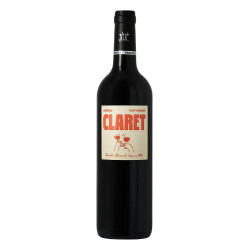
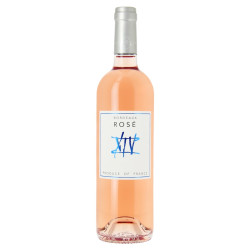
What Does the XIV on Château Haut-Guiraud Capsules Mean?
The XIV on Château Haut-Guiraud capsules is the estate's signature. The grower puts it plainly: “Our signature is the XIV found on our capsules and our packaging.” The numeral points to Louis XIV, who stayed at Bourg in 1650.