Delivery from €16,90 per winemaker in Europe (excluding the United Kingdom)

Unbeatable !
Cabernet Sauvignon: origins and characteristics of this grape variety
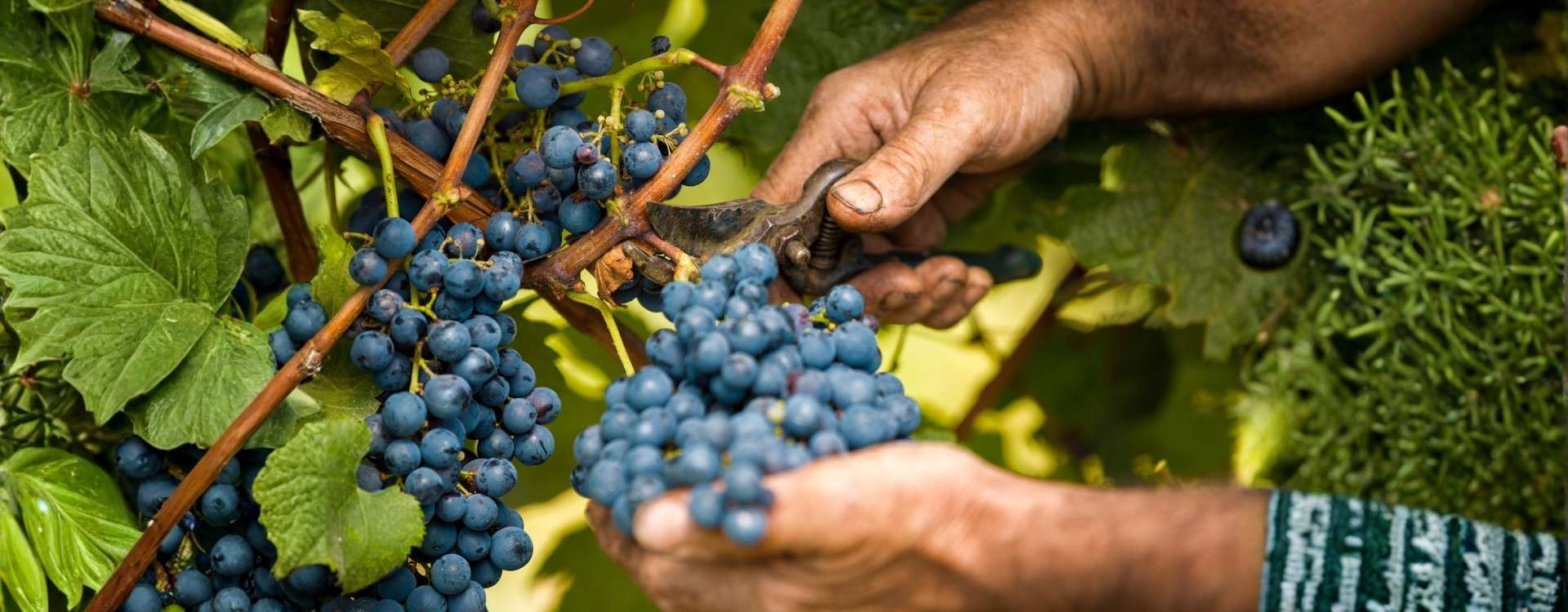
Cabernet Sauvignon: origins, aromas and terroirs of this iconic grape variety
Which grape variety has been the most widely cultivated in the world since 2010, and which lies behind most of the world's most expensive wines ? The answer is in the title: Cabernet Sauvignon. How did this relatively recently discovered grape become so indispensable? What are its aromas, its terroirs and its food pairings? Here is the story of a success that has taken this grape across France and the world.
Origins and description of Cabernet Sauvignon
Cabernet Sauvignon came into existence relatively recently, and by happy accident. It was produced by a natural crossing between Sauvignon Blanc (a white grape variety) and Cabernet Franc (a red grape variety), which occurred in the 17th century in south-west France, in the Bordeaux region. This unexpected crossing gave rise to a grape with unique aromatic and gustatory qualities.
Small, thick-skinned berries
The crossing produced a variety with small, thick-skinned berries, which makes growing and harvesting easier, while protecting the grapes from excessive rainfall and rot before harvest.
Late budbreak
Cabernet Sauvignon buds late, which allows it to more easily avoid spring frosts, a major advantage for growers in regions with unpredictable spring weather.
Did you know ? Cabernet Sauvignon has been the world's most widely cultivated grape variety since 2010, ahead of Merlot and Tempranillo. It is grown in over 40 countries across all wine-producing continents.
The aromas of Cabernet Sauvignon
Cabernet Sauvignon produces tannic, complex and structured wines that develop with age. It maintains a good balance of acidity and alcohol across the many terroirs in which it is grown. Its aromatic profile evolves significantly with the age of the wine:
Primary aromas (young wines)
In its early years, Cabernet Sauvignon expresses intense varietal aromas of dark fruits and berries: blackcurrant, blackberry, violet and sometimes raspberry. These fresh, fruity notes are the hallmark of young wines from this grape.
Secondary and tertiary aromas (evolved wines)
With maturation, the wine evolves towards more wild aromas of musk and leather. Ageing in new oak barrels, practised particularly in the Médoc, adds tertiary aromas linked to the interaction with wood: vanilla, cedar, toast.
The green pepper aroma
Cabernet Sauvignon is sometimes associated with an aroma of green pepper. This note indicates either a lack of ripeness (grapes harvested too early) or excessive yields in the vineyard. It is considered a fault and should be avoided through careful vineyard management.
Our Cabernet Sauvignon Selection : Our Cabernet Sauvignon wines selected at estate price, direct from the growers of Bordeaux, the Loire and the Languedoc. See the selection →
The main Cabernet Sauvignon terroirs in France
Originally from the Bordeaux region, Cabernet Sauvignon has spread to many French wine regions, expressing a different facet of its personality in each one.
Bordeaux - the home of Cabernet Sauvignon
It is in the Médoc, particularly in Pauillac, Margaux, Saint-Julien and Saint-Estèphe, that Cabernet Sauvignon reaches its full potential. It thrives in the warm, sandy-gravelly or limestone soils of this region. In Bordeaux, it is typically blended with Merlot to temper its tannic power.
Loire Valley
In western France, Cabernet Sauvignon features in appellations as diverse as Chinon, Cabernet d'Anjou, Saumur and Anjou. Here it expresses a fresher, more herbaceous side of its personality.
Languedoc and Provence
In the Languedoc and Provence, it is often blended with Syrah under the southern sun. Here it develops a more sun-drenched, spiced palette with riper dark fruits and beautiful body.
South-West France
Close to its Bordeaux birthplace, Cabernet Sauvignon is also cultivated across South-West France, where it contributes to characterful red and rosé wines.
Food pairings - Cabernet Sauvignon
The wide range of Cabernet Sauvignon styles makes it a natural partner for many dishes. Its profile changes considerably with age:
Young wines - The fresh, firm tannins pair particularly well with grilled red meats: rib of beef, lamb, duck breast.
More mature wines - With age, Cabernet Sauvignon pairs wonderfully with aged cheeses and mushroom-based dishes, porcini, morels, truffles.
Highly evolved wines - In some exceptional cases, very old Cabernet Sauvignons can even be paired with dark chocolate in unusual but seductive matches.
Tasting tip: a young, tannic Cabernet Sauvignon benefits from decanting for 30 to 60 minutes before serving. Decanting allows the tannins to soften and the aromas to open fully. For a great Médoc, allow up to 2 hours of decanting.
Why buy Cabernet Sauvignon directly from the grower ?
At Avenue des Vins, our Cabernet Sauvignon wines are selected directly from the producing estates, whether from the Médoc, the Languedoc or the Loire Valley. Every bottle is shipped from the estate's cellar at estate price. You gain access to cuvées of a freshness and authenticity that mainstream retail simply cannot offer.
Our Cabernet Sauvignon Selection : Our Cabernet Sauvignon wines selected at estate price, direct from the growers of Bordeaux, the Loire and the Languedoc. See the selection →
Frequently asked questions - Cabernet Sauvignon
What is the origin of Cabernet Sauvignon ?
Cabernet Sauvignon was born in the 17th century in Bordeaux, France, from a natural crossing between Sauvignon Blanc (a white grape variety) and Cabernet Franc (a red grape variety). This accidental crossing produced what has become the world's most widely cultivated red grape variety since 2010. It is now grown in over 40 wine-producing countries across all continents.
What does Cabernet Sauvignon taste and smell like ?
Cabernet Sauvignon is characterised by dark fruit aromas in its youth: blackcurrant, blackberry, violet and sometimes raspberry. With age, it develops more complex aromas of musk, leather and undergrowth. Oak ageing adds tertiary notes of vanilla, cedar and toast. A green pepper aroma generally indicates a lack of ripeness or excessive yields in the vineyard.
What is the difference between Cabernet Sauvignon and Merlot ?
Cabernet Sauvignon is more tannic, more acidic and more structured than Merlot. It ages better and reveals more with time. Merlot is softer, fleshier and more approachable when young, with aromas of plum and chocolate. In Bordeaux, the two varieties are frequently blended: Cabernet Sauvignon provides structure and ageing potential, while Merlot contributes roundness and generosity.
What food pairs well with Cabernet Sauvignon ?
A young, tannic Cabernet Sauvignon pairs perfectly with grilled red meats: rib of beef, lamb, duck breast. A more mature Cabernet pairs wonderfully with aged cheeses and mushroom-based dishes (porcini, morels). Highly evolved Cabernet Sauvignons can even accompany dark chocolate in unusual but seductive pairings.
What are the best Cabernet Sauvignon appellations in France ?
The finest French Cabernet Sauvignon appellations are in the Médoc: Pauillac, Margaux, Saint-Julien, Saint-Estèphe, Listrac-Médoc and Moulis-en-Médoc. In the Loire Valley, it features in Chinon, Saumur, Anjou and Cabernet d'Anjou. In the South, it appears in many Languedoc and Provence cuvées, often blended with Syrah.
Should Cabernet Sauvignon be decanted ?
Yes, for most young, structured Cabernet Sauvignons. Decanting allows the tannins to soften and the aromas to open up. For a Cabernet Sauvignon aged 3 to 5 years, allow 30 to 60 minutes of decanting. For a great Médoc under 10 years old, up to 2 hours. Very evolved Cabernet Sauvignons (over 20 years) may on the contrary need no decanting at all, as over-aeration risks losing their delicate aromas.
Bordeaux origins, blackcurrant and blackberry aromas, Médoc, Loire and Languedoc terroirs: Cabernet Sauvignon is far more than a grape variety, it is an invitation to explore the full diversity of French wines. At Avenue des Vins, discover this grape through our selection of grower wines at estate price.


