Delivery from €16,90 per winemaker in Europe (excluding the United Kingdom)


IGP Ratafia Champenois
East of Paris, in northeastern France, the Champagne vineyards extend over 34,000 hectares in the Marne, Aube, Aisne, Haute-Marne and Seine-et-Marne departments. These include the IGP Ratafia Champenois. The appellation area of this PGI covers the same territory as that of the AOC Champagne. The spirits produced in this appellation are made from grape must. They are known for their diversity, reflecting the characteristics of the terroir in which they were produced, as well as the grape varieties used in their production. They can be kept for between 10 and 15 years.
Filtrer


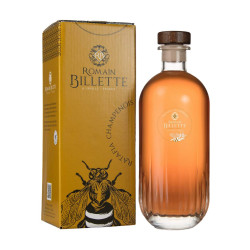
Ratafia Champenois: Made During the Grape Harvest
A straw-yellow to amber liqueur, Ratafia champenois combines a spirit of grape origin with must from grapes picked within the Champagne appellation area, mostly Chardonnay, Pinot Noir and Meunier. Pressed from fresh grapes, that must brings fruity aromas and an acidity that keeps the sweetness in balance.
Key figures
- Alcohol: 16 to 22% ABV
- Sugar: at least 110 g/L
- Marc brandy: 20% of the pure alcohol at most
- Maturation: at least 10 months
History of the IGP Ratafia champenois
IGP Ratafia champenois is a traditional specialty of the Champagne region. This liqueur has a rich history dating back to the Middle Ages when it was produced by Champagne winemakers for their personal consumption. The term "ratafia" originates from the Latin phrase "rata fiat," meaning "let the agreement be ratified," as it was often used to seal deals and contracts. This liqueur is made by adding alcohol to unfermented grape must, stopping fermentation and preserving the grape's natural sugars. In 2015, IGP Ratafia champenois received official recognition, protecting its unique production method and terroir.
Climate and Terroir of the IGP Ratafia champenois
Climate: The climate in the Champagne region is degraded oceanic with continental influences. Winters are cold, and summers are mild, with well-distributed precipitation throughout the year. This cool climate is ideal for growing Champagne grape varieties, allowing for slow ripening and preservation of their natural acidity.
Soils: The Champagne terroir is unique, characterized by chalky soils that provide excellent drainage and impart a distinctive minerality to the wines. These conditions are perfect for producing high-quality wines and Ratafia champenois.
Grape Varieties of IGP Ratafia champenois
IGP Ratafia champenois is made from the same grape varieties used for Champagne. The main varieties are:
- Chardonnay: Adds finesse and elegance, with aromas of white-fleshed fruits and citrus.
- Pinot Noir: Provides body and structure, with aromas of red and black fruits.
- Pinot Meunier: Contributes to the roundness and suppleness of the ratafia, with notes of ripe fruits.
Within 20 Days of Pressing, Then at Least 10 Months
Ratafia champenois is made during the harvest: the spirit has to meet the must within 20 days of pressing the grapes, to keep the juice fresh. That must comes from Champagne presses, capped at 2,666 liters for every 4,000 kg (about 8,800 lb) of grapes, and it may not be enriched in any way.
The spirit also comes from grapes that could go into a Champagne: vinous distillate, wine distillate, wine brandy or marc brandy, alone or blended. Marc brandy can supply no more than 20% of the pure alcohol used, so the fruit of the must stays in the foreground.
The liqueur then matures for 10 months or more before bottling, in tanks or casks, with no oak chips, and caramel is the only coloring allowed. For packaging, the geographical indication excludes sparkling-wine bottles and the mushroom-shaped cork held by a wire hood.
Style of IGP Ratafia champenois Liqueurs
Appearance: Golden color with amber highlights.
Nose: The nose of Ratafia Champenois offers a complex and intense aromatic palette, with aromas of dried fruits (apricot, fig), candied fruits, honey, caramel, and sometimes spicy notes.
Palate: On the palate, Ratafia champenois is sweet and creamy, with a nice freshness that balances the richness of the sugar. It offers persistent flavors of ripe fruits and caramel, with a long finish.
Serving Temperature: Slightly chilled, between 8 and 10 °C.
Aging Potential: Due to its richness in sugar and alcohol, Ratafia champenois has good aging potential. It can be kept for 10 to 15 years or even longer, depending on the estate.
Best Food Pairings with IGP Ratafia champenois
To accompany a fine bottle of liqueur from an estate or château in IGP Ratafia champenois, try one of the following recipes:
- Semi-cooked foie gras
- Chocolate fondant
- Blue cheeses (Roquefort, Bleu d’Auvergne, Gorgonzola)
- As an aperitif
- In a cocktail
Where Ratafia Champenois Stands Among Liqueurs
What is the alcohol content of Ratafia champenois?
Ratafia champenois is sold at no less than 16% and no more than 22% ABV, a range its geographical indication sets for every producer. It also keeps at least 110 g/L of sugar. Each label gives the bottle's exact strength.
Is Ratafia champenois a wine?
Ratafia champenois is classed as a liqueur, one of the spirit drink categories under EU law. Wine results from the alcoholic fermentation of grapes or grape must, whereas ratafia blends a spirit of grape origin into must from Champagne grapes.
How does Ratafia champenois differ from Pineau des Charentes?
Ratafia champenois carries a geographical indication as a liqueur, while Pineau des Charentes holds an AOC as a vin de liqueur. Pineau has to be fortified with Cognac that comes from the estate supplying its must; ratafia may use several spirits made from Champagne grapes. Both stay within the same range: 16% ABV minimum, 22% maximum.
Where can you buy Ratafia champenois direct from the winemaker?
On Avenue des Vins, every Ratafia champenois is sold direct by the producer who made it. Every ratafia's page lists its grape varieties.
See also: AOC Coteaux champenois - AOC Rosé des Riceys - Pineau des Charentes