Delivery from €16,90 per winemaker in Europe (excluding the United Kingdom)


AOC Coteaux champenois
AOC Coteaux Champenois: The Hidden Wines of Champagne. Explore AOC Coteaux Champenois, a rare appellation producing still wines in Champagne. Discover the unique characteristics of these delicate and flavorful wines, often overlooked by the general public. These wines are made only when a harvest lends itself to still wine, so output swings widely from one vintage to the next. Their grapes grow on the same delimited plots as the grapes for Champagne.
Filtrer


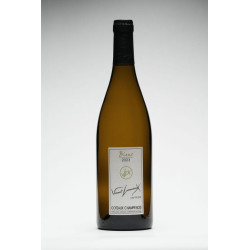


Coteaux champenois: More Than a Year Before Release
Coteaux champenois ages until August 15 at the earliest in the year after the harvest, and sales to wine lovers only open on October 15 of that year, more than a year after picking. For the whites, gentle pressing keeps the juice of black grapes from taking on color.
From “Vins Natures” to AOC: 1927, 1953, 1974
The law of July 22, 1927, which amended France’s 1919 appellation law, restricted the name “Champagne” to sparkling wines alone. The region’s still wines lost the right to that name and took a longer label instead: “vins originaires de la Champagne viticole,” wines from the Champagne wine-growing area. The same law set the boundaries of that vineyard.
From 1953, they were called “vins natures de la Champagne.” Here, “nature” simply means still, made without bubbles; it has nothing to do with today’s natural wines. For some twenty years, a handful of growers kept the tradition alive.
A law passed on December 12, 1973, then abolished France’s “simple” appellations of origin, the category this name belonged to. The wines needed AOC status under a new name: the decree of August 21, 1974, recognized them as AOC Coteaux champenois.
The word “Champagne” left the name, replaced by the hillsides, or coteaux, and the adjective champenois. Nearly half a century after the 1927 law, they finally had an appellation of their own.
History of AOC Coteaux Champenois
Nestled in the famous Champagne region, the AOC Coteaux Champenois is known for its exceptional still wines. While Champagne is globally renowned for its sparkling wines, the AOC Coteaux Champenois, with a history dating back to the Middle Ages, showcases the region's historic expertise in producing still red, white, and rosé wines.
Climate and Terroir of AOC Coteaux Champenois
- Climate: The region's climate is predominantly continental with oceanic influences, characterized by cold winters and mild summers.
- Soils: The soils range from chalk and limestone to clay, providing a richness and diversity reflected in the characteristics of the wines.
Chardonnay and Pinot Noir: The Emblematic Grapes of AOC Coteaux Champenois
The wines of AOC Coteaux Champenois are primarily made from Pinot Noir and Pinot Meunier for reds and rosés, and Chardonnay for whites. These grape varieties, typical of Champagne, are carefully cultivated to produce high-quality still wines.
Style of AOC Coteaux Champenois Wines
Red Wine: Light ruby red color. AOC Coteaux Champenois red wines offer notes of ripe red fruits (cherry, raspberry), spices evolving towards notes of leather and undergrowth as they age. On the palate, they reveal an elegant structure with fine tannins.
White Wine: The white wines of Coteaux Champenois exhibit a bright straw-yellow color. The nose reveals aromas of white flowers, dried fruits (hazelnut, almond), citrus, and a mineral touch. They are balanced, with refreshing acidity and great finesse.
Rosé Wine: Deep pink color. Although rare, the rosés stand out for their subtle aromas of fresh red fruits and flowers. The palate is light, fresh, and finely fruity.
Best Food Pairings with AOC Coteaux Champenois Wines
Here are the best pairings to accompany a bottle of wine from an estate or château in AOC Coteaux Champenois, be it white, red, or rosé:
- White Wine: Seafood, sole fillet with cream, cheeses
- Rosé Wine: Aperitif, shrimp skewers
- Red Wine: Veal chop, stuffed capon with prunes, oeufs en meurette
Coteaux champenois FAQ: Sugar, Labels and Voltis
What sugar level does AOC Coteaux champenois allow?
A Coteaux champenois holds at most 3 grams of fermentable sugars per liter, whatever its color. It is therefore always a dry wine. During fermentation, almost all of the grape sugar turns into alcohol.
Why can a village name follow “Coteaux champenois” on the label?
On a Coteaux champenois label, a village name added to the appellation tells you where the grapes come from. These wines are often known by the village where they were harvested. A registered vineyard site (lieu-dit) can appear too, but only if all the grapes in the wine come from it.
Why does Coteaux champenois travel only in bottles?
Outside the Champagne wine-growing area, Coteaux champenois can only be shipped in bottles, under a law passed on May 23, 1977. Producers asked for it themselves, to prevent fraud with wine moved in bulk. The wines go into new bottles.
What role does Voltis play in Coteaux champenois?
Voltis is a white grape allowed in Coteaux champenois as an adaptation variety. It stays a minor player, capped at 5% of a grower’s plantings and 10% of a blend, and no wine can be made from Voltis alone. The eight main grapes, from Pinot Noir to Petit Meslier, remain the backbone.
Where can you buy Coteaux champenois direct from the winemaker?
You can buy Coteaux champenois, sold by the producer, on Avenue des Vins. Each wine’s page names the producer who made it.
See also: AOC Champagne - AOC Rosé des Riceys - IGP Ratafia Champenois