Delivery from €16,90 per winemaker in Europe (excluding the United Kingdom)


IGP Périgord
IGP Périgord is a protected geographical indication covering the entire Dordogne département in southwest France, plus the village of Salviac in the neighboring Lot. Its area takes in AOC Bergerac country, yet it follows its own, broader rules. Merlot and the Cabernets lead the reds, while Sauvignon Blanc and Sémillon, sometimes with a little Chardonnay, shape white wines from Southwest France that range from dry to liquoreux. Rosés round out the range.
Filtrer


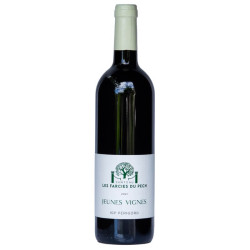

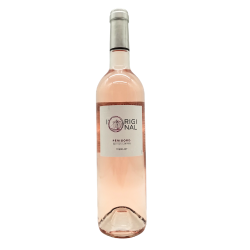

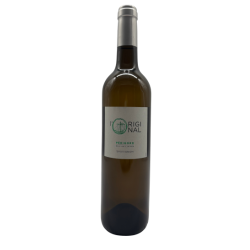


IGP Périgord: River Barges, Stone Slabs and Harvest Dates
IGP Périgord ties its wines to the Dordogne River and to limestone. Flat-bottomed gabares once carried wines from upriver down the Dordogne. On the causses around Domme, the rock splits into flat slabs called lauzes. As early as 1784, the community of Domme also set a ban des vendanges, an official start date for picking.
An IGP Alongside the Bergerac Appellations
Recognized as Vin de Pays du Périgord by a decree of October 25, 1996, it is now an IGP, or protected geographical indication, not an AOC. Its area covers the whole Dordogne département plus the village of Salviac, in the Lot. The Bergerac, Monbazillac and Pécharmant AOCs, whose vineyards all lie inside it, follow different rules.
Two more precise names can follow Périgord on the label: “Dordogne,” for wines grown and made within the département, and “Vin de Domme,” for the Domme area. One or more grape varieties may be named as well.
The IGP allows about 250 grape varieties, from Merlot to Chardonnay and Gros Manseng, and a maximum yield of 120 hl/ha (about 1,280 US gallons per acre). All are still wines: reds, rosés and whites, from dry to liquoreux.
Two Winegrowing Hubs, Then and Now
In the 18th century, Belleyme's maps show vines all along the Dordogne Valley, with two hubs, around Bergerac and around Domme, and a band in the northeast at the foot of the Massif Central. Today the vineyards are concentrated in Bergerac country and in the Domme canton, where winegrowing is enjoying a revival.
The climate is oceanic, with wider temperature swings than on the Atlantic coast, and spring is often wetter than winter. Vines mostly grow on well-drained limestone plateaus. Around Domme, the land is a dry causse pitted with sinkholes and caverns and cut by the deep Céou Valley.
Domme, From the Vinée to the 1993 Revival
As elsewhere in Southwest France, vines reached the Périgord in Roman times. The Dordogne River, the only way to move goods, carried the trade in wines from upriver: at Domme and Castelnaud, wine stores stood next to the river ports.
Around 1260, the Count of Toulouse was already collecting a due known as the “Vinée” in part of the area. On September 12, 1784, the community of Domme set a date before which no one could pick grapes, so the fruit would be ripe and the wines would keep their good name.
Before phylloxera struck in the late 19th century, the Domme vineyard covered more than 2,800 hectares (about 6,900 acres). It took until 1993 for an association of farmers, agricultural technicians and local officials to replant it. Domme's current production is red and rosé, led by Merlot and Cabernet Franc.
Domme, Dry Stone and Lower Alcohol: Your IGP Périgord Questions
Where is the Vin de Domme vineyard?
The Vin de Domme vineyard lies in the southeast of the Dordogne: fifteen communes around Domme, near Sarlat, plus Salviac, in the Lot. This IGP Périgord designation covers villages such as Castelnaud-la-Chapelle, Cénac-et-Saint-Julien, Daglan and Groléjac, along the Dordogne and the Céou Valley.
Why are Domme's vineyards lined with dry-stone walls and huts?
Around Domme, the dry-stone walls and huts are built from lauzes, flat limestone slabs that growers cleared from their plots. The causse's Jurassic limestone naturally splits into these slabs. On the Daglan causse, two of these huts have been listed as historic monuments since 1991.
Can an IGP Périgord wine be partially dealcoholized?
IGP Périgord allows partially dealcoholized wines in red, rosé and white. Their alcohol content must be between 6% and 9% ABV, compared with a 10.5% minimum for the IGP's other wines. Their label must read “Vin partiellement désalcoolisé” (partially dealcoholized wine).
Where can you buy IGP Périgord wine direct from the producer?
You can buy IGP Périgord wine direct from the producer on Avenue des Vins. Each order is prepared and sent by the producer, not from a warehouse.
See also: AOC Monbazillac - AOC Côtes de Bergerac - IGP Côtes de Gascogne